
Standard car washes fail to protect your vehicle from harsh weather, road debris, and fading UV rays. Instead, full detailing is required to decontaminate surfaces and apply the durable coatings that normal washes miss. Establishing this routine care is ultimately the best way to prevent permanent damage to the exterior and interior.
Leaving your car unprotected quickly ruins its paint and tanks its resale value. Fortunately, this brief guide outlines the perfect maintenance schedule for your specific climate and driving habits. Read on to learn how often should you detail your car.
How Often Should You Detail Your Car
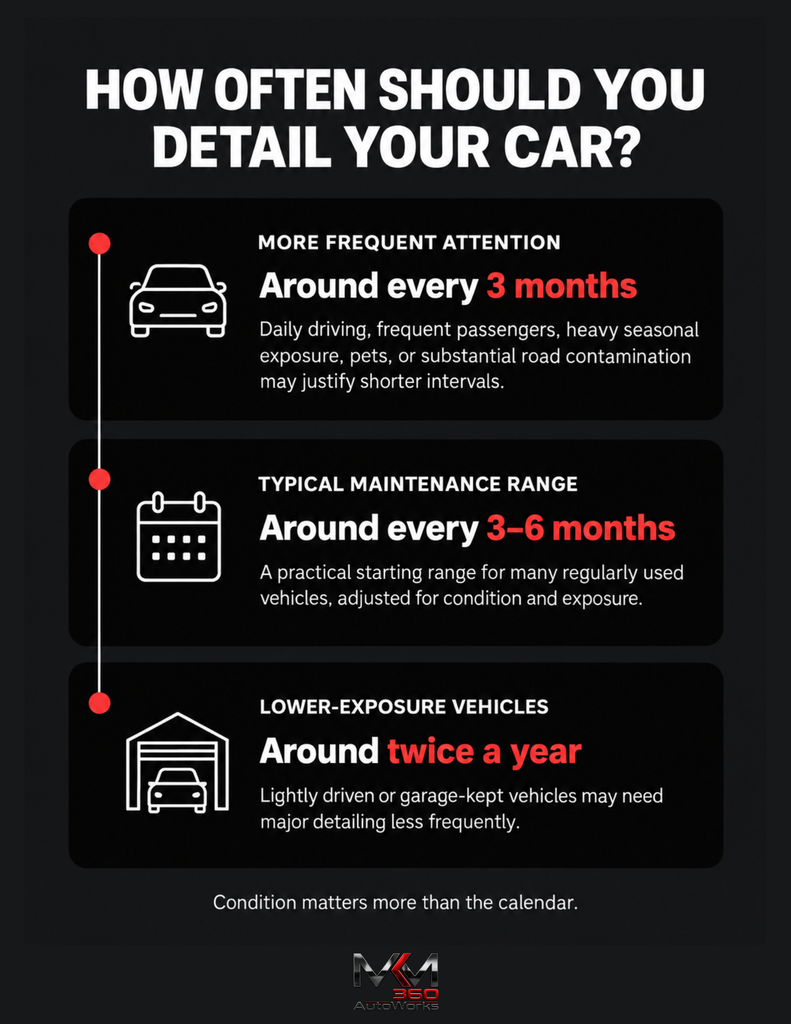
Regular car washes cannot prevent surface grime from chemically bonding to your clear coat over time, which is one of the differences between car detailing and a car wash. Most vehicles require a full detail every 3-6 months to stop this paint damage and protect the interior.
Adjust your schedule based on your specific vehicle usage and environment:
- Every 3 months – Daily drivers, rideshare vehicles, and cars exposed to road salt
- Every 4 to 6 months – Average drivers with standard commutes
- Twice a year – Garage-kept vehicles and weekend cars
Detail your vehicle early if you spot stubborn stains, such as bird droppings, tree sap, or heavy bug splatter.
Detailing Frequency by Vehicle Type
| Vehicle Type | Recommended Frequency | Why |
| Daily driver | Every 3-4 months | Road grime, UV exposure, and interior wear accumulate fast |
| Family car | Every 3-4 months | Food, spills, and crumbs require frequent attention |
| Pet vehicle | Every 2-4 months | Dander and saliva proteins bond to upholstery and resist vacuuming; require steam extraction |
| Work vehicle | Every 2-3 months | Construction dust and tool oils grind abrasive particles into carpet and vinyl seams |
| Garage-kept / weekend car | Every 6 months | Less exposure, slower buildup |
Interior vs. Exterior – Is the Timing Different?
How often to detail car interior?
Detail your vehicle’s cabin every 4-6 months to maintain a clean driving environment and preserve surface materials. This timeline shortens to every 2-4 months if you frequently transport children, pets, or food. Routine vacuuming and wiping prevent dirt from grinding into carpets and staining upholstery.
Regular detailing applies vital UV protectants that stop the dashboard, steering wheel, and door panels from drying out, cracking, or fading. Deep conditioning treatments also keep leather seats pliable and resistant to friction wear. Clean the interior immediately if you notice sticky controls, dusty air vents, or trapped odors.
How often should I detail my car exterior?
Schedule a full exterior detail every 3-4 months to shield your paint from harsh environmental hazards. Acidic contaminants like bird droppings and bug splatter can permanently etch into a warm, clear coat within hours. Additionally, winter road salt rapidly accelerates underbody rust, while intense summer sun drives paint oxidation.
A thorough exterior detail removes deep-seated grime with specialized iron decontamination and clay-bar treatments. This process pulls embedded grit out of the paint’s pores that standard washes miss. The session concludes with the application of a protective wax, sealant, or ceramic coating to prevent future contaminants.
What Factors Change How Often You Need Detailing?
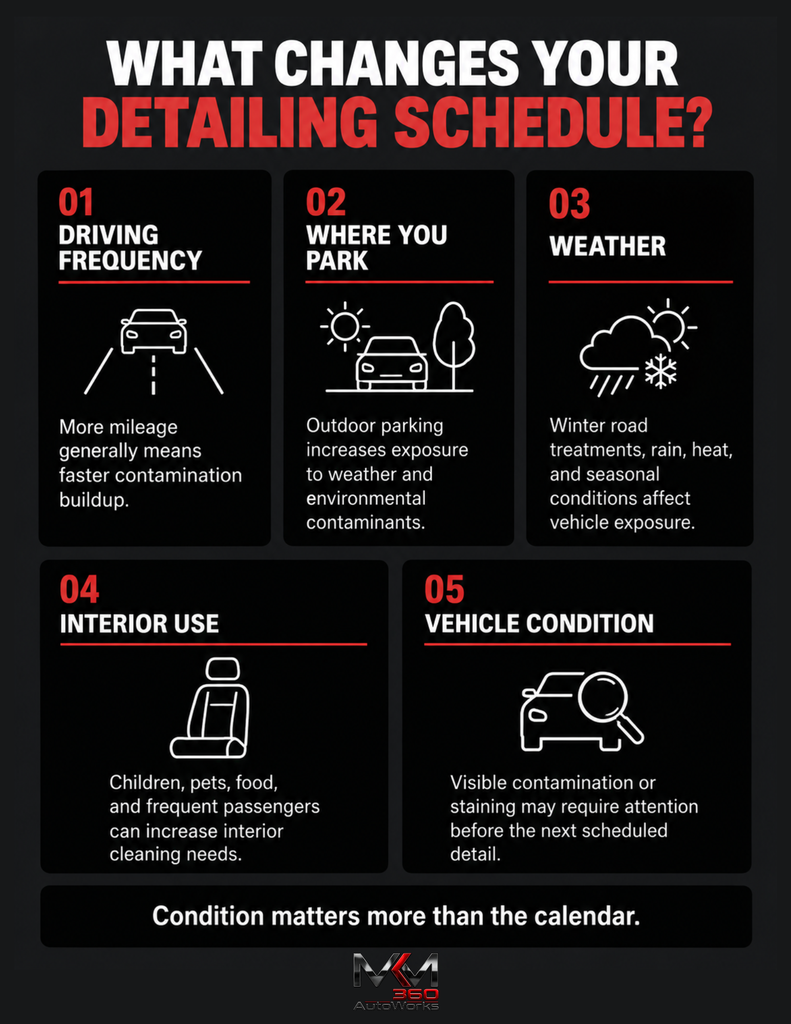
Driving habits and vehicle usage
Your daily driving routine dictates how quickly contaminants accumulate inside and outside your car. Highway commuters experience rapid buildups of microscopic brake dust, exhaust soot, and road grime on front bumpers. Inside the cabin, rideshare drivers, carpoolers, and families introduce constant dirt, friction, and moisture, making frequent vacuuming and fabric sanitization essential to prevent permanent upholstery stains.
Storage conditions and parking environments
Where you park your vehicle serves as a primary factor in paint and interior longevity. Vehicles parked outdoors are constantly bombarded by UV rays, acid rain, tree sap, and bird droppings, which rapidly break down protective coatings and threaten clear-coat failure. Conversely, garage storage shields surfaces from moisture, temperature swings, and falling debris, allowing you to safely extend the intervals between major detailing sessions.
Climate and seasonal weather variations
Local weather patterns dictate your detailing schedule, which should center around a mandatory post-winter and pre-winter detail. The post-winter session focuses entirely on decontamination, using specialized undercarriage flushes to neutralize corrosive road salt and winter brine. The pre-winter detail focuses heavily on protection, applying robust sealants or ceramic coatings to shield the clear coat from upcoming freezing temperatures and road grit.
Humidity, moisture, and mold risks
High humidity and trapped cabin moisture from wet shoes, spills, or sunroof leaks quickly saturate seat foam, creating an ideal breeding ground for mold. When moisture enters the climate control system, it can cause a musty odor, indicating that mold spores have taken root in the dark HVAC evaporator housing. Resolving this deep-seated issue requires specialized chemical atomizing treatments or professional ozone remediation rather than standard surface wipes.
Vehicle colors and interior materials
Your vehicle’s specific colors and materials determine how easily it reveals flaws and how much specialized maintenance it demands. Dark exterior paints show micro-scratches and water spots instantly, while light interior cloth or beige leather highlights blue denim dye transfer and dirt stains immediately. Additionally, leather upholstery requires regular conditioning to replenish lost oils, keeping the material pliable to prevent drying, shrinking, or splitting.
Signs Your Car Needs Detailing Now
Paint warnings
- Gritty texture – Rough paint indicates bonded contaminants requiring a clay bar treatment
- Flat water – Water that sheets instead of beading proves protection has failed
- Swirl marks – Spiderweb scratches under direct light mean paint requires correction and polishing
Interior warnings
- Musty odor – Damp smells indicate mold is in the carpet backing or HVAC vents
- Stubborn smoke – Returning smoke odors mean smoke has penetrated deep into the seat foam
- Surface wear – Key indicators include set-in stains, embedded hair, and stiff leather
Does Washing Between Details Actually Help?
Yes. Regular washing between details is essential because it removes fresh surface contaminants before they can permanently damage your paint. When considering how often should a car be washed, the general standard is every one to two weeks, which helps preserve the clear coat by safely removing harmful bugs, sap, and road salt while detailing handles deep, bonded contamination.
To safely wash between details, use a pH-balanced soap (pH 6-8) to avoid stripping wax, and use a two-bucket hand method instead of scratch-inducing automatic brush washes. Never let the car air-dry, as this can leave stubborn mineral spots; use forced air or gently pat the paint with a waffle-weave towel to prevent scratches.
Does Ceramic Coating Change the Detailing Schedule?
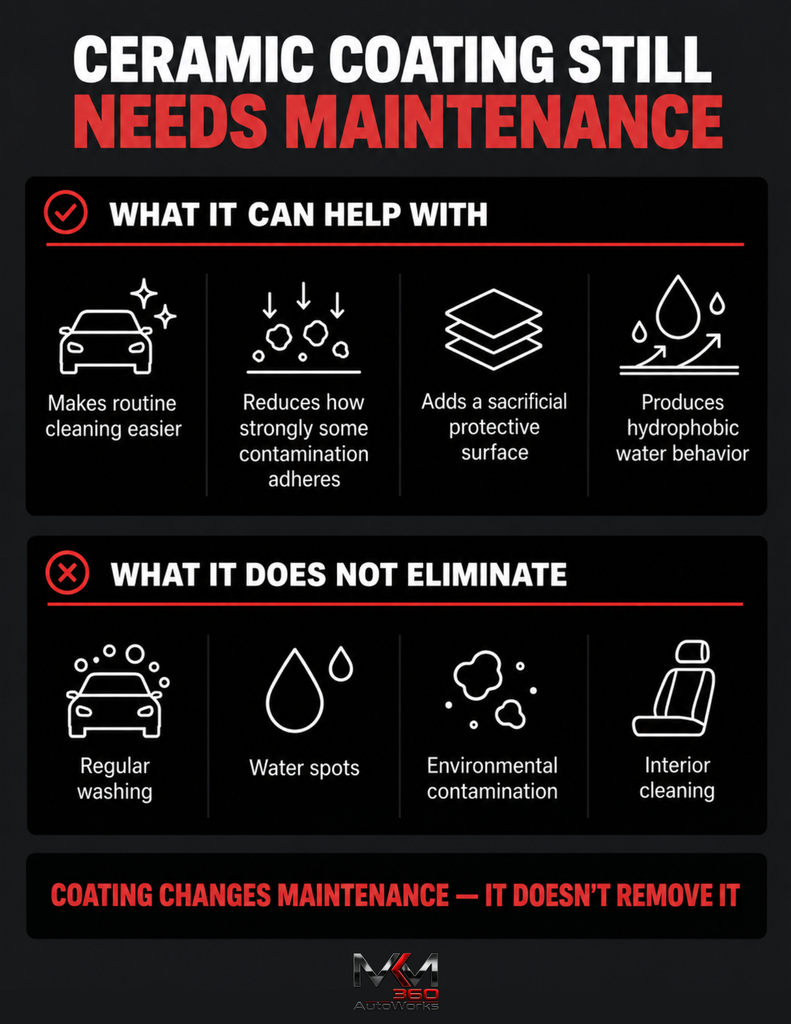
Yes, but it doesn’t eliminate the need for detailing entirely. Ceramic coating creates a slick barrier that prevents contaminants from bonding aggressively, making your exterior much easier to clean. As a result, the vehicle requires less frequent deep exterior detailing. However, neglected coatings can still suffer from water spots, grime, and environmental contamination over time.
To maximize the coating’s lifespan, the vehicle still requires regular, safe hand-washing and periodic maintenance checks. You will also need to apply specialized booster products to refresh the hydrophobic layer. Furthermore, a coating only protects the outside of the vehicle; your interior detailing schedule remains exactly the same to manage everyday dust, mud, and spills.
Conclusion
How often should you detail your car ultimately comes down to how you use it, where you park it, and what conditions it faces. Most cars sit comfortably in the three to six-month range, but the right schedule is personal. Daily drivers, cars parked outside, and vehicles exposed to kids, pets, or harsh weather benefit from detailing closer to every three months. Garage-kept and lightly driven cars can often get by with twice-yearly maintenance.
Stay ahead of the schedule, and the damage never gets a chance to compound. A few details a year, paired with regular washing, is enough to keep most vehicles in genuinely good shape for the long run. The cost of car detailing can also vary depending on the vehicle, service level, and condition.