Persistent tobacco odors inside a vehicle are notoriously difficult to eliminate because smoke residue penetrates deep into fabrics, headliners, and ventilation systems. Masking the odor temporarily with standard air fresheners never solves the problem. Can car detailing get rid of smoke smell?
Determining whether professional cleaning can truly eliminate these stubborn, embedded particles requires examining the specific techniques detailers use. Let’s explore how the process works and what it takes to completely refresh your interior below.
Can Car Detailing Get Rid of Smoke Smell?
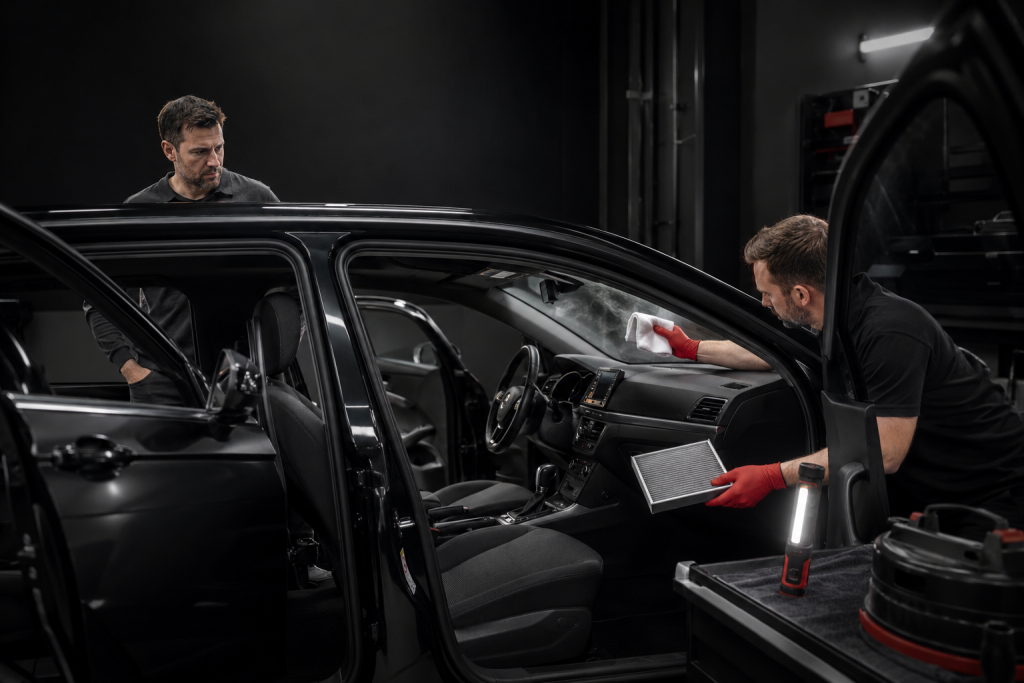
Yes, professional detailing can completely eliminate tobacco odors by targeting the source rather than masking it. Tobacco smoke leaves an oily film of tar and nicotine on every interior surface. Simply spraying deodorizers fails because these odor molecules remain physically trapped inside the cabin’s porous materials.
Using professional car detailing to remove smoke smell requires a thorough multi-step chemical breakdown. Detailers must shampoo carpets, steam-clean the headliner, wash all glass, and flush the air conditioning ducts. For severe cases, an ozone machine treatment follows the cleaning process to alter the chemical structure of any remaining particles and permanently neutralize the smell.
Why Smoke Smell Is Hard to Remove
Smoke leaves behind tar and nicotine residue known as thirdhand smoke. Studies show this residue embeds deeply into cabin materials and persists long after the last cigarette, often surviving a basic vehicle cleaning.
Porous fabrics and carpets soak up the residue, while hard surfaces and glass develop a thin, odor-trapping tar film. The HVAC system compounds the issue by trapping particles in the cabin filter and vents, pushing the smell back into the car whenever the air conditioning runs. Rising temperatures accelerate this problem because trapped particles off-gas on warm days, causing a vehicle that seemed fine in cool weather to suddenly smell like an ashtray.
Is a Regular Interior Detail Enough?
A regular interior detail can handle light odors, but rarely solves a heavy cigarette smell. Basic vacuuming and surface wiping remove loose ash and visible grime, but they cannot reach the residue bonded to underlying fabric fibers and carpet padding.
While shampooing helps lift surface odors, a standard detail skips the vents and HVAC system entirely, leaving a hidden odor source untouched. Air fresheners simply mask the scent temporarily, so the smoke smell returns the moment the fragrance fades.
What Smoke Odor Detailing Usually Includes
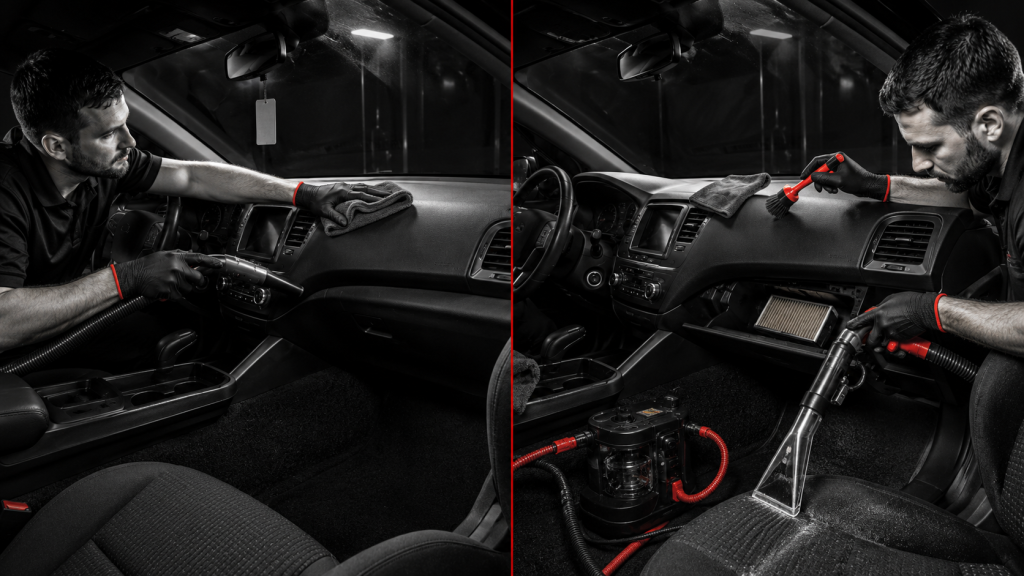
A proper service for car detailing to get rid of smoke smell goes far beyond a standard car cleaning. It begins with vacuuming ash, wiping down hard surfaces, and shampooing the seats, carpets, and floor mats. Detailers then use hot water extraction or steam cleaning for deeper penetration, along with a gentle cleaning of the headliner to avoid fabric sagging.
Next, the vents and HVAC system are treated directly to eliminate hidden particles, and the cabin air filter is replaced if it is saturated. Finally, an odor neutralizer or ozone treatment completes the process, destroying any remaining scent molecules that physical cleaning cannot reach.
Do Ozone Treatments Remove Smoke Smell?
Ozone treatments destroy stubborn smoke odors by releasing molecules that reach tight gaps physical cleaning misses, including deep vent cavities, seams, and crevices. However, this process works best after physical deep cleaning rather than in place of it, as it cannot replace manual extraction of embedded tar and nicotine from fabrics. Treatment time varies from a few hours to a full day, and the vehicle must air out completely before use.
This step should be handled by professionals because high ozone concentrations are hazardous to breathe and can degrade interior plastics or rubber over time. Light odors often resolve with deep cleaning alone, meaning ozone treatments are typically reserved for moderate to severe cases.
Can Smoke Smell Be Completely Removed?
Light odor can often be completely removed, and moderate odor can usually be greatly reduced or removed with cleaning and neutralization. Severe, long-term exposure is the exception. It may need multiple treatment cycles before it’s fully resolved.
Results also depend heavily on the interior materials used, since cloth and suede retain odors far longer than leather or vinyl. In heavily saturated cases, floor mats or cabin filters may simply need replacing rather than cleaning, since some materials hold onto more residue than extraction can realistically remove.
Why Smoke Smell Comes Back After Cleaning
When smoke odor returns after a detail, it is almost always caused by a few specific oversights:
- The original odor source wasn’t fully removed during cleaning
- The HVAC system or cabin air filter was skipped, allowing trapped odor to recirculate
- The headliner or carpets still contain smoke residue, as they’re commonly overlooked
- Air fresheners masked the smell instead of eliminating it
- Heat or humidity reactivated residual smoke trapped in interior materials
When to Book Professional Smoke Odor Removal
DIY methods can help with light smoke odor, but professional car detailing for smoke smell is usually the better choice if:
- You bought a used car with a lingering smoke odor, even if it’s faint
- The smell keeps returning after DIY cleaning
- The odor is strongest when the A/C or heat is running
- Passengers or family members notice the smell
- You see yellow or brown residue on windows or interior plastics
- You’re planning to sell or trade in the vehicle, as the smoke odor can significantly reduce resale value
Final Takeaway
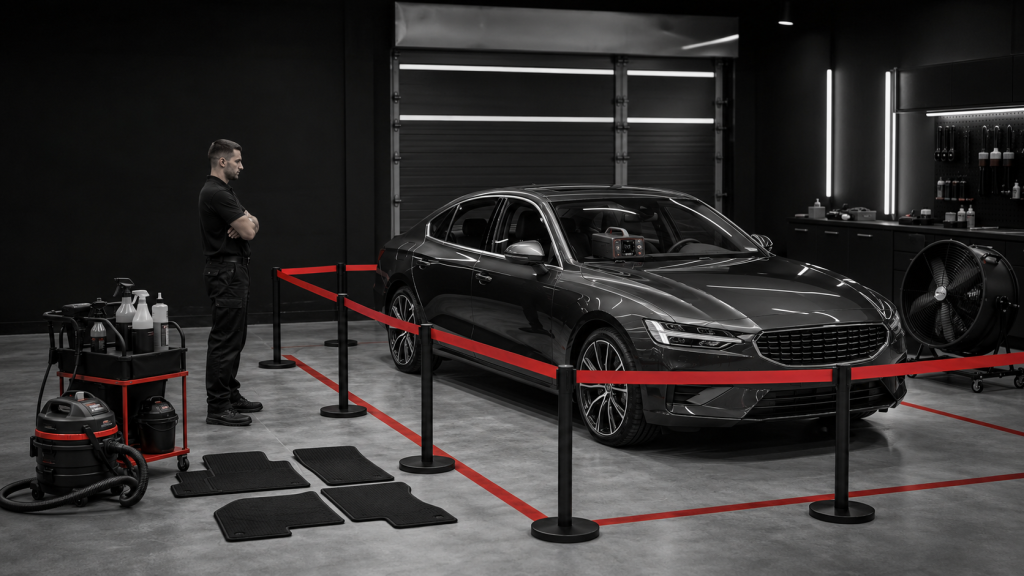
Can car detailing get rid of smoke smell? Yes, but only when it targets the molecular source rather than the surface. Basic cleaning and air fresheners are never enough because tobacco residue can hide deep inside fabrics, headliners, vents, and filters, where a quick wipe-down cannot reach.
Deep cleaning paired with professional odor neutralization gives you the best chance at permanent results. Choosing a comprehensive treatment tailored to your vehicle’s specific level of buildup is the only way to ensure the smell is truly gone, not just masked for a week.