Choosing the right paint protection keeps your vehicle looking flawless while preserving its resale value. Everyday environmental hazards like UV rays, bird droppings, and road grit constantly threaten your factory finish. Left unprotected, these contaminants cause oxidation, fading, and permanent degradation of the clear coat.
To combat this ongoing damage, comparing ceramic coating vs wax helps you weigh long-term durability against upfront cost. Explore this comprehensive guide today to choose the ultimate shield for your car’s shine.
Ceramic Coating vs Wax
Ceramic coatings chemically bond to the clear coat, shielding against UV rays and contaminants for 2-5 years. In contrast, traditional carnauba wax sits loosely on the paint surface. Because wax lacks this molecular bond, it degrades rapidly at ambient temperatures and must be reapplied every 1-3 months.
This bonding difference directly dictates daily paint protection and performance. The hardened ceramic shell creates a hydrophobic, self-cleaning surface that repels road grime and resists minor swirl marks. While waxes deliver a deep gloss, they lack structural hardness and easily melt under intense summer sunlight.
These resulting variations in durability determine the labor and financial investment required. Applying a ceramic coating requires intensive paint correction, resulting in a high initial cost that eliminates the need for frequent maintenance. Conversely, car wax costs less upfront but demands significant recurring time and material over the vehicle’s lifespan.
What Is Car Wax?
Car wax is a surface-level protectant that enhances shine and provides a basic environmental barrier. It sits loosely on top of the paint rather than bonding to it, which limits its durability. Reflecting its widespread use in mainstream car care, the global car wax market is valued at approximately $1.0 billion in 2026 and is projected to reach $1.4 billion by 2033.
Car owners typically choose between two main types:
- Natural carnauba wax
- Synthetic polymer wax
Natural carnauba wax produces a deep, warm gloss favored by enthusiasts, while synthetic polymer wax offers superior resistance to heat and washing cycles. Neither option provides long-term protection, because wax lacks a chemical bond. Heat, rain, and detergents break it down, requiring reapplication every few weeks to a few months.
What Is Ceramic Coating?
Ceramic coating is a silica-dioxide-based liquid polymer that chemically bonds with a vehicle’s clear coat to form a hard, semi-permanent protective layer. This advanced technology represents a massive industry shift, with the global ceramic coating market projected to reach $13.78 billion in 2026 and $22.93 billion by 2032.
Unlike temporary surface treatments, this integrated chemical barrier cannot wash away and typically lasts between one and several years. This chemical bond creates a highly hydrophobic, UV-resistant surface that repels water, road salt, bird droppings, and chemical fallout. However, achieving this performance requires flawless preparation; any remaining wax, oil, or residue will block the bond and cause uneven curing, streaking, or premature failure.
After application, the coating requires a 24- to 48-hour dry curing period to fully set. Ceramic coating is a completely distinct category of resilient protection rather than just a longer-lasting wax.
Car Wax vs Ceramic Coating – Quick Comparison
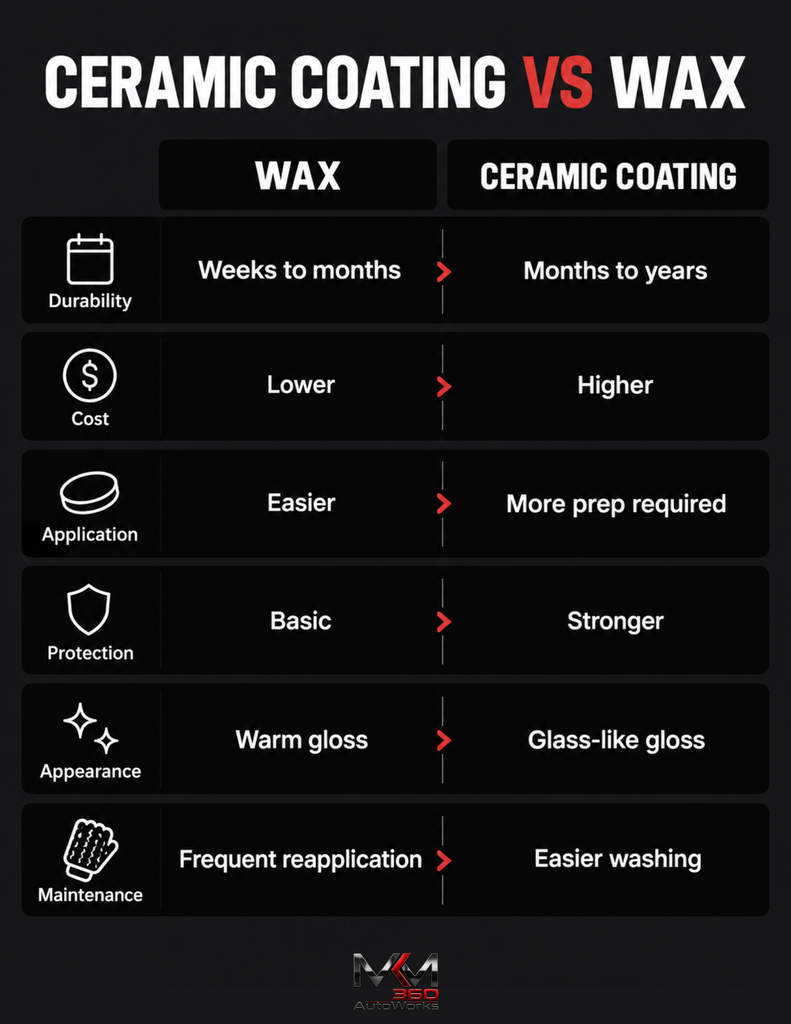
| Factor | Wax | Ceramic Coating |
| Durability | Weeks to months | Months to years |
| Cost | Lower | Higher |
| Application | Easier | More prep required |
| Protection | Basic | Stronger |
| Shine | Warm gloss | Slick, glass-like gloss |
| Maintenance | Frequent reapplication | Easier washing |
| Best For | Budget shine | Long-term paint protection |
Is Ceramic Coating Better Than Wax?
Yes. When comparing ceramic coating vs wax for long-term protection, durability, water repellency, UV resistance, and easier maintenance, ceramic coating is the better product.
Wax still has its place. It makes sense for tighter budgets, older vehicles, or owners who enjoy the routine of regular waxing. For short-term gloss without commitment, it’s fine. But for protection that holds up against sun, road salt, bugs, and grime, and makes washing easier, wax won’t cut it.
Because contaminants struggle to bond to a ceramic-coated surface, a basic rinse removes most light dirt that would otherwise require scrubbing on unprotected paint.
Which Lasts Longer?
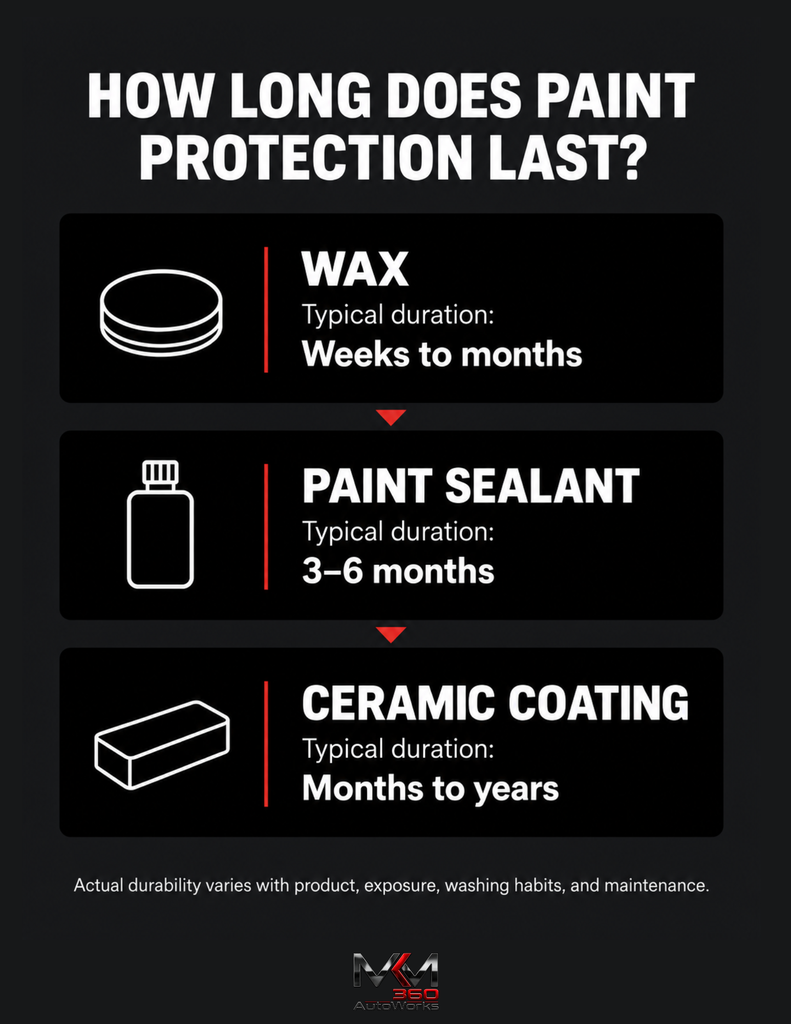
Ceramic coatings last significantly longer than traditional waxes. While natural carnauba wax lasts only a few weeks and synthetic variants stretch to a few months, consumer-grade DIY ceramic coatings protect for one to two years. Professional-grade installations, utilizing higher silica-dioxide concentrations, routinely extend this lifespan to between two and five years.
Environmental exposure and washing habits heavily influence this durability. Harsh road salt, intense UV rays, and abrasive automatic brush washes will accelerate the degradation of both protective layers. However, hand washing a ceramic-coated vehicle with pH-neutral products maximizes its lifespan, making the higher single upfront cost more economical over time than purchasing and reapplying wax every few months.
Which Protects Paint Better?
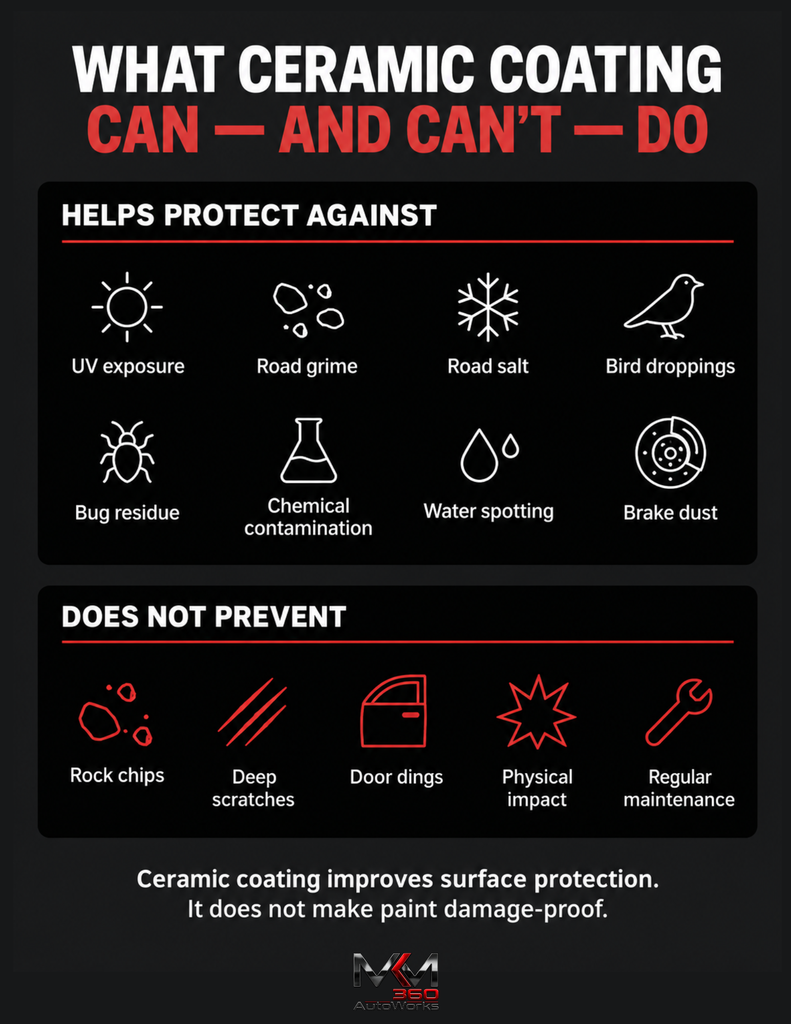
Ceramic coatings protect paint significantly better than wax by providing a much harder, more durable surface layer. This robust barrier prevents damage from common environmental hazards:
- UV rays and intense sunlight
- Road salt and winter grime
- Water spots and tree sap
- Industrial iron particles and brake dust
Furthermore, its chemical resistance gives you critical time to wipe away highly acidic contaminants, such as bird droppings and bug splatter, before they can etch the paint finish.
However, ceramic coating isn’t an impenetrable force field. It cannot prevent deep scratches, rock chips, or door dings, and it doesn’t eliminate the need for regular maintenance. Expecting zero upkeep leads to disappointment, as regular, careful washing is still required to maintain the coating’s protective properties.
Which Looks Better?
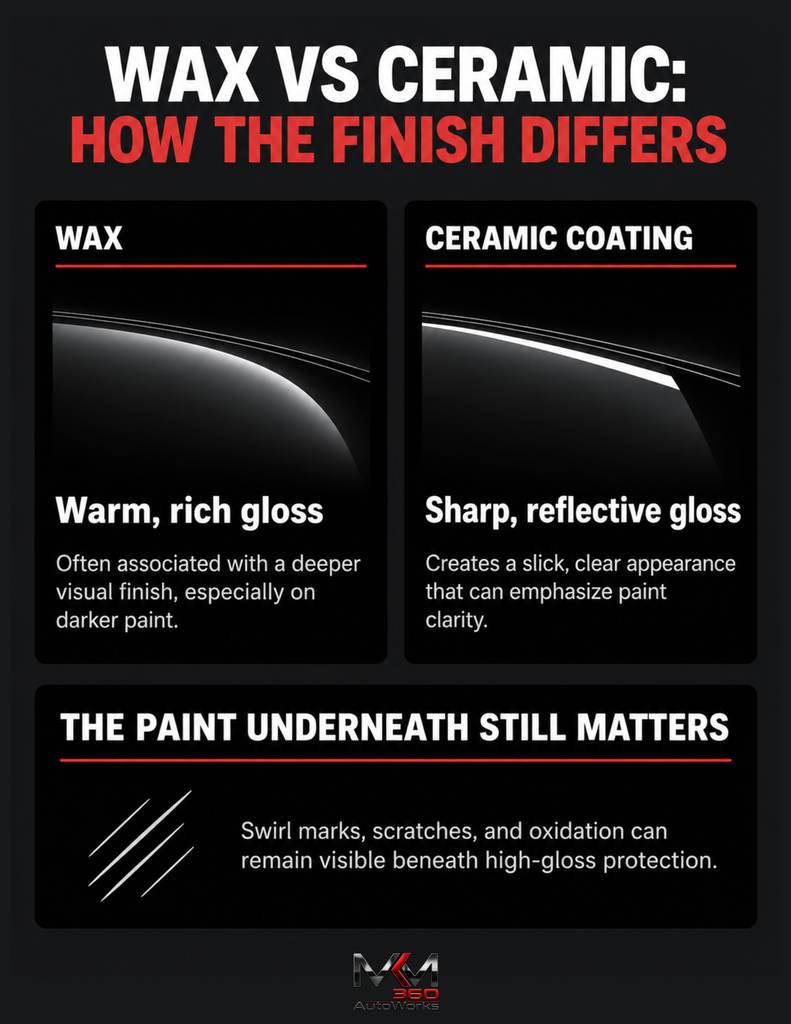
Choosing between wax vs ceramic coating depends on personal aesthetic preference, as they create distinct visual finishes. Traditional carnauba wax produces a warm, rich gloss with a deep shine, particularly striking on darker paint colors. In contrast, ceramic coatings deliver sharper, glass-like clarity and high reflectivity, making metallic flakes pop under sunlight and artificial lighting.
Regardless of your choice, the final look depends entirely on the underlying paint condition. Neither product hides surface defects; instead, high-gloss finishes amplify existing swirl marks, scratches, and oxidation. Machine paint correction prior to application is essential to achieve a truly flawless, mirror-like finish.
Can You Wax Over Ceramic Coating?
You can technically apply wax over a ceramic coating, but doing so is unnecessary and counterproductive. Placing wax on top of a ceramic coating masks the coating’s superior hydrophobic properties, causing the surface to attract more road contamination. Furthermore, you are layering a temporary product that degrades in weeks over an advanced barrier designed to last for years, which disrupts the coating’s self-cleaning abilities.
Instead of using wax, you should maintain the finish by washing with a pH-neutral, ceramic-safe shampoo and periodically applying a dedicated ceramic booster. These specialized spray-on products chemically bond to the existing coating, refreshing its hydrophobic layer and restoring its original gloss. This shift in maintenance prioritizes consistent, gentle upkeep over heavy, incompatible product layers.
Can You Put Ceramic Coating Over Wax?
No. Ceramic coating needs a clean, bare surface to bond to. Wax, oil, polish residue, or sealant blocks that bond, leading to weak durability, streaking, high spots, or early failure. The coating may look fine initially, but it can start breaking down within weeks.
Before application, you must complete these critical preparation steps:
- Thorough wash to remove loose surface dirt
- Chemical decontamination and clay bar treatment
- Machine paint correction to remove swirl marks
- Isopropyl alcohol (IPA) wipe-down to strip remaining oils
Skipping any step compromises the bond before the coating can properly cure.
Where Do Paint Sealants Fit In?
Paint sealants bridge the gap between traditional wax and advanced ceramic coatings. These synthetic polymer protectants bond to the clear coat, providing three to six months of defense. This bond offers significantly greater resistance to UV rays, road salt, and harsh detergents than natural carnauba wax.
A sealant delivers enhanced protection without the high cost or the strict application commitment required by ceramic coatings. The process requires minimal surface preparation and zero professional leveling tools. This accessibility makes sealants an ideal, cost-effective compromise for daily drivers.
Which Should You Choose?
- Wax – Best for budget-conscious owners, older vehicles, and people who enjoy regular car care; it offers low-commitment protection
- Ceramic coating – Best for long-lasting protection, easy maintenance, and high-value vehicles; the upfront cost is high, but the investment pays off over time
- Sealant – Best if ceramic coating is too expensive or difficult to apply, but wax feels insufficient; it delivers a practical, medium-term compromise
Your choice depends on how long you plan to keep the car and how much you value your time. The real decision is about the total cost of ownership, not the initial purchase price.
Conclusion
Choosing between ceramic coating vs wax is simple once you understand their core differences. Ceramic coating provides superior long-term protection, durability, and easy maintenance. Wax remains a reliable, cost-effective choice for short-term shine when a premium coating is out of your budget.
However, the underlying paint condition matters more than the product itself. Always remove swirl marks, oxidation, and scratches before applying any protection. Proper paint correction ensures your chosen product delivers a flawless, long-lasting finish.