Your showroom shine eventually fades into a dull, scratched finish, forcing a choice between paint correction vs polish. Detailing shops often use these terms interchangeably, but they are completely different processes, and selecting the wrong service can cost you serious money on improper work.
This guide breaks down each service in plain terms. You will identify clear-coat damage, evaluate your vehicle’s true condition, and select the exact fix your car needs.
Paint Correction vs Polish – Quick Comparison
| Factor | Polishing | Paint Correction |
| Main Goal | Improve shine and clarity | Reduce visible paint defects |
| Best For | Light haze, dullness, minor marks | Swirls, oxidation, water spots, light scratches |
| Process | Usually lighter and faster | More detailed and correction-focused |
| Intensity | Light to moderate | Moderate to advanced |
| Time | Shorter (often a few hours) | Longer (often a full day or more) |
| Result | Glossier paint | Clearer, deeper, more restored finish |
| Best Use | Maintenance or enhancement | Paint restoration or ceramic coating prep |
What Is Car Polishing?
Car polishing uses a mildly abrasive product applied with a foam or microfiber pad to refine the paint’s surface. It’s a finesse process, not a heavy-correction one. Polishing can help with:
- Dull, tired-looking paint
- Light haze
- Minor swirl marks
- Mild oxidation
- Loss of gloss over time
- Very light surface imperfections
Polishing is the right call when the paint is already in reasonably good shape and just needs to look its best – think of it as restoring the paint’s natural clarity rather than repairing damage.
What Is Paint Correction?
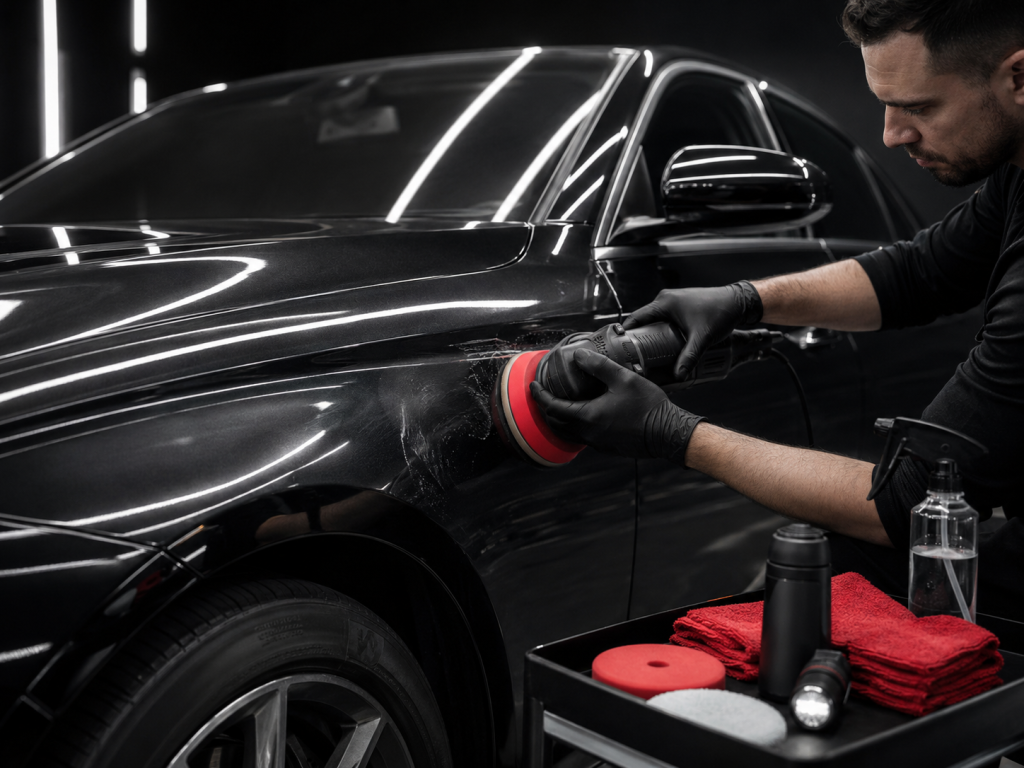
Paint correction is a more involved, multi-stage process designed to physically level the clear coat and reduce the defects sitting inside it, not just mask them with shine. A correction service typically works to reduce:
- Swirl marks
- Light scratches
- Oxidation
- Water spots and mineral etching
- Haze
- Buffer trails or holograms
- Dullness
- Light marring
Correction starts with a professional paint inspection to check your clear coat thickness. Because machine compounding removes a micro-layer of material, technicians must verify that enough paint remains. Depending on the depth of the scratches, the process requires one to three stages of intense cutting. This intensive labor permanently restores the surface rather than just masking the damage with a temporary shine.
Is Paint Correction the Same as Polishing?
No, and confusing the two is a costly mistake. Polishing is simply a final step within a larger paint correction process. A standalone polish only enhances surface gloss and boosts shine. Paint correction goes much deeper, using aggressive compounding to physically level the clear coat and eliminate deep defects such as scratches and swirl marks. Ultimately, every paint correction requires polishing, but a basic polish cannot fix deep damage.
When Is Polishing Enough?
Polishing is often the right, more cost-effective choice if:
- Your car is newer or well-maintained
- The paint looks slightly dull but isn’t heavily marked
- Only light surface marks are present
- You want more gloss without a full restoration
- You’re maintaining an already clean, healthy finish
This is the better fit for a “refresh” rather than a full paint restoration, and it’s a service that can be repeated more often since it’s far less aggressive on the clear coat.
When Do You Need Paint Correction?
Paint correction is worth the extra time and cost when:
- Swirl marks are clearly visible in direct sunlight
- The paint still looks dull after a proper wash
- Oxidation or persistent haze is present
- Water spots remain embedded in the surface
- Light scratches are affecting the overall finish
- You want a deeper, mirror-like reflection
- You’re prepping the vehicle for ceramic coating
If polishing is a touch-up, correction is closer to a reset. It’s the move when the paint’s problems are baked in, not sitting on the surface.
Does Paint Correction Remove Scratches?
Paint correction can reduce or fully remove clear-coat-level defects such as swirl marks, light scratches, and similar surface-level damage. But it has limits.
If a scratch catches your fingernail or has gone through the clear coat into the base color or primer, correction alone won’t fix it. That level of damage usually requires touch-up paint or a professional respray. A reputable car detailer will be upfront about realistic results rather than promising fixes that paint correction physically cannot deliver. They will also check your clear-coat thickness before committing to a plan, ensuring there is enough material to safely work with over your vehicle’s lifespan.
Paint Correction Before Ceramic Coating
Ceramic coatings permanently seal the current condition of your vehicle’s paint. Applying a coating over swirl marks, haze, or oxidation will lock those defects underneath the protective layer for years. Because quality ceramic coatings last anywhere from two to five years, any existing imperfections become incredibly difficult to fix later.
Experienced detailers always perform paint correction or a fine polish before applying the final coating. This step ensures maximum gloss and creates a flawless surface for the protection layer to bond properly. Skipping this preparation phase is one of the most expensive mistakes vehicle owners make when investing in long-term paint protection.
Which One Does Your Car Need?
Choose polishing for
- Better shine
- Cleaner gloss
- Light paint enhancement
- Routine maintenance between full details
Choose paint correction for
- Reducing swirl marks
- Improving dull or oxidized paint
- Restoring genuine clarity and depth
- Preparing the surface for ceramic coating
- Getting the most refined finish possible
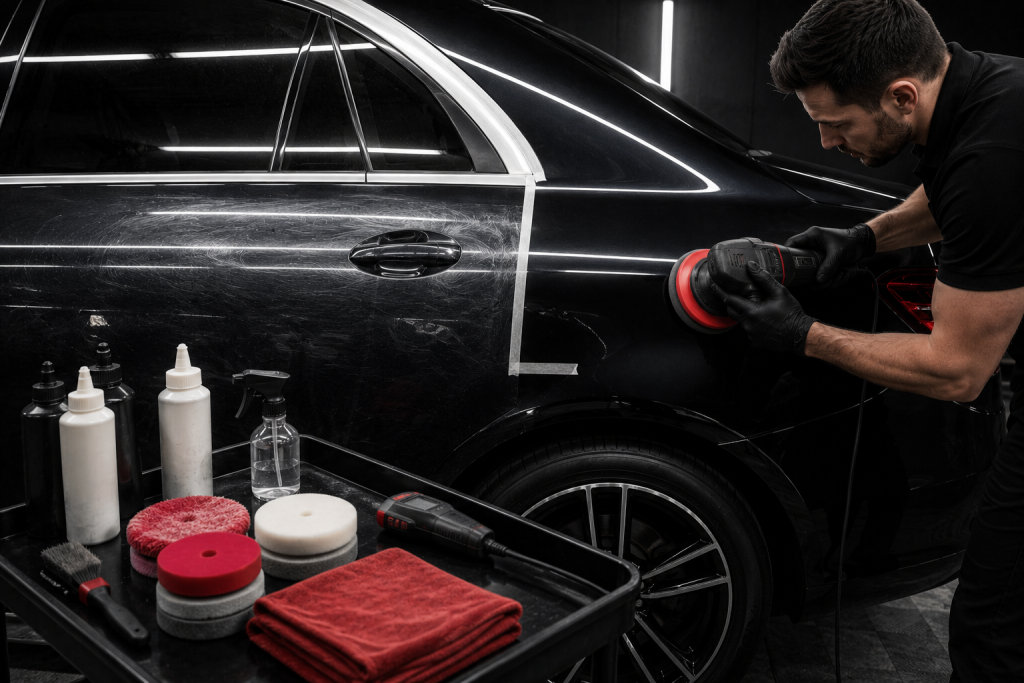
Perform a quick inspection by examining your paint under direct sunlight or a bright flashlight. If you spot spider-web swirl patterns or the finish remains cloudy after a thorough wash, your vehicle needs paint correction, not a simple polish.
Conclusion
Determining the best route for your vehicle comes down to analyzing its current finish and your ultimate expectations. When navigating paint correction vs polish, it helps to view them as completely different solutions for specific levels of clear-coat damage rather than competing services.
At MKM360 AutoWorks, we know that applying the wrong treatment either leaves defects behind or wastes money on unnecessary labor. If you remain unsure which process your vehicle requires, an in-person paint inspection under specialized lighting is the only definitive way to build the perfect plan.