Convertible ownership comes with a quiet trade-off: that fold-down roof needs care regular cars never demand. Get the wash routine wrong, and you’re not just leaving streaks behind. You’re risking cracked vinyl, faded fabric, or a top that leaks long before its time.
Learning how to wash a convertible car properly isn’t complicated, but it does follow its own logic. Below, we’ll break down the correct order, from body to top, plus the material-specific steps that keep fabric and vinyl looking new. You’ll learn what to avoid, how often to wash based on where you park, and when it’s worth calling in a professional instead.
How to Wash a Convertible Car
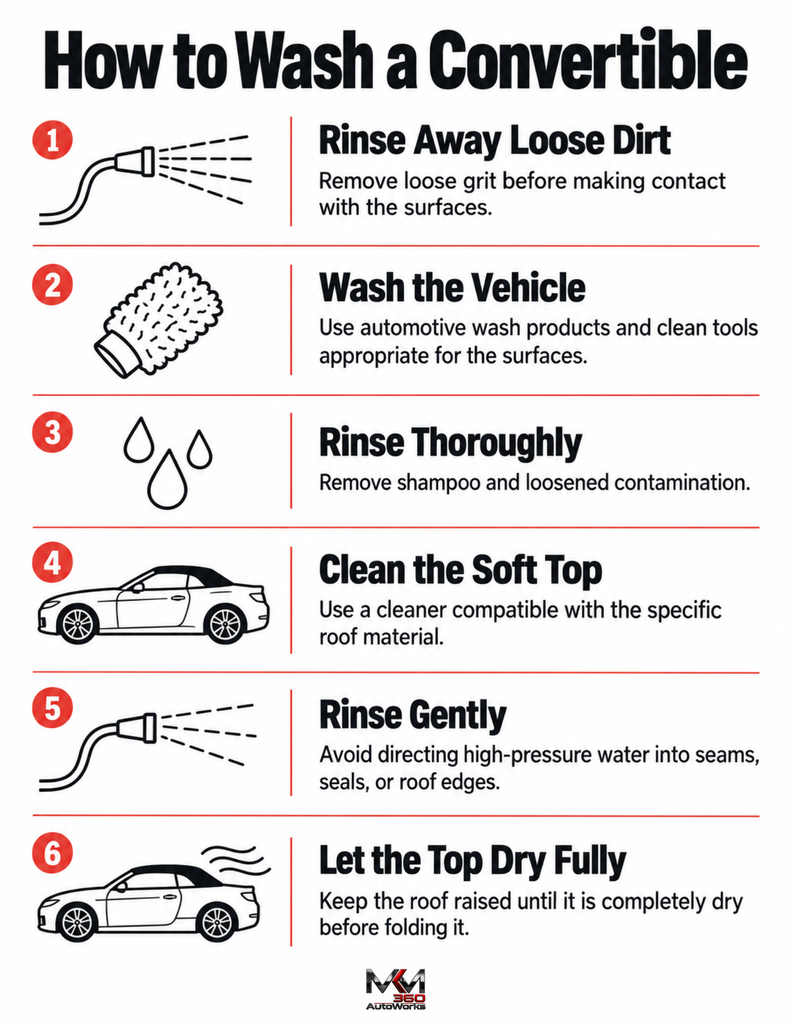
Washing a convertible requires a slightly different order than a standard car, especially when it has a fabric or vinyl soft top.
- Rinse the entire car – Remove loose dirt, dust, and grit before making contact with any surface.
- Wash the body from top to bottom – Clean the paint and glass as usual, leaving the wheels and tires until last.
- Dry the body completely – Use a clean microfiber towel to dry the paint before cleaning the roof.
- Clean the convertible top – Use a cleaner made specifically for fabric or vinyl, depending on your roof material. Work gently without aggressive scrubbing.
- Rinse the top thoroughly – Remove all cleaner residue and avoid directing high-pressure water at seams, seals, or edges.
- Let the roof dry completely – Once fully dry, apply a protectant suitable for the roof material if needed.
Keeping the body first and soft top last prevents dirty runoff from contaminating freshly cleaned paint.
Identify Your Soft Top Material First
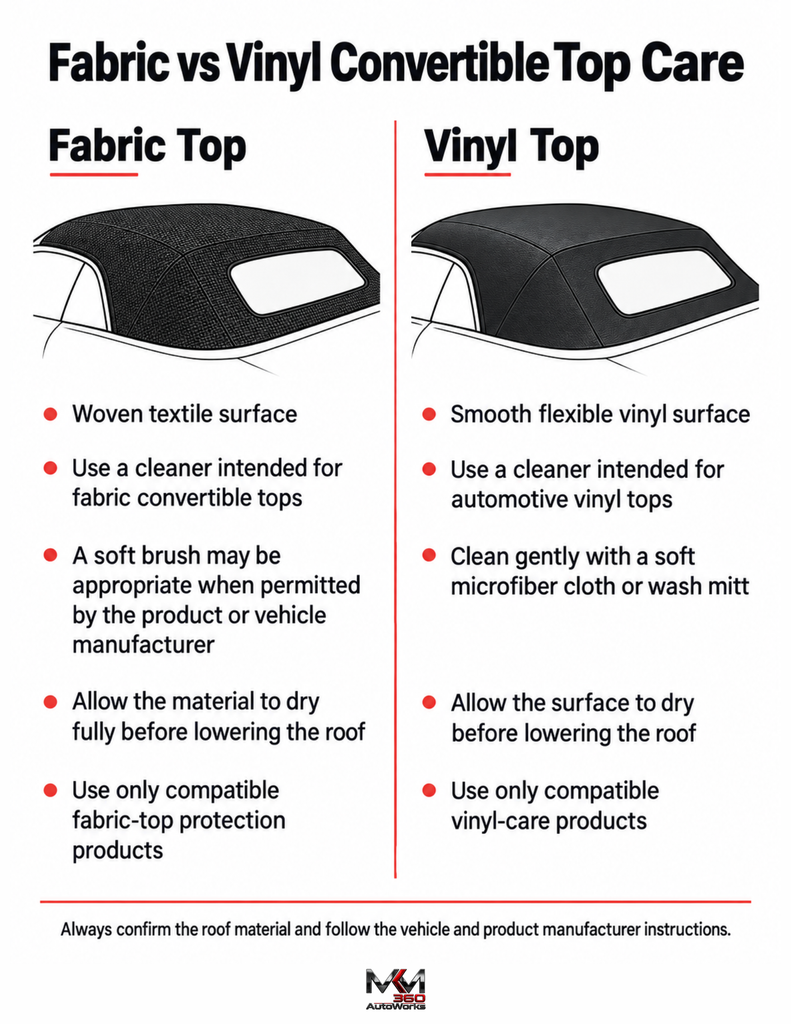
Before you reach for any cleaner, find out what your top is made of. Fabric and vinyl are cleaned with different products, and using the wrong one can strip protective coatings or leave permanent damage.
The test is simple: place a few drops of water on the top and rub it in lightly with a finger. If the water soaks into the material, it’s fabric. If it beads up and smears across the surface, it’s vinyl.
As a general trend, fabric and canvas tops have become more common on modern convertibles, particularly mid-range and premium models, while vinyl tends to show up more on older vehicles and lower-cost trims. It’s still worth checking your specific car rather than assuming.
Wash the Body, Wheels, and Glass Before the Top
Treat this stage like a normal car wash. Work in order: glass first, then body panels, then wheels and tires last, since that’s where the heaviest grime and brake dust live.
Use a pH-neutral car shampoo and a clean microfiber wash mitt; anything harsher can dull the clear coat and, more importantly for a convertible, risks contact with the top’s edges and seams. The two-bucket method (one bucket of soapy water, one for rinsing your mitt) keeps grit from getting dragged back across the paint on your next pass.
Once the body is rinsed and dried, you’re ready to start on the top, not before. Washing in the shade also helps keep the paint cool and prevents water and cleaning products from drying too quickly on the surface. For vehicles regularly parked outdoors, protecting car paint from prolonged sun exposure is another important part of preserving the finish between washes.
How to Wash a Soft Top Convertible
The cleaning method splits by material. Get this part wrong and you risk stripping the top’s water repellency or damaging the fabric itself.
Fabric tops
- Dilute the fabric-specific cleaner according to the product instructions.
- Apply the cleaner section by section to prevent it from drying on the surface.
- Gently clean the fabric with a soft-bristle brush using light, even strokes.
- Rinse from the top down to prevent dirty runoff from resettling on clean areas.
- Work in the shade to reduce the risk of streaks or cleaner residue.
Vinyl tops
- Use a cleaner specifically formulated for vinyl convertible tops.
- Clean the surface gently with a soft wash mitt to avoid scratching the vinyl.
- Work in the shade to prevent the cleaner from drying too quickly.
- Clean flexible vinyl rear windows separately with a dedicated microfiber cloth and mild soap.
- Avoid ammonia-based glass cleaners because they can damage flexible vinyl over time.
| Fabric Top | Vinyl Top | |
| Cleaner Type | Fabric-specific top cleaner | Vinyl-specific cleaner |
| Tool | Soft-bristle brush | Soft wash mitt |
| Sun Exposure During Wash | Shade only | Shade only |
| Drying Method | Blot with microfiber | Blot with microfiber |
| Protectant Type | Fabric protectant/proofer | Vinyl protectant |
What to Avoid When Washing a Soft Top Car
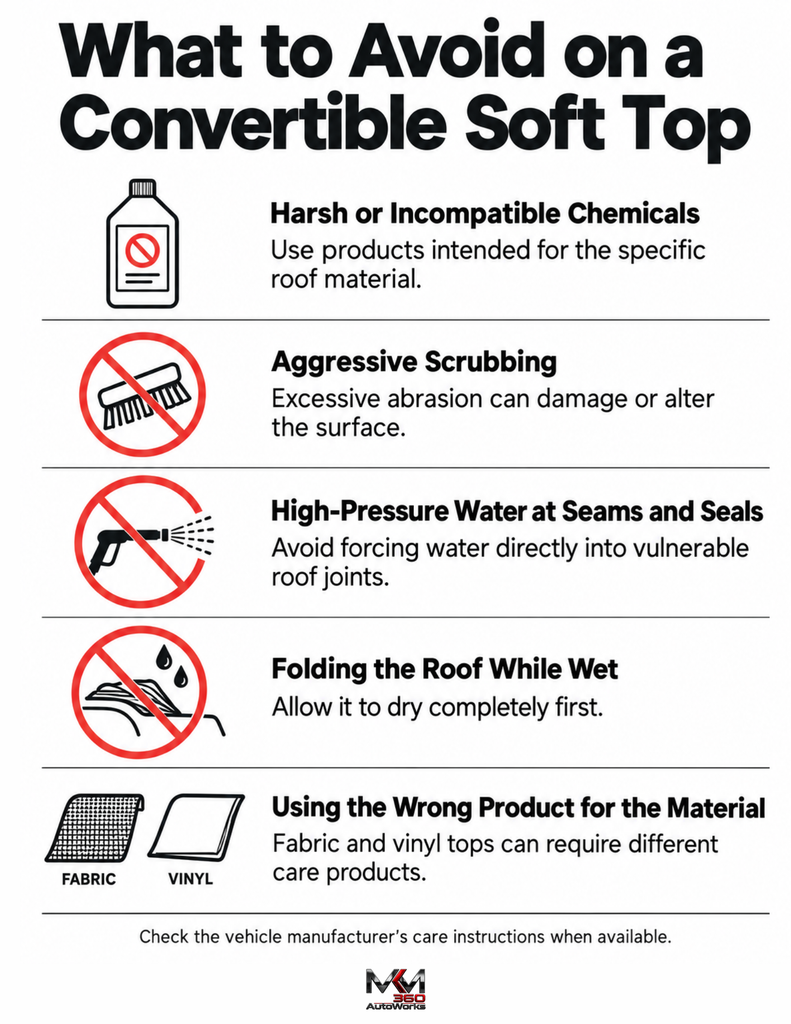
Avoid harsh chemicals such as ammonia, bleach, vinegar, and alcohol, as they can damage or discolor soft-top materials. Stiff brushes should also be avoided because aggressive scrubbing can wear or mark the surface.
Automatic car washes with spinning brushes are another poor choice, as the brushes can be too aggressive for a soft top. For the same reason, avoid directing a pressure washer at the roof, especially around seams, seals, and edges.
Also wash the soft top in the shade rather than direct sunlight. Heat can cause cleaning products to dry too quickly, making them harder to rinse away and increasing the chance of streaks or residue.
Drying and Protecting the Top
Blot the top dry with a microfiber towel. Don’t rub, which can push grit around and abrade the surface. Let it air-dry fully in the shade for 1-2 hours before folding it down. If moisture gets trapped in the roof folds or spreads into damp interior materials, it can lead to a persistent mold problem; preventing mold and mildew in your car starts with keeping vulnerable areas dry and addressing moisture promptly. Once odors settle into interior materials, removing stubborn odors from a car can require more than routine cleaning.
Once dry, apply a protectant matched to the material: a UV- and water-repellent formula for fabric or a vinyl-specific protectant for vinyl. Apply evenly in light coats rather than one heavy pass, and give it time to cure fully before the car sees rain or another wash.
Maintenance schedule by driving conditions
| Driving Condition | Wash Frequency | Protectant Frequency |
| Garage-kept, occasional driving | Every 4-6 weeks | 2-3 times per year |
| Daily driver, moderate climate | Every 2-3 weeks | Every 6-8 weeks |
| Parked outside, coastal or high-pollution area | Weekly to biweekly | Every 4-5 weeks |
Climate and exposure matter more than mileage here, and they also influence how often you should detail your car beyond routine soft-top washing. A garage-kept weekend car and a daily-driven coastal convertible are on completely different maintenance clocks.
Let a Professional Handle It
Detailers see the same DIY mistakes repeatedly: vinyl damaged by ammonia-based glass cleaner, uneven fading from spot-cleaning, and water intrusion after aggressive pressure washing. These problems usually build gradually through small mistakes made over time.
Knowing how to wash a convertible car correctly means identifying the roof material and using the right cleaner, tools, and technique every time. A professional car detailing removes that guesswork. If your soft top is already showing wear, or you would rather avoid damaging it, book a detail with us and we can handle the cleaning and reproofing properly.
Frequently Asked Questions
Can you wash a convertible top with regular car soap?
Not ideally. Standard car shampoo is formulated for painted surfaces and won’t clean or protect fabric or vinyl the way a dedicated top cleaner will, and it can leave the material without any water-repellent coating.
How often should you clean a soft top convertible?
It depends on how the car is driven and stored. Anywhere from every 4-6 weeks for a garage-kept car to weekly for one parked outside in a coastal or high-pollution area.
Does rain damage a convertible soft top?
Occasional rain on a properly proofed top isn’t a problem. The risk comes from folding the top down while it’s wet, or letting a poorly maintained top go without reproofing, which is when leaks and mildew start.
Can a convertible top be cleaned while it’s down?
No. Clean it while it’s up and fully extended, so you can reach the seams, edges, and full surface evenly.
How long does a convertible top take to fully air dry?
Typically 1-2 hours in the shade, depending on humidity and the material. Don’t fold it down until it’s completely dry to the touch.