A vinyl wrap can completely change a car’s appearance, but keeping that finish clean requires more attention than washing standard paint. Dirt, road grime, chemicals, and improper washing methods can all affect how the film looks and wears over time. Even routine cleaning can cause problems if the wrong products or techniques are used.
So, how can you wash a wrapped car without causing damage? The method matters. This guide covers safe hand washing, pressure washing, automatic car washes, drying, routine maintenance, and how different wrap finishes can change the way you care for the surface.
Can You Wash a Wrapped Car?
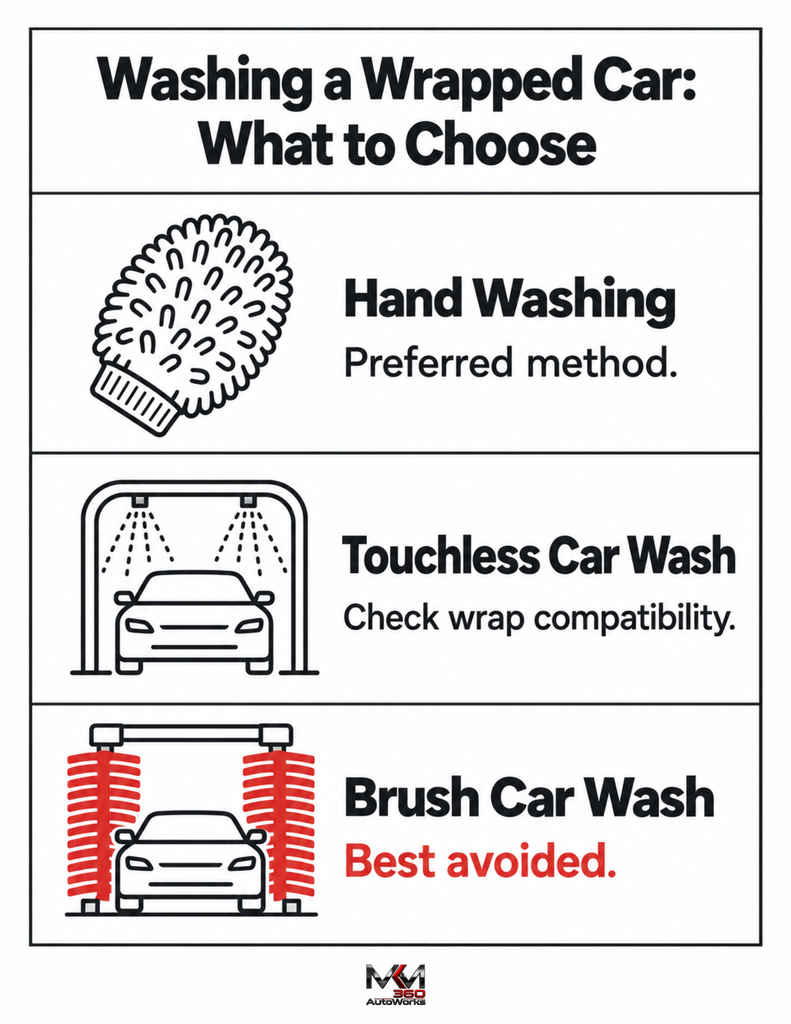
Yes, you can wash a wrapped car, but the cleaning method matters. Hand washing is generally the safest approach because it gives you more control over pressure, products, and contact with the vinyl.
Use mild car shampoo, soft wash tools, and clean water while avoiding harsh chemicals and aggressive scrubbing. Extra care around seams and edges can also help reduce the risk of lifting, peeling, or premature wear.
The same level of care matters when you take the vehicle somewhere for professional cleaning. Whether you choose car detailing or a car wash, make sure the provider knows how to work safely with vinyl-wrapped surfaces.
Is Washing a Wrapped Car Actually Safe for the Vinyl?
A professionally installed vinyl wrap can handle normal driving, weather, and routine cleaning, but it shouldn’t be treated like automotive clear coat. The film is thin and relies on adhesive, so harsh chemicals, abrasive tools, stiff brushes, and concentrated water pressure can damage the surface or lift exposed edges.
The safest approach is to rinse away loose grit before touching the wrap, then wash it with a mild, non-abrasive cleaner and a soft microfiber mitt or cloth. Washing out of direct sunlight also helps prevent soap and mineral-rich water from drying onto the surface.
Wrap durability depends on the film, installation quality, exposure, climate, vehicle orientation, and maintenance.
Matte and satin wraps vs. gloss wraps
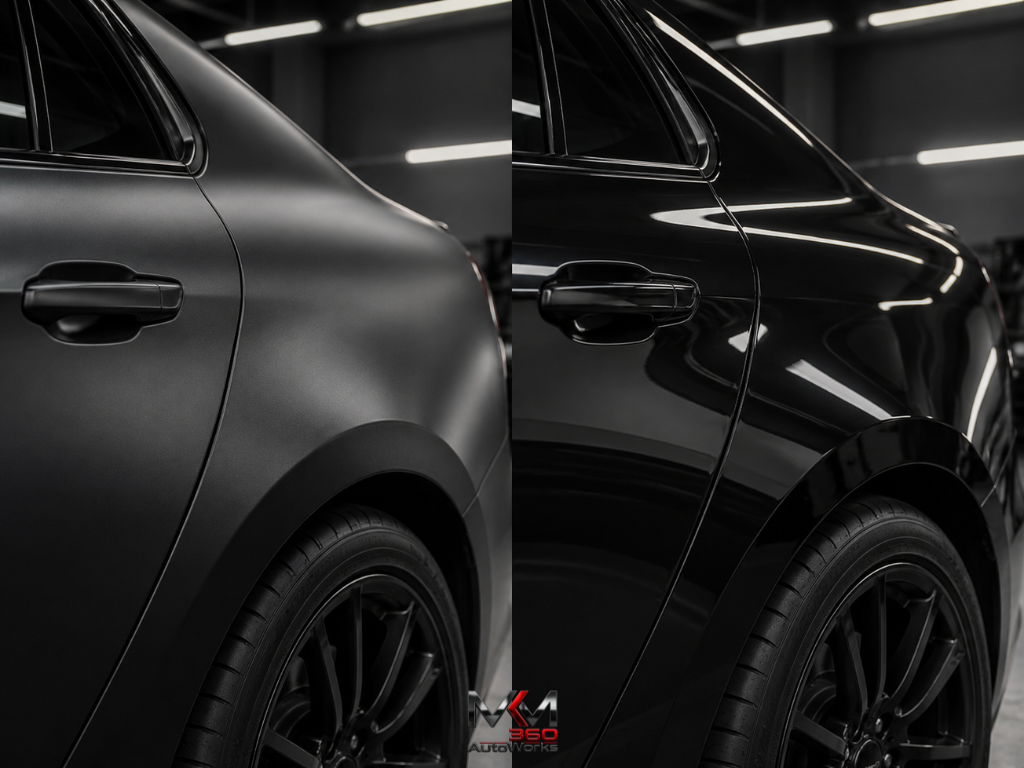
Matte and satin wraps need extra care because their appearance depends on an even surface texture. Abrasive polish, cutting compounds, waxes, and some protectants can create glossy or uneven areas that are difficult to correct.
Gloss wraps generally tolerate a wider range of compatible products, but manufacturer guidance should still come first.
Automatic Car Wash vs. Hand Washing a Wrapped Car
The difference comes down to control. Hand washing lets you control the chemical, contact pressure, water pressure, and treatment of vulnerable seams. An automatic wash gives up much of that control in exchange for speed.
| Factor | Hand Wash | Touchless Automatic | Brush Automatic |
| Wrap-Edge Control | Highest when done properly | Moderate | Lowest |
| Scratch Risk | Low with clean microfiber tools | Low from physical contact | Higher because brushes contact the film |
| Cost per Wash | Mainly supplies or detailing labor | Standard wash fee | Standard wash fee |
| Time Required | Longer | Short | Short |
| Recommended for Wrapped Cars | Preferred | Acceptable when appropriate | Best avoided |
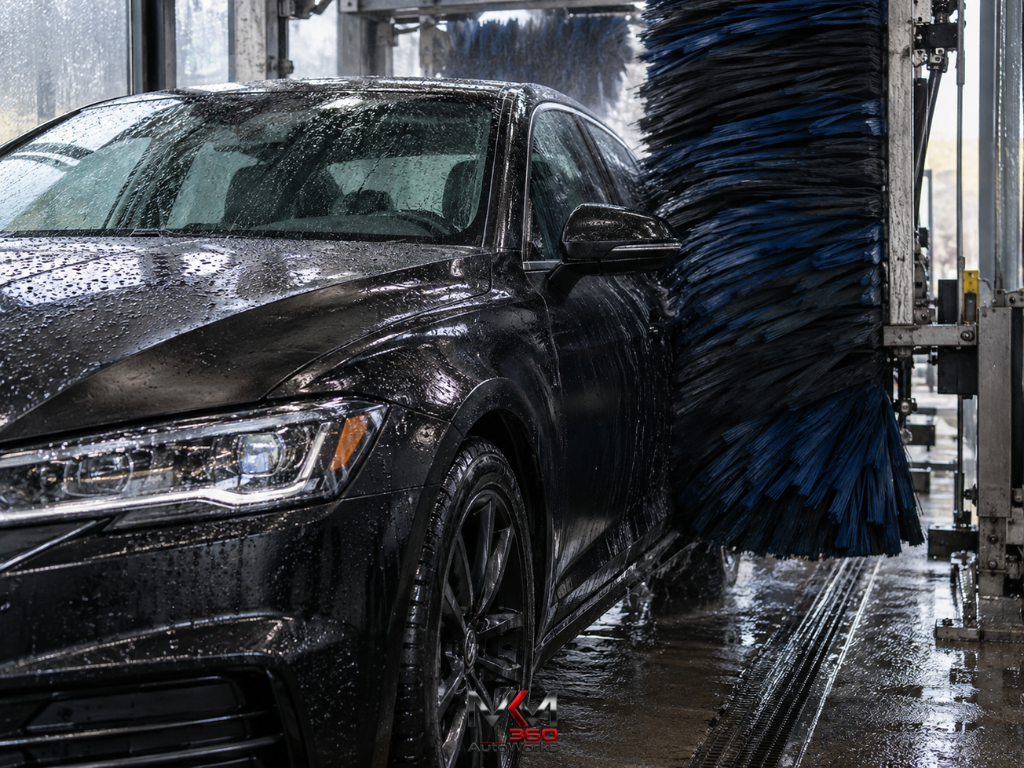
A brush wash is particularly risky once the wrap already has a loose edge. A rotating brush doesn’t need to remove the whole panel to create a problem; catching one vulnerable edge can worsen an existing lift.
Can You Pressure Wash a Wrapped Car?
Yes, but pressure washing gives you less room for error than a gentle hand wash.
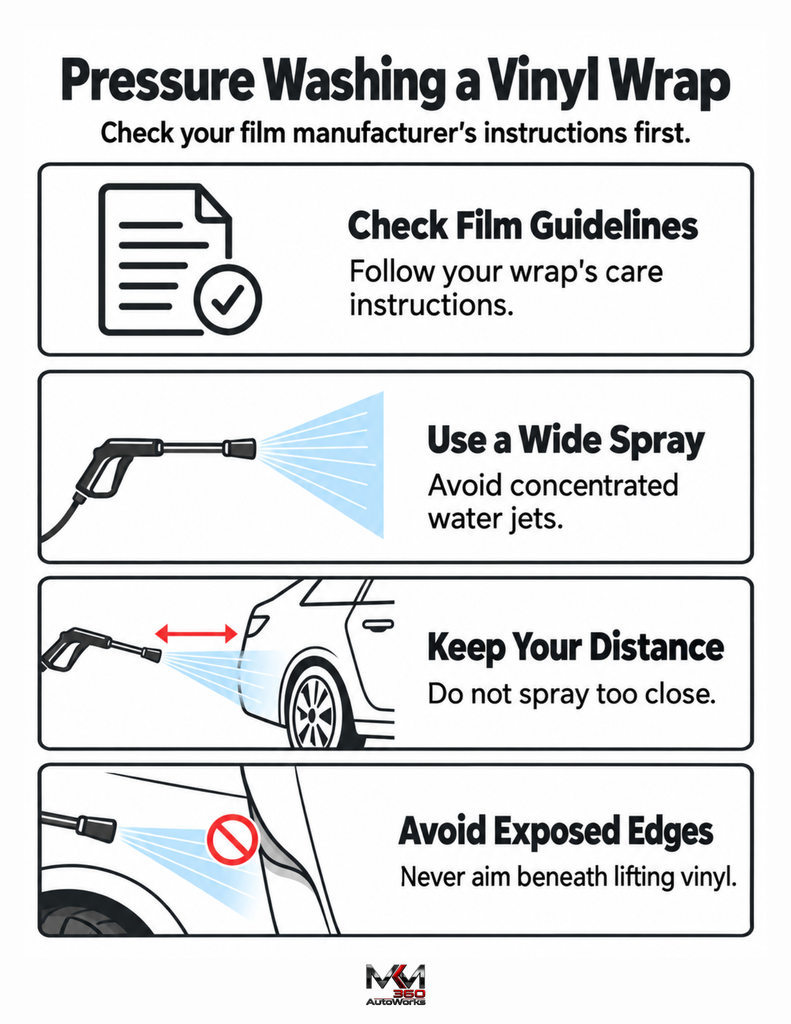
Rather than using an arbitrary pressure limit found online, start with the specifications from the manufacturer of your actual wrap film. For vehicle graphics, pressure washing may be appropriate when these conditions are followed:
- Keep pressure below 2,000 PSI (13.7 MPa)
- Keep water temperature below 180°F (82°C)
- Use a 40-degree wide-angle spray pattern
- Keep the nozzle at least 1 foot (304 mm) from the graphic
- Hold the spray at 90 degrees to the graphic rather than directing it underneath an edge
Nozzle position matters because concentrated water aimed at a seam or exposed edge can get under the vinyl and weaken the adhesive.
Pressure, distance, temperature, and angle limits vary by film manufacturer, so follow the specific care instructions for your wrap. Avoid directing the spray at door seams, panel gaps, bumpers, trim transitions, or any edge that is already lifting.
How to Wash a Wrapped Car by Hand
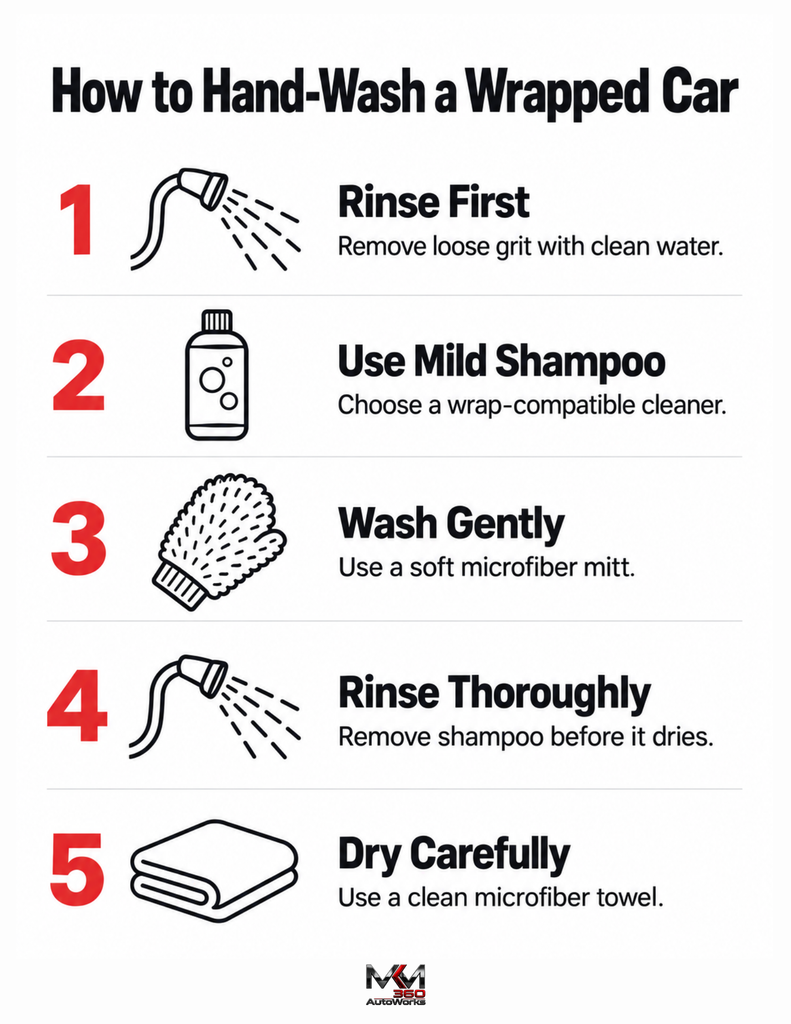
For routine care, hand washing gives you the best balance of cleaning power and control. To wash a wrapped car safely, park it in the shade and make sure the panels are cool so water and shampoo do not dry too quickly.
- Rinse loose contamination first
Use a gentle stream of clean water to remove dust, sand, grit, and loose road debris before anything touches the vinyl.
- Use a mild, wrap-appropriate shampoo
Choose a non-abrasive automotive cleaner without aggressive solvents or polishing compounds. If the wrap manufacturer specifies a particular product type, follow that recommendation.
- Wash with soft microfiber
Clean from the roof downward with a soft microfiber mitt or cloth. Rinse the mitt frequently so trapped grit is not dragged across another panel.
A two-bucket setup can help here: one bucket holds the wash solution, while the other is used to rinse contamination from the mitt.
- Rinse before soap dries
Do not leave detergent sitting on the film in direct sunlight. Rinse each section thoroughly with clean water.
- Dry the surface
Use a clean microfiber drying towel and light pressure. Drying promptly helps reduce mineral spotting.
How Often Should You Wash a Wrapped Car?
There is no single washing schedule that suits every wrapped vehicle. In practice, the car should be cleaned when dirt and contamination become noticeable, since residue can become harder to remove the longer it remains on the film.
For a regularly driven vehicle, washing about every two to three weeks can be a practical starting point. From there, adjust the frequency based on:
- How often the car is driven
- Whether it is parked indoors or outside
- Rain, snow, and winter road conditions
- Dust and pollen exposure
- Local road grime
That routine covers normal washing, while the right detailing frequency depends more on the vehicle’s condition and the level of care it needs.
Some contaminants shouldn’t wait for either schedule. Bird droppings, bug residue, tree sap, road salt, fuel, and similar materials are better removed as soon as practical rather than left on the wrap until the next full wash.
How to Maintain a Wrapped Car Between Washes
Washing technique is only one part of keeping a wrapped car in good condition. Remove contaminants before they harden. Soften difficult material such as tree sap with hot, soapy water for several minutes before rinsing, instead of attacking the area with aggressive scrubbing.
Parking conditions matter as well. Prolonged UV exposure and environmental contamination can affect vinyl over time, so indoor or shaded parking can help limit exposure when practical. These habits can also help with protecting your car paint from the sun, especially when the vehicle spends long periods outdoors.
Inspect the edges occasionally while drying the vehicle. Look around door handles, panel seams, bumpers, mirrors, wheel arches, and other areas where the film terminates. If an edge has started lifting, stop treating that area like intact vinyl. Aggressive washing can turn a small defect into a larger repair.
So, that’s the core of how to take care of a vinyl wrapped car: clean it gently, deal with contamination early, and notice small problems before they spread.
Should You Wash It Yourself or Let a Professional Do It?
DIY washing makes sense when the wrap is in good condition and you know what film is installed.
Professional care becomes more valuable when:
- The wrap is new, and you are unsure about its curing or care requirements
- You have a matte, satin, textured, or specialty finish
- The vehicle is high-value or part of a commercial fleet
- You notice lifting, bubbling, damaged seams, or stubborn contamination
- You do not know which chemicals are safe for the film
A knowledgeable detailer can inspect the surface first, choose suitable cleaning products, work carefully around seams, and identify early adhesion problems before aggressive washing makes them worse.
Another important difference between wrapped vinyl and clear-coated paint is that you cannot simply machine-polish every mistake away. A scratched, stretched, discolored, or lifted vinyl panel may require repair or replacement instead.
Frequently Asked Questions
Does washing a wrapped car void the wrap warranty?
Normal washing should not void a wrap warranty, but damage caused by improper care may not be covered. Warranty terms vary, so follow the maintenance instructions for your specific film and installer.
Can you use dish soap on a wrapped car?
Automotive shampoo is the safer choice. Dish soap is made for kitchen grease and may contain ingredients that are unnecessary for vinyl care. Use a mild, non-abrasive cleaner approved for vehicle wraps.
Will washing remove a car wrap?
Proper washing should not remove a correctly installed wrap. Problems are more likely when the film is already damaged or exposed to excessive pressure, harsh chemicals, abrasive tools, or aggressive brushes.
Does a wrapped car need to be washed differently in winter?
The method is mostly the same, but winter grime and road salt should be removed regularly. Rinse thoroughly, wash gently with wrap-safe products, and dry seams and edges well. For a newly installed wrap, follow the installer’s curing and washing instructions.