Every fleet manager knows the feeling. A truck rolls back into the yard caked in salt, mud, or brake dust, and washing it feels like one more task nobody has time for. That’s exactly where fleet washing earns its place. It’s not about vanity or a shiny paint job. It’s about protecting expensive assets, keeping drivers safe, and avoiding a bad moment at a roadside inspection.
So what is fleet washing and how does it fit into daily operations? This guide covers the full picture: what the service actually includes, how the process works step by step, and the compliance rules most businesses never think about until they’re fined. You’ll also learn which washing method fits your fleet best.
What Is Fleet Washing?
Fleet washing is the professional cleaning of a company’s entire group of vehicles, not just a single car. The term “fleet” covers a wide range of assets: box trucks, delivery vans, semi-trailers, buses, and construction or agricultural equipment all fall under it.
Fleet washing is generally narrower in scope than a full vehicle detail, which can involve more extensive interior cleaning, surface decontamination, and finish work.
What separates fleet washing from a standard car wash is scale and delivery. A drive-in bay is built for one vehicle at a time and light-duty grime. Fleet washing is built for dozens of vehicles at once, often delivered on-site at a depot or yard, using commercial-grade degreasers formulated for road film, brake dust, and grease that a consumer car wash simply isn’t equipped to break down.
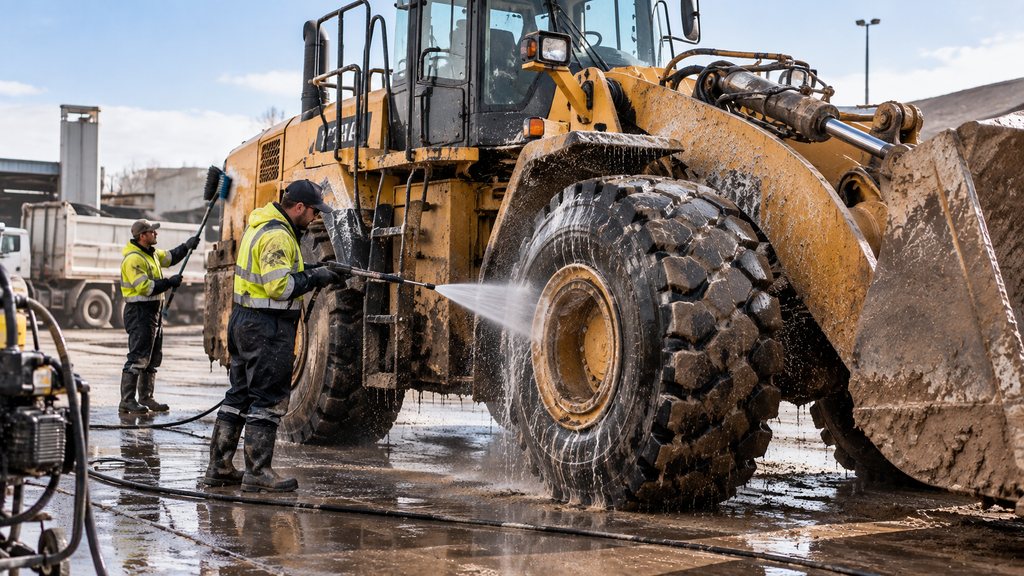
Wash timing should be based on vehicle condition and use, not just a fixed schedule. Common signs include:
- Visible dirt, salt film, or mud buildup on body panels and wheel wells
- Decals, company logos, or DOT numbers becoming difficult to read
- Grime on headlights, mirrors, or windshields affecting visibility
- Dirt buildup hiding damage, corrosion, or required exterior markings
- Heavy contamination after winter driving, construction work, or off-road use
How Fleet Washing Works
Professional fleet washing follows a consistent process, but the exact method depends on the vehicle type, condition, and level of buildup.
Inspection and wash planning
The process starts with a walkaround to identify heavy grease, rust-prone seams, delicate decals, and other areas that need extra attention. From there, the crew selects the wash method and cleaning products suited to the vehicle and its condition.
Pretreatment and washing
A traffic film remover or degreaser is applied first to loosen dirt and grime. The vehicle is then cleaned using hand brushing, foam, pressure washing, or a combination of methods, with extra attention to areas such as wheel wells, chassis sections, and cab backs.
Rinsing and final inspection
Soap and loosened debris are rinsed away before the vehicle is checked for missed areas. Lights, decals, and required markings should also be left clean and clearly visible.
The process changes with the vehicle. A commuter van with light road dust needs a different approach than a concrete mixer with heavy, hardened buildup, which may require stronger cleaning products and more agitation.
Wastewater Containment and Runoff Rules
Fleet wash water can carry oil, brake dust, heavy metals, detergents, and road chemicals. Because of that, it should not be allowed to flow freely into storm drains.
The EPA’s National Pollutant Discharge Elimination System (NPDES) program regulates stormwater discharges to help prevent pollutants from reaching surface waters. EPA guidance also identifies vehicle washing as a potential source of detergent, metal, and hydrocarbon runoff.
Professional fleet washing therefore requires a clear wastewater-control plan. Common methods include:
- Containment mats or berms to keep runoff within the wash area
- Vacuum recovery systems to collect wastewater during cleaning
- Filtration systems to remove solids and oils before approved disposal or discharge
A provider without a containment and recovery plan can create environmental and compliance risk for the site owner.
Methods of Fleet Washing
There are three common ways to wash a fleet, and the best fit depends on fleet size, vehicle type, and site access. In-house washing can work for very small fleets with light-duty vehicles, available staff, and a repeatable vehicle-cleaning checklist to keep results consistent.
For larger fleets, mobile on-site washing reduces downtime by cleaning vehicles where they are parked. A dedicated wash facility is better suited to fleets located near a fixed site or vehicles that need more intensive cleaning than a mobile setup can provide.
| Method | Best For | Equipment Needed | Typical Turnaround | Compliance Handling |
| In-house/DIY | Small fleets, light-duty vehicles | Hose, bucket, soap, brushes, optional pressure washer | Hours, spread across staff time | Falls on the business; often overlooked until an inspection or complaint |
| Mobile on-site service | Mid-size to large fleets, multi-site operations | Truck-mounted pressure washing rig, containment mats/vacuum recovery, degreasers | Same-day, scheduled around operating hours | Handled by the provider, including wastewater containment and disposal |
| Dedicated wash facility | Fleets based near a fixed site, heavy equipment or vehicles needing deep cleaning | Wash bays, reclamation/filtration systems, high-pressure or automated equipment | Fast per vehicle, but requires vehicles to travel to the site | Built into facility design (sanitary sewer connections, permits) |
Why Fleet Washing Matters
To understand what is fleet washing, it helps to look beyond appearance. A fleet is a moving advertisement, so dirty vehicles can undermine the professional image your branding is meant to create.
Beyond image, buildup causes real damage. Road salt, grease, and chemical residue left on a vehicle accelerate corrosion, particularly in wheel wells and undercarriage seams where they’re hardest to spot.
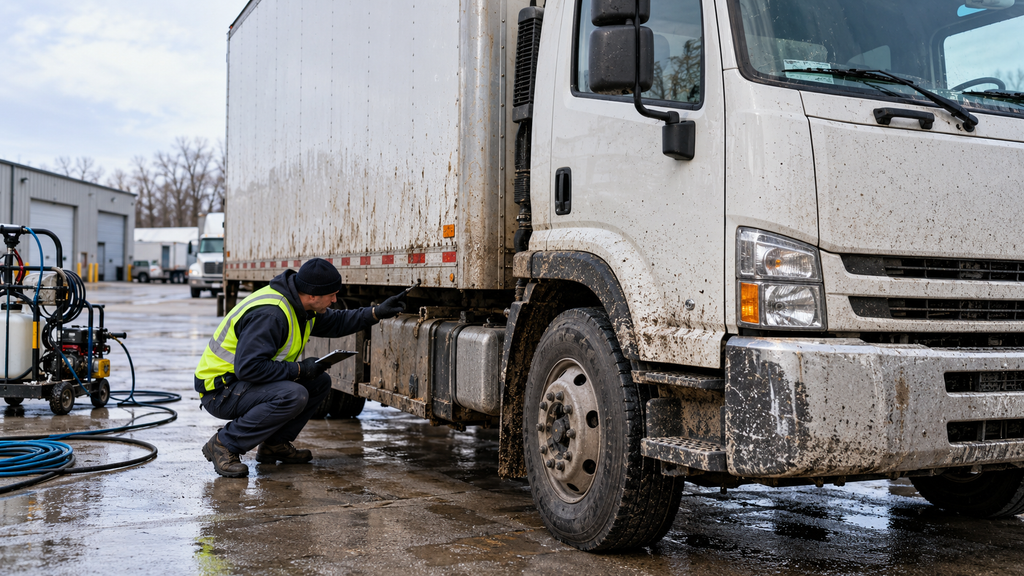
There’s also an inspection angle. Inoperative clearance markers, tail lights, and reflectors are often the gateway issue that triggers a deeper roadside inspection, and grime that obscures lights, reflectors, or required markings makes a routine check take longer.
In the 2025 CVSA International Roadcheck, inspectors examined 56,178 commercial vehicles and placed 22.6% out of service. This is a reminder that anything adding friction to an inspection, including a vehicle inspectors can’t read clearly, works against you.
Frequently Asked Questions
How often should a fleet be washed?
It depends on vehicle use and exposure. Heavy trucks running daily routes often need weekly washing, box trucks and vans typically do well bi-weekly to monthly, and construction equipment is usually washed after each job or exposure to heavy debris.
Can fleet washing be done in cold or freezing weather?
Yes, though it requires adjustments for warmer water temperatures, faster drying methods, and avoiding standing water on door seals and mirrors, which can freeze.
Is fleet washing a deductible business expense?
For most businesses, routine vehicle maintenance costs, including fleet washing, are deductible as an ordinary business expense. Confirm specifics with a tax professional, since treatment can vary by entity type and jurisdiction.
What certifications should a fleet washing provider carry?
Look for general liability insurance, proper wastewater handling credentials or permits where required, and, for providers working near waterways or municipal storm systems, documented compliance with local stormwater ordinances.
How long does it take to wash an entire fleet?
A mobile crew can typically wash 10-20 standard vehicles in a few hours, depending on vehicle size, dirt level, and site layout. Heavy equipment or vehicles needing interior cargo cleaning take longer per unit.