
Steam cleaning and shampooing can both refresh dirty car upholstery, but they work in different ways and suit different problems. One relies on heat and moisture to loosen grime, while the other uses a cleaning solution to lift dirt from the fabric before extraction. Because upholstery materials and stains vary, the better method depends on what you are actually trying to remove.
Choosing between steam cleaning vs shampoo for auto upholstery depends on the material, the type of contamination, and the condition of the seats. This article explains what each method does, which one fits different upholstery types, why professional cleaning often produces better results than DIY, and when combining both methods makes the most sense.
Steam Cleaning vs Shampoo for Auto Upholstery
Steam cleaning uses heated vapor to loosen surface grime and reach tight areas while using relatively little moisture. Shampooing works differently, applying a cleaning solution to the upholstery before agitation and extraction to lift embedded dirt, stains, and residue from the fabric.
When comparing steam cleaning vs shampooing car upholstery, neither method is automatically better for every job. Steam can work well for lighter cleaning and certain surfaces, while shampooing is often more suitable for heavily soiled fabric that needs deeper extraction. The right choice depends on the upholstery material, its condition, and the type of contamination being treated.
What Steam Cleaning Does to Auto Upholstery
Steam cleaning uses heated water vapor to loosen dirt, oils, and residue from upholstery fibers. Professional machines can produce very hot steam, but the main benefit is that they clean with far less moisture than traditional shampooing.
Because the fabric is not heavily saturated, drying times are usually shorter. Steam is especially useful when the goal is light cleaning, odor treatment, or refreshing upholstery without leaving detergent behind.
What steam cleaning does well:
- Loosens light dirt, oils, and surface residue
- Helps reduce bacteria, dust mites, and some mold spores through heat
- Can help address smoke and other stubborn interior odors
- Leaves no shampoo or detergent residue
- Uses less moisture, which can shorten drying time
- Works well for many fabric, microfiber, and vinyl surfaces when used correctly
Its main limitation is stain removal. Steam can soften dried or bonded residue, but it does not provide the same agitation and extraction as shampooing. Deep, oily, or heavily embedded stains often need a stronger cleaning process.
What Shampooing Does to Auto Upholstery
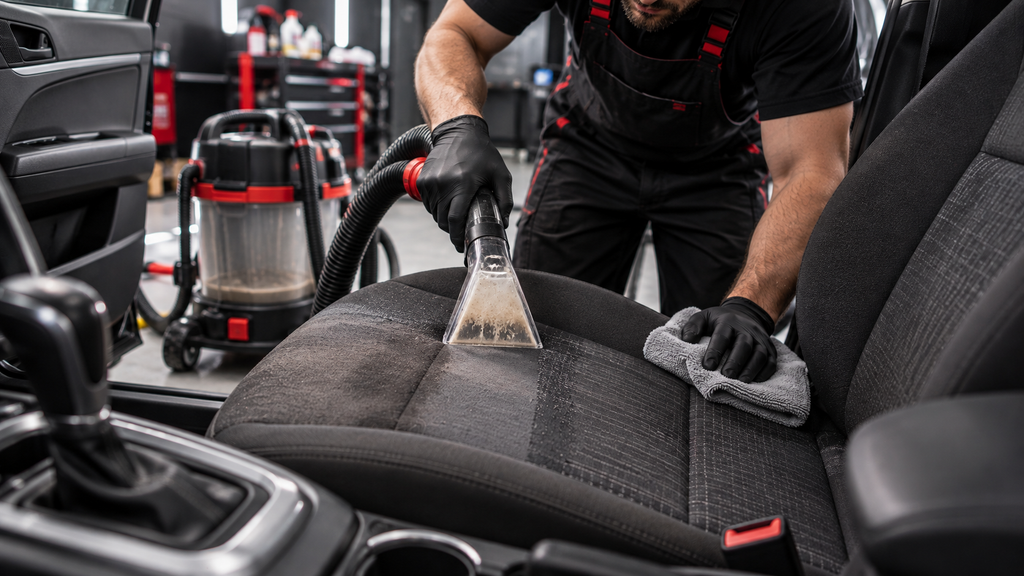
Shampooing, more precisely, hot water extraction, uses a cleaning solution with surfactants, applied to the fabric and worked in with a brush or rotary machine. Once the solution breaks down the contaminant, a wet vacuum extracts the liquid, dirt, and dissolved stain material.
This method is built for stains steam can’t touch: old coffee, pet accidents, blood, vomit, grease, and years of accumulated grime pressed into carpet fibers. The chemical agitation physically breaks the bond between the stain and the fabric, which heat alone often can’t do.
The tradeoff is drying time. Because the process introduces significantly more liquid into the fabric, upholstery can take six to 12 hours to fully dry; longer in humid climates or poorly ventilated vehicles. That’s also where equipment quality becomes critical: a consumer rental extractor pulls out only a fraction of the moisture a commercial-grade unit removes. Whatever moisture is left behind sits in the padding under the seat cover, which is exactly the environment mold and mildew need to take hold.
Which Method Fits Your Upholstery Type
Cloth and fabric seats
Both methods work on standard cloth upholstery. The best choice depends on how dirty the seats are and what you need to remove. Steam works well for light maintenance cleaning, odor refreshing, and reducing surface contaminants, while shampoo extraction is better for deeper stains from food, pets, and spills.
For fabric interiors with mixed conditions, you can use both methods together. Shampoo the visibly stained areas first, then use steam on the remaining upholstery where lighter cleaning is enough.
Leather seats
Neither raw steam nor raw shampoo is the right call on leather without a leather-specific product added to the process. High-heat steam applied directly can dry out and eventually crack the surface over repeated treatments. Standard shampoo solutions can strip the leather’s protective top coat, leaving it more vulnerable to future staining and fading. Leather needs a pH-balanced leather cleaner followed by a conditioning step; the way leather car seats are cleaned and conditioned is different from fabric upholstery, particularly when preserving the protective surface.
Vinyl, suede, and delicate materials
Vinyl tolerates light steam well for routine maintenance but doesn’t hold up as well to aggressive hot-water extraction, which can stress seams over time. Suede and Alcantara are the most delicate materials in a vehicle interior because high heat can affect the nap of the material, and standing moisture from shampooing can leave visible water marks that don’t fully disappear.
On any of these surfaces, a patch test on a hidden section (under the seat, inside a door pocket) before committing to either method is the safer move.
Why Drying Time Is the Real Tradeoff
Drying time isn’t just a matter of inconvenience; it’s the variable that determines whether a cleaning job holds up or causes new problems. Steam-cleaned upholstery is typically dry within one to three hours. Shampooed upholstery typically needs six to 12 hours, and that drying window can extend the total detailing timeline further in humid or coastal climates.
Incomplete drying is where most DIY interior cleaning jobs go wrong. Moisture trapped in the padding beneath the seat cover doesn’t just smell musty. It actively feeds mold and bacterial growth, which can undo the sanitizing benefit of the cleaning in the first place. This is why the method matters less than the equipment behind it: a shampoo job with strong commercial extraction can dry faster and cleaner than a steam job done with underpowered gear.
Why a Professional Gets Better Results Than DIY
The gap between consumer and professional equipment is the single biggest factor in outcome quality, and it shows up in two places.
Temperature
Consumer steam cleaners generally top out at 100-140°F. Professional units run at 200-250°F. That difference is the line between a surface refresh and actual sanitization. Lower temperatures loosen some dirt but don’t reliably kill bacteria and dust mites the way higher, sustained heat does.
Extraction power
Rental wet vacs usually leave more moisture behind than commercial extractors used by professional detailers. That extra moisture can contribute to slow drying, mildew, and lingering odors.
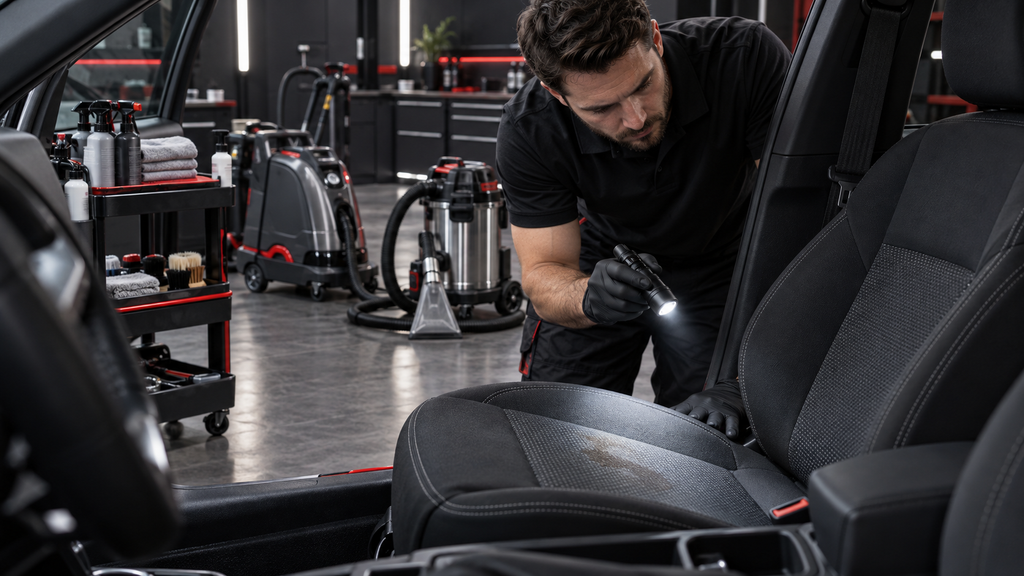
Professionals also assess the upholstery before choosing a method. Professional car detailing considers the fabric type, stain source, and how long the stain has been there, which helps avoid using steam or shampoo where another approach would be safer.
If stains keep returning, odors persist, or the upholstery has not been professionally cleaned in a long time, DIY cleaning may not be enough. A professional interior detailing service can match the cleaning method to the actual condition and material of the seats.
When to Combine Both Methods
The best answer to steam cleaning vs shampoo for auto upholstery is sometimes to use both. Heavily stained areas can be shampooed and extracted first, while lighter sections are treated with steam to loosen surface dirt and refresh the material.
This combined approach works well when different parts of the interior have different cleaning needs. Instead of using one method everywhere, each section gets the treatment that better matches its condition.
Frequently Asked Questions
Can steam cleaning remove old car seat stains?
Steam can lift many older stains, especially odor-causing ones, because the heat breaks down the bacteria and loosens surface bonding. But stains that have fully set into the fabric, like dried blood or old grease, typically need chemical pre-treatment and extraction to come out completely.
How often should car upholstery be professionally cleaned?
Every three to four months is a reasonable baseline for a typical daily driver. Vehicles with kids, pets, or frequent eating in the car benefit from cleaning every six to eight weeks to prevent stains from setting in.
Is it safe to shampoo car seats with pet odor?
Yes, and it’s often the more effective first step for embedded pet hair and accidents, since the agitation physically breaks up what’s bonded to the fibers. Following it with a steam pass helps address any remaining bacteria at the source.
Will steam cleaning damage vinyl or plastic trim?
Used correctly, no. Light steam is generally safe on vinyl and hard plastic trim. The risk comes from prolonged, high-heat exposure on the same spot, which is why professional application matters more than the method itself.
How much does professional auto upholstery cleaning cost?
Pricing depends on the number of seats, soil level, and which method (or combination) the job requires. Request a quote based on your specific vehicle and condition rather than relying on a flat estimate.