
A ceramic coating isn’t “set it and forget it”. The nano-ceramic layer bonded to your clear coat still needs a deliberate care routine to keep its hydrophobic behavior, gloss, and scratch resistance intact. Skip that routine and even a premium coating will look tired within a year. Follow it, and the same coating can outperform its rated lifespan.
This guide walks through exactly how to maintain ceramic coating, how to clean ceramic coating without stripping it, and how to take care of ceramic coating between full washes.
How to Maintain Ceramic Coating
- Wash on a regular schedule using the two-bucket method to safely remove dirt and grime.
- Use a pH-neutral, coating-safe shampoo without wax or gloss additives that can affect the coating’s performance.
- Dry immediately with clean microfiber towels or forced air to prevent water spots and mineral buildup.
- Use a maintenance spray or booster at recommended intervals to help restore hydrophobic performance.
- Remove contaminants promptly by cleaning bird droppings, tree sap, and bugs as soon as possible.
- Avoid automatic brush washes and waxes, which can introduce scratches or leave products that interfere with the coating.
How Often to Wash a Ceramic Coated Car
Wash your ceramic-coated car every 7–14 days in normal conditions, and closer to the seven-day mark if you’re driving through heavy pollen, road salt, or industrial dust. For deeper maintenance, occasional professional detailing can help address contamination and restore the finish. The reason for regular washing isn’t cosmetic; it’s chemical.
Contaminants like bird droppings, tree sap, and brake dust can be acidic or corrosive, and the longer they sit on the coating, the more time they have to damage the surface and potentially affect the clear coat underneath. A coating buys you a grace period; it doesn’t make you immune.
Use the two-bucket method for safer washing
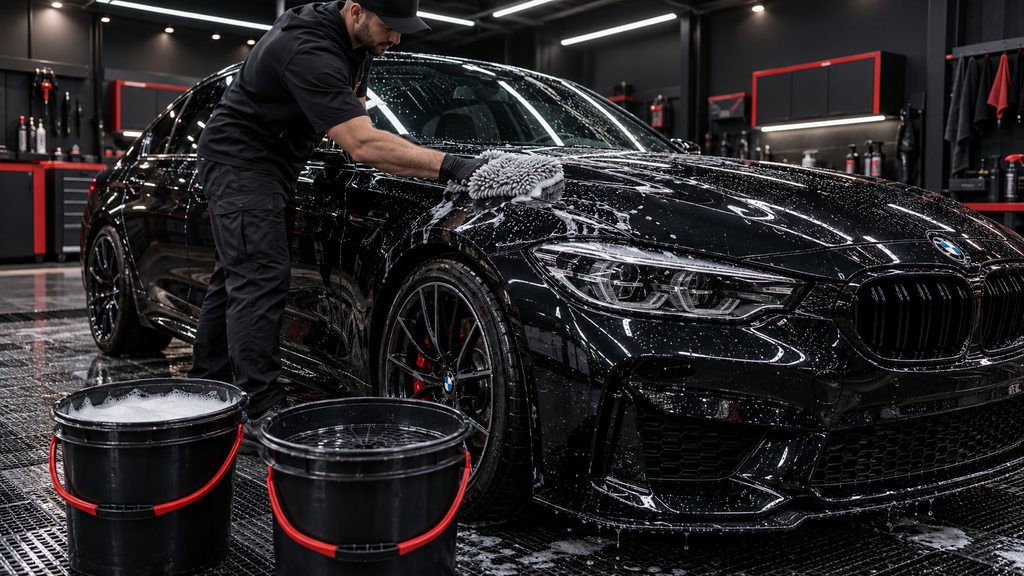
- Set up two buckets – Fill one with pH-neutral shampoo and the other with clean rinse water. Add a grit guard to each.
- Wash and rinse the mitt – Wash one panel, then rinse the mitt in the clean-water bucket before returning it to the shampoo. The grit guard keeps dirt at the bottom.
- Work from top to bottom – Start with cleaner areas such as the roof and hood, then move to dirtier areas like the lower doors and rocker panels.
For light dust, a quick rinse with a hose followed by a coating-safe spray detailer can work between full washes. Use a full shampoo wash when the car has visible grime, pollen, or heavier road dirt.
Stick to hand washing or touchless washes. Automatic brush washes can transfer grit from other vehicles onto your paint, increasing the risk of swirl marks and marring.
How to Clean Ceramic Coating the Right Way
Cleaning a ceramic-coated car isn’t about scrubbing harder. It’s about using the right products and technique to protect the coating and paint.
- Use a pH-neutral shampoo – Avoid acidic cleaners and strong alkaline degreasers on coated paint.
- Skip wax, sealants, and gloss additives – These can leave a film over the coating and affect its hydrophobic performance.
- Never use dish soap – It can strip protective oils and may reduce water-repellent performance with repeated use.
- Choose a high-pile microfiber wash mitt – Its deep fibers help lift dirt away from the surface instead of dragging it across the paint.
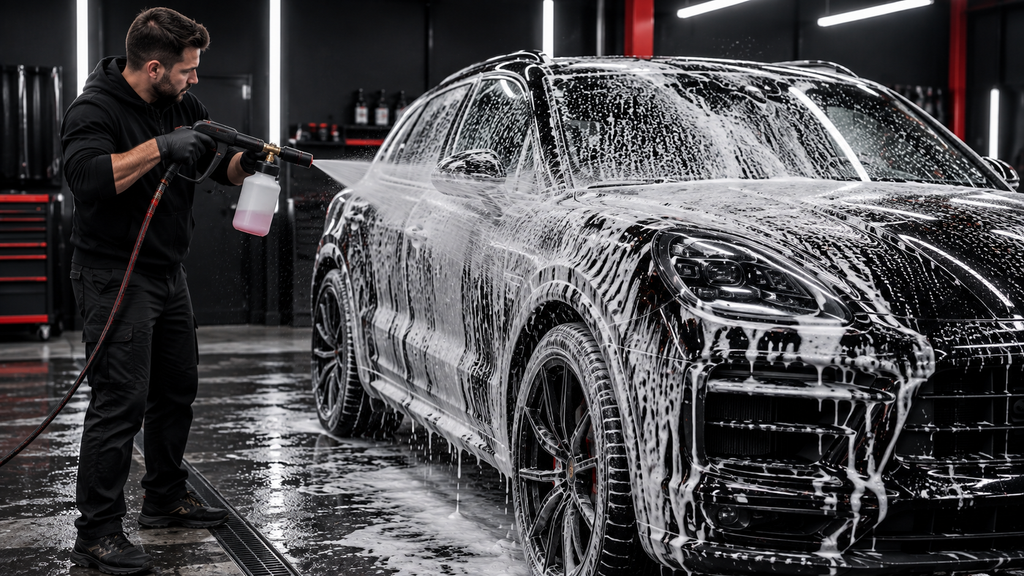
Before touching the car with a mitt, use a foam pre-wash with a coating-safe pre-wash soap. A full maintenance routine can also help keep each stage of the wash process consistent, from pre-washing and contact washing through drying. This loosens and lifts loose dirt, reducing the amount of grit that the contact wash has to remove and helping minimize marring.
Ceramic coating wash product comparison
| Product Type | Best Use Case | Frequency | Notes |
| pH-Neutral Shampoo | Full contact wash | Every 7-14 days | Base of any coating-safe wash routine |
| Silica-Infused Shampoo | Full wash with a light booster effect | Every 2-3 washes | Adds mild hydrophobic refresh while washing |
| Waterless Wash / Rinseless Wash | Light dust, no hose access | Between full washes | Use a plush mitt and generous product to avoid dry-wiping |
| Quick Detailer Spray | Fingerprints, light dust, spot touch-ups | As needed, between washes | Never use as a substitute for a full wash |
How to Dry a Ceramic Coated Car Without Water Spots
After rinsing, use a clean, high-quality microfiber drying towel to remove the remaining water. Blot rather than drag the towel across the paint, as unnecessary friction can increase the risk of fine marring. A highly absorbent towel also helps reduce the need for repeated passes or pressure.
For an even safer approach, use a leaf blower or dedicated car dryer to push water out of panel gaps, mirrors, badges, and other tight areas. This minimizes towel contact while removing trapped water that could drip onto the paint later.
Whichever method you choose, dry the car immediately after rinsing rather than letting it air-dry. As water evaporates, minerals can remain on the surface and create water spots. Whenever possible, wash and dry in the shade to slow evaporation and make spotting less likely.
How to Take Care of Ceramic Coating Between Washes
Ceramic coating makes routine maintenance easier, but a little care between washes still helps keep the finish clean and performing well. For light dust, fingerprints, or a quick refresh before heading out, keep a coating-safe quick detailer and clean microfiber towel on hand.
For bird droppings, tree sap, and bug splatter, spot-clean as soon as possible rather than leaving them until the next wash. Apply a dedicated coating-safe cleaner, let it dwell for a few seconds, then gently blot the area with a microfiber towel instead of rubbing it.
Don’t overlook brake dust, especially around the wheels and lower body panels. Use a soft wheel brush with a wheel-safe, non-acidic cleaner to remove buildup before it can spread onto nearby coated paint and become harder to clean.
Extending Ceramic Coating Lifespan
A ceramic coating can last for years when it’s properly maintained. Regular washing, prompt contaminant removal, and periodic maintenance products help preserve its hydrophobic performance and protect the coating from premature wear.
Maintain the coating regularly
Wash the car regularly with a pH-neutral, coating-safe shampoo and avoid harsh chemicals or automatic brush washes. Keeping dirt and contaminants from building up reduces unnecessary stress on the coating.
Remove contaminants promptly
Bird droppings, tree sap, bug splatter, and other contaminants should be removed as soon as possible. Use a coating-safe cleaner and a clean microfiber towel, gently blotting rather than rubbing to avoid unnecessary contact with the surface.
Use a ceramic coating booster
A booster or topper doesn’t add coating thickness or hardness. Instead, it refreshes the hydrophobic performance of the existing ceramic layer between full reapplications. Apply it every 4-8 weeks, depending on wash frequency and exposure, following the product’s application and curing instructions.
Choose the right maintenance product
A spray topper is applied to a clean, dry surface after washing and provides a more noticeable refresh. A ceramic-infused wash additive is mixed into the wash solution and provides a lighter, gradual boost. These products aren’t interchangeable, so use each according to its intended application.
Watch for signs of declining performance
Water behavior provides a simple way to monitor the coating. Tight, well-defined beads that sheet off quickly generally indicate strong hydrophobic performance. If water spreads flat and clings to the surface, the coating may benefit from a booster or further maintenance.
When DIY Maintenance Isn’t Enough
DIY maintenance has a ceiling. Wrong products, wrong technique, or a coating that’s simply past its refresh window can strip or dull it faster than normal wear ever would. A few concrete signals it’s time to hand it off:
- Water beading has gone flat despite staying consistent with booster applications.
- Visible swirl marks or dulling show up after a wash, even a careful one.
- The coating is due for its scheduled professional inspection or reapplication window; most coatings have a recommended check-in interval tied to the brand and application method used.
A professional maintenance wash uses coating-safe products and techniques matched to the specific coating brand applied to your car, which matters, since not every ceramic coating responds the same way to every product. If you’re seeing any of the signals above, it’s worth having it looked at rather than guessing.
Frequently Asked Questions
Can you use a pressure washer on a ceramic coated car?
Yes, at a safe distance (roughly 12+ inches) and moderate pressure. It’s actually useful for rinsing before contact washing. Avoid narrow, concentrated nozzle tips held close to trim, badges, or panel edges.
Do you still need to wax a car with ceramic coating?
No. Wax sits on top of the ceramic layer and can interfere with its bonded hydrophobic surface. Use a dedicated ceramic booster or topper instead; it’s designed to work with the coating rather than over it.
What’s the difference between a ceramic booster and a full reapplication?
A booster refreshes the surface chemistry of an existing coating and lasts weeks to a few months. A full reapplication is a new bonded layer, typically requiring paint decontamination and correction first, and is meant to last years.
Is it safe to use a clay bar on ceramic coating?
Yes, as long as you use a fine or ceramic-specific clay bar with plenty of lubricant and don’t clay more than a couple of times a year. Over-claying can gradually thin the coating.
How do you know a ceramic coating needs a maintenance wash versus a deep clean?
If water beading is still tight and the surface feels smooth, a standard maintenance wash is enough. If the surface feels gritty after washing, or beading looks flat even after a booster, that’s a sign contaminants have bonded to the surface and a deeper decontamination wash (clay or chemical) is due.