Every car owner researching paint protection eventually lands on the same fork in the road: PPF vs ceramic coating. Both terms get thrown around as if they’re interchangeable, and that’s where most people get stuck. They’re not competing products. They’re solving two different problems. Paint protection film stops things from hitting your paint. Ceramic coating stops things from bonding to it. Once that distinction clicks, the rest of the decision gets a lot easier.
This guide breaks down exactly what each product does, how they compare on durability, cost, and appearance, and, since it’s one of the most searched questions on the topic, whether you can ceramic coat PPF.
PPF vs Ceramic Coating
PPF (paint protection film) creates a physical barrier that protects your paint from rock chips, scratches, road debris, and minor abrasions, making it ideal for preventing physical damage. By contrast, ceramic coating bonds to the paint to provide excellent water repellency, UV and chemical protection, added gloss, and easier cleaning, but it does not offer the same level of impact protection as PPF.
| Factor | PPF | Ceramic Coating |
| Protection Type | Physical barrier | Chemical bond |
| Rock Chips / Road Debris | Yes; absorbs impact | No; too thin to stop impact |
| UV / Oxidation Resistance | Moderate (surface only) | Strong; core function of the coating |
| Chemical Resistance | Limited on its own; film can be porous | Strong; resists acid rain, sap, droppings |
| Hydrophobic Properties | Minimal unless coated on top | Strong; water beads and sheets off |
| Typical Lifespan | 5-10 years | 1-5 years |
| CoverageAarea | Usually partial (high-impact zones) or full body | Usually full exterior; can extend to wheels, glass, trim |
| Relative Cost | Higher, especially at full coverage | Lower, more accessible |
| Effect on Matte Finishes | Can add sheen unless matte-specific film used | Matte-safe products exist; standard ceramic adds gloss |
What Is Paint Protection Film (PPF)?
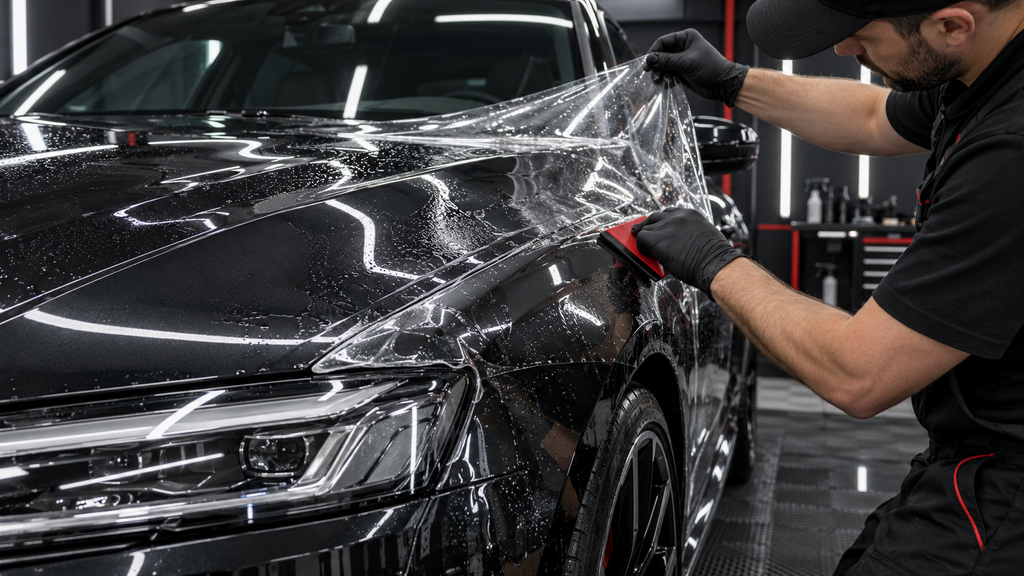
Paint protection film is a physical film, not a liquid and not a coating. It’s a clear (or matte) urethane film applied directly over factory paint, most commonly in the 150-200 micron range depending on the brand and product line. Because it’s a material layer rather than a chemical treatment, PPF works the same way a screen protector works on a phone: it takes the hit so the surface underneath doesn’t have to.
Most quality films include a self-healing top layer. Light scratches and fine swirl marks in that top layer soften and close up when exposed to heat, be it direct sun, warm water, or a heat gun. Deeper damage from a genuine impact stays contained in the film rather than reaching the clear coat, which means a damaged panel can be refilmed instead of repainted.
The key thing to remember heading into the rest of this comparison: PPF is a physical barrier. It doesn’t chemically interact with your paint at all. That’s the opposite of how ceramic coating works, and it’s the root of almost every difference between the two.
What Is Ceramic Coating?
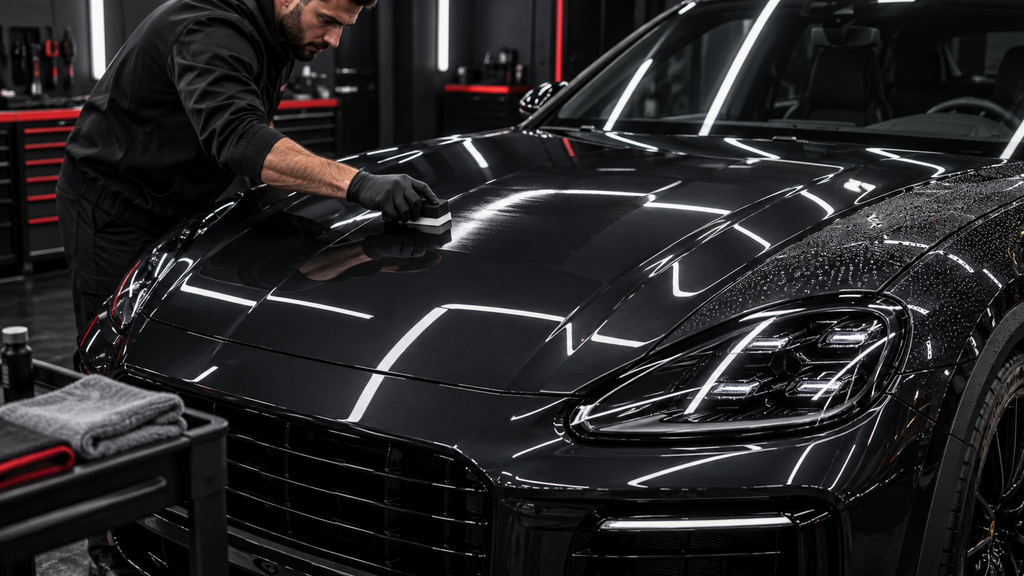
Ceramic coating is a liquid polymer, most commonly built around silicon dioxide (SiO2), that’s applied by hand and cures into a hard layer bonded to the clear coat. Unlike wax or paint sealant, which sit on top of the paint and break down within weeks to a few months, a ceramic coating forms an actual bond at the molecular level. That bond is what makes it semi-permanent rather than something you top up every wash.
Once cured, the coating fills the microscopic pores in your clear coat and creates a hydrophobic surface. In practical terms: water beads up tightly and rolls off instead of sheeting and sitting, taking loose dirt with it as it goes. That’s the whole reason coated cars are noticeably faster and easier to wash; contaminants have a much harder time gripping the surface in the first place.
It’s worth being precise about the category here, because a lot of buyers lump ceramic coating in with wax and sealant. It isn’t the same thing. Wax and sealant are surface-level products that wear off with washing and UV exposure. Ceramic coating chemically bonds and lasts years, not weeks.
PPF vs Ceramic Coating – Key Differences
The core distinction is simple once you strip away the marketing: PPF blocks physical impact. Ceramic coating resists chemical and environmental damage. Neither one does both jobs well, and that’s the single most important thing to understand before spending money on either.
Protection type
PPF absorbs physical impact, such as rock chips, road debris, and light abrasion from brushes or careless contact. Ceramic coating does none of that; a coating layer measured in microns simply isn’t thick enough to stop a stone traveling at highway speed. What it does resist is UV degradation, oxidation, bird droppings, tree sap, acid rain, and general environmental fallout. These cause slow chemical damage that dulls paint over the years rather than the sudden damage from one bad commute.
Durability and lifespan
PPF is built for the long haul. Quality installations commonly last five to 10 years, with lifespan depending heavily on film grade and installation quality. Poor installs, for example, edges not tucked properly, air bubbles, incorrect panel wrapping, shorten that significantly and can lead to lifting or yellowing well ahead of schedule.
Ceramic coatings have a longer lifespan, generally landing somewhere between one and five years depending on product tier and how well the car is maintained afterward. Harsh alkaline washes, abrasive compounds, and skipped maintenance all shorten that window. Both products are heavily installation-and-maintenance-dependent; treat any lifespan claim as a ceiling, not a guarantee.
Appearance and finish
Ceramic coating adds real optical value: deeper gloss, more color depth, and a wet-look finish that PPF simply doesn’t provide. It also preserves whatever finish is underneath, including matte paint, which matters because standard ceramic products can’t be swapped for matte-safe alternatives without checking compatibility first.
PPF is designed to be invisible when done right, but it isn’t optically neutral in every case. On matte finishes, clear film can add unwanted sheen unless a matte-specific film is used. And on any finish, a poor install shows; panel edges, especially where the bumper meets the fender, are the classic giveaway of a rushed job.
Can You Ceramic Coat PPF?
Yes, and it’s now considered standard practice rather than an upsell. PPF on its own isn’t hydrophobic, and its surface can be porous enough that contaminants grip and stain the film if it’s left untreated. Applying a ceramic coating over the film gives it the same water-beading, easy-clean behavior as coated paint, adds a layer of UV protection for the film itself, and generally makes the film easier to keep looking new.
Installation order matters here: PPF always goes on first, and ceramic coating goes on after. Coating the paint before film installation would interfere with adhesion and give installers a slicker, less workable surface to fit film against. Once the film is installed, it typically needs a short settling period before a coating is applied on top. Your installer will confirm the exact window based on the film and coating products used.
Cost Comparison
PPF costs more than ceramic coating, especially for full-vehicle coverage, because the film itself is expensive and installation requires precise cutting and fitting. Full coverage also takes significantly longer to install than a partial front-end package, adding to labor costs.
Ceramic coating costs vary by product tier, vehicle size, and the prep work required. Vehicles with swirl marks, old wax, or contamination may need paint correction and decontamination before coating, increasing the total cost.
Getting both is the most expensive option upfront but is common for high-value, collector, and long-term-ownership vehicles because the combination provides layered protection and can help reduce future paint correction. If your budget doesn’t allow for both, ceramic coating can be applied first and PPF added later without redoing the coating work.
Which One Should You Choose?
There’s no universal winner here. The right call depends on how and where you drive, and what you’re trying to protect against. That’s exactly the kind of decision our team walks customers through every day, and we install whichever option, or combination, actually fits your vehicle.
- Frequent highway driving or gravel roads – We recommend PPF, installed on high-impact zones (front bumper, hood, mirrors, rocker panels) or as full coverage depending on your budget and how long you plan to keep the car.
- Daily commuting, want easier washing and more gloss – We recommend ceramic coating and can typically apply it in a single visit.
- High-value, collector, or long-term-owned vehicle – We install both, in the correct order, for full physical and chemical protection.
- Budget-limited but want protection now – We start with ceramic coating and add PPF later without redoing any existing work.
If you’re not sure which category your car and driving habits fall into, that’s a normal starting point, not a problem you need to solve before reaching out. Book a consultation with our team, and we’ll assess your vehicle in person, walk you through realistic options for your budget, and quote exactly what makes sense.
Frequently Asked Questions
Do I need to wash my car differently after PPF or ceramic coating?
Yes, to a degree. Both benefit from pH-balanced shampoos rather than harsh degreasers or alkaline cleaners, which can degrade a coating faster than normal wear and dull a film’s finish over time. The two-bucket method and a clean microfiber wash mitt remain the safest approach either way.
Will PPF or ceramic coating void my warranty?
Neither product affects a manufacturer’s paint or vehicle warranty when installed correctly, since both sit on top of factory paint rather than altering it. Ask your installer for documentation of the products and process used, in case you ever need to reference it.
Can these be applied over existing paint damage?
Both products seal in whatever condition the paint is in underneath. They don’t fix swirl marks, scratches, or oxidation. Any correction work should happen before installation, not after, since ceramic coating in particular tends to magnify existing defects rather than hide them.
How soon after buying a car should I get this done?
As early as possible. New paint is fully exposed to UV, water spotting, and airborne contamination from the first drive, so protecting it early locks in the best possible starting condition rather than trying to correct damage later.
Can PPF or ceramic coating be removed later?
PPF is fully reversible when properly installed and removed. It peels away cleanly, leaving the original paint underneath intact. Ceramic coating isn’t peelable. It bonds to the clear coat and gradually wears away over its lifespan rather than being stripped off in one step.