Professional vehicle care preserves your car’s clean look and its resale value. Standard drive-through car washes only remove surface dirt, but a professional detail provides deep cleaning and long-term protection. This thorough process takes extra time to make every part of your car look like new.
Because of this extra care, you need to know how long does car detailing take before booking a service. The total time depends heavily on your car’s size, how dirty it is, and the exact cleaning package you choose. This article explains the exact time needed for different jobs, how to prepare your car, and the main reasons why some cleanings take longer.
How Long Does Car Detailing Take?
A professional car detailing service generally takes between two and eight hours, depending on your vehicle’s size, condition, and chosen package. A basic wash and vacuum can wrap up in just one to two hours, while a full deep clean with carpet shampooing and exterior polishing typically requires three to five hours. Premium packages that include specialized treatments like paint correction or ceramic coating can extend the job to six or even 10+ hours.
Car Detailing Time Breakdown
If you’re wondering how long does auto detailing take for each specific service, here’s a general guide to typical timeframes. Actual time can vary based on your vehicle’s size and condition.
| Service | Typical Time |
| Basic exterior detail | 1-2.5 hours |
| Interior detailing | 2-4 hours |
| Full car detailing | 4-8 hours |
| Headlight restoration | 30-90 minutes |
| Paint correction | 4-12+ hours |
| Ceramic coating | 1-2 days |
| Mobile detailing | Similar service time, less travel time |
Paint correction and ceramic coating take the longest because they involve multiple prep and application steps. Mobile detailing takes about the same time as an in-shop visit, just without the drive.
How Long Does a Full Car Detail Take?
A full detail typically takes four to eight hours, with larger or heavily soiled vehicles requiring more time. This timeline breaks down into a 45-60-minute wheel-and-tire pre-rinse, a 60-90-minute interior vacuum and shampoo, a 90-120-minute exterior wash and clay-bar treatment, a 45-90-minute polish or wax, and a final 30-minute inspection.
Larger vehicles like SUVs, trucks, and vans take longer due to their extra surface area. Heavy wear, such as pet hair, stains, smoke odors, road grime, and brake dust, also adds significant cleaning time.
Paint condition further affects the schedule. Clearing up contamination, swirl marks, or oxidation requires extra work. Premium add-ons like ceramic coatings or paint corrections can even push the job into a second day.
Paint correction takes time because it requires testing a small spot, performing one to three polishing passes, and checking paint thickness to protect the clear coat. Skipping these careful steps to rush the job will damage the paint rather than fix it.
Why Some Details Take Longer
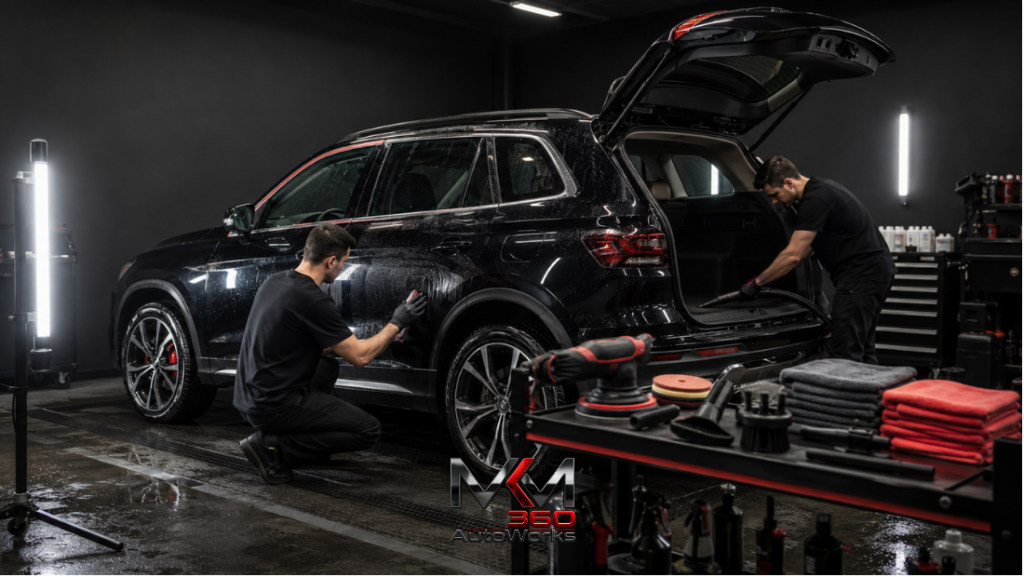
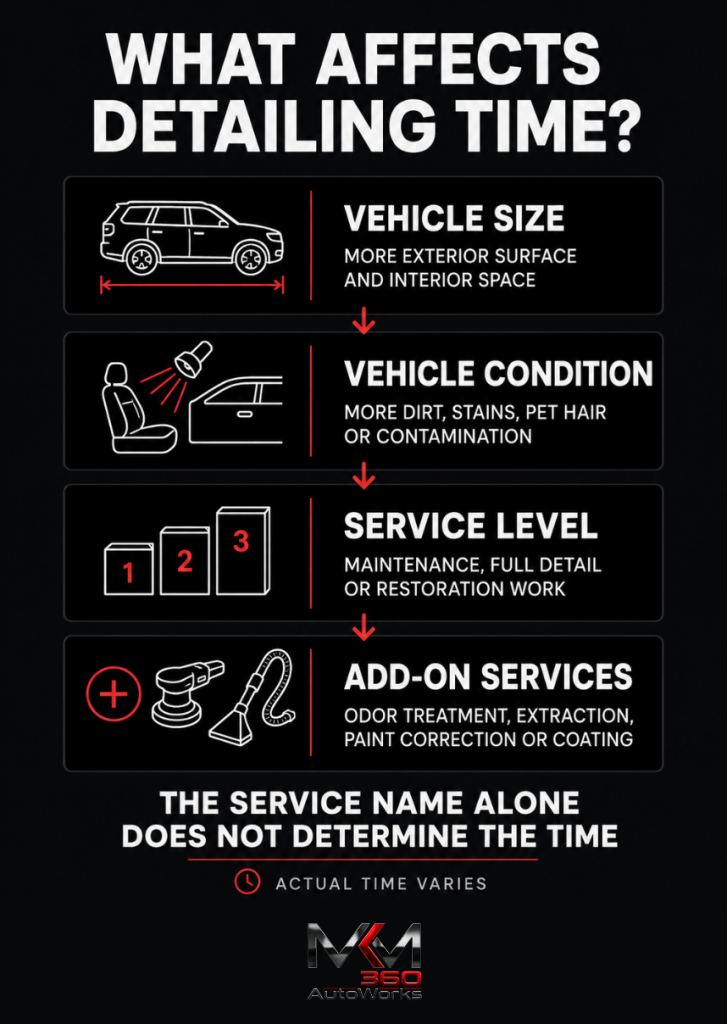
Knowing what affects detailing time helps set realistic expectations before booking. A well-maintained sedan and a neglected work truck will rarely take the same amount of time, even when they receive the same service.
The main factors that influence the time required include:
- Vehicle size – Larger vehicles have more exterior surface area and interior space to clean.
- Vehicle condition – Heavy dirt, stains, pet hair, or neglect require additional cleaning and restoration work.
- Service level – Basic maintenance details take less time than full details or restoration packages.
- Add-ons – Services such as odor removal, stain extraction, headlight restoration, paint correction, and ceramic coating add extra time.
Is Faster Car Detailing Better?
Not always. A faster detail can mean a rushed job, and rushed jobs cut corners.
Vents, cup holders, and seat seams collect dust and grime that a quick pass often skips. The same goes for carpets, wheels, trim, and glass edges. Paint contamination needs time to address properly, not a fast wipe-down.
One way to check is to run a finger along the interior air vents and door seam trim after pickup. Dust or grime there almost always means the detail was rushed, since these are the first areas skipped under time pressure.
A detail done right takes as long as it needs to take. Speed matters less than whether the job actually gets done.
How to Prepare Your Car Before Detailing
Pre-appointment preparation helps you get a clearer estimate of how long does car detailing take while allowing the technician to work much faster.
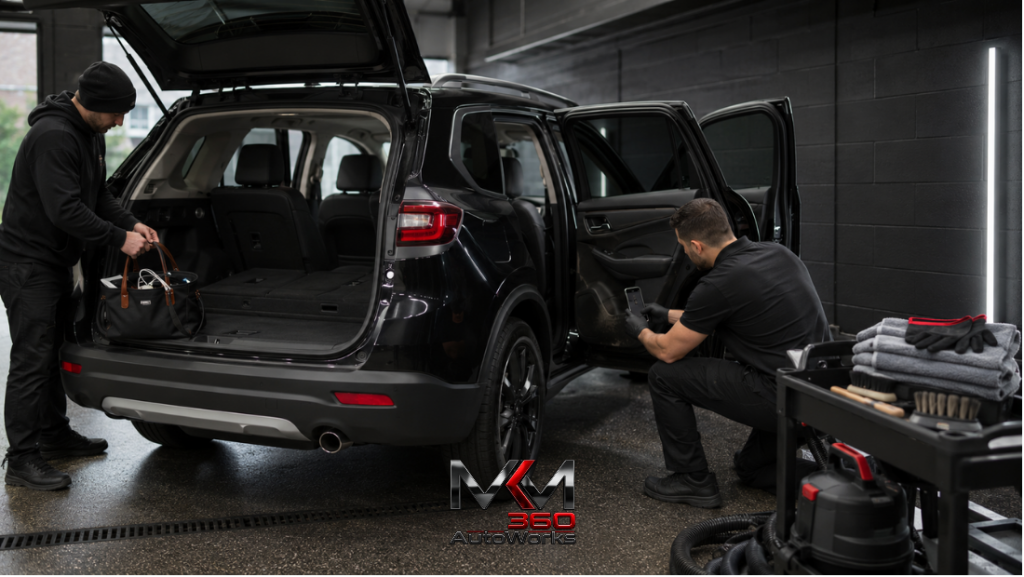
Removing personal items and clearing the trunk beforehand typically shaves 15-20 minutes off the interior prep stage, time that can be spent on the actual cleaning. Empty the trunk if needed and take out child seats if you can. Let the detailer know about stains, odors, pet hair, or any problem areas ahead of time.
Sending photos when you request a quote also helps. It gives the detailer a clearer picture of the work involved, which means a more accurate timeline from the start.
How MKM360 AutoWorks Estimates Detailing Time
MKM360 AutoWorks determines detailing times based on a vehicle’s size and current condition. There’s no flat number that applies to every car.
A sedan with light dust and a quick wipe-down might sit in the bay for three hours. A family SUV with pet hair worked into the carpet, stained seats, and heavy exterior buildup can run closer to five, sometimes longer if the paint needs correcting first. The work decides the timeline, not the clock.
Drivers can request a quote and share vehicle details or photos before booking. That gives MKM360 AutoWorks a clearer picture upfront, and you a more accurate estimate.
Conclusion
The time required for car detailing depends on the service, the vehicle’s condition, and the level of care needed. A basic detail may take a few hours, while deep cleaning, paint correction, or ceramic coating can take a full day or longer.
Understanding how long does car detailing take depends on matching the service to your vehicle’s needs. Discussing the car’s condition with a professional helps set realistic expectations and ensures the best results without rushing the process.