Achieving a flawless, mirror-like finish requires careful attention to how you handle your vehicle’s surface. Circular imperfections and microscopic scratches often dull the clear coat under direct sunlight. While many drivers assume these blemishes are inevitable signs of aging, they actually stem from specific environmental factors and mechanical contact.
Improper drying, automated car washes, stiff towels, and blowing debris all contribute to this cumulative damage over time. Protecting your vehicle’s finish requires identifying these hidden culprits before attempting any paint correction. Below is exactly what causes swirl marks on car paint.
What Are Swirl Marks?
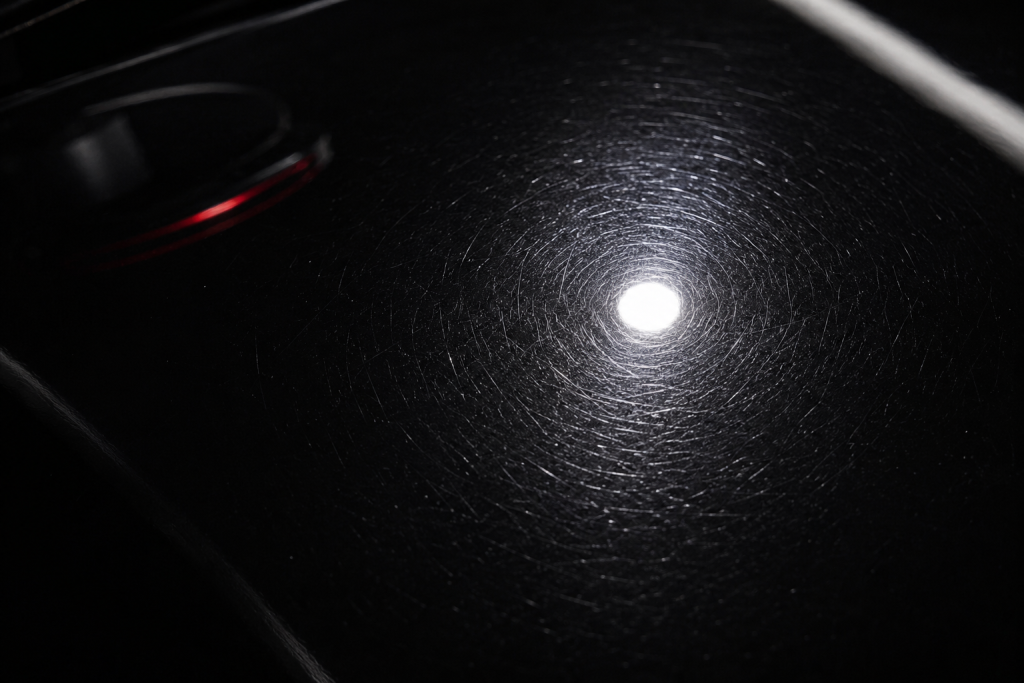
Swirl marks are fine, circular scratches in the clear coat, the transparent top layer protecting your vehicle’s paint. They are usually too shallow to catch a fingernail, making them invisible under flat lighting.
You will spot them most clearly under:
- Direct sunlight
- Detail shop lighting
- Gas station canopy lights
These blemishes are cosmetic surface defects that scatter light rather than reflect it cleanly, making the paint look hazy and dull. Dark-colored vehicles show this effect the worst because they lack a light base tone to hide the scattered light.
What Causes Swirl Marks on Car Paint?
Swirl marks build up through repeated, small acts of friction. The most common causes include:
- Washing with dirty or gritty mitts and sponges
- Automatic brush car washes
- Drying with rough, dirty, or low-quality towels
- Wiping dust off dry paint
- Using a quick detail spray on a dirty surface
- Applying or removing wax with heavy pressure
- Dirty or improperly stored car covers
- Poor machine polishing technique
- Harsh compounds or the wrong pad/product combination
- Fast, careless dealership or lot washing
Individually, these actions seem harmless, but over months and years, the scratches stack into a hazy finish that ruins the clear coat.
Do Automatic Car Washes Cause Swirl Marks?
Yes, brush-style automatic washes are a leading cause of swirl marks. The spinning brushes contact hundreds of vehicles weekly, collecting road grit, brake dust, and sand from every car ahead of you. Because these materials are not fully rinsed away between cycles, the machinery essentially drags sandpaper across your clear coat.
Touchless, chemical-only washes are much safer because nothing physically contacts the panels, though they may leave heavy grime behind. Repeated use of brush tunnels will rapidly dull your finish, often showing visible swirl marks on dark paint within a few months.
How Drying Causes Swirl Marks
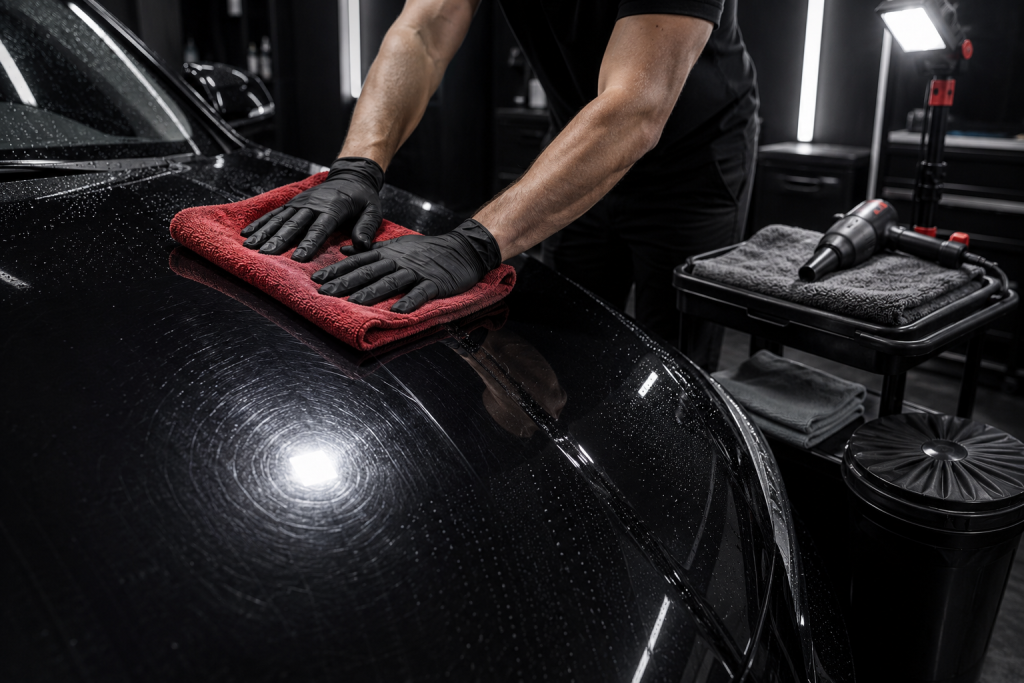
Washing gets the attention, but improper drying is just as responsible for creating swirl marks. If a car isn’t rinsed completely, towels drag leftover dirt across the paint. Using rough bath towels, stiff old microfibers, or dirty chamois worsens this damage by grinding contaminants directly into the clear coat.
Pressure matters just as much as the tool. Dragging a towel forcefully, rather than blotting or gliding it lightly, instantly scratches the surface. To eliminate this risk, forced-air blowers offer the safest alternative by removing water without ever touching the paint.
Why Wiping Dust Off Paint Is a Problem
Quickly wiping dust off dry paint feels harmless, but it isn’t. At a microscopic level, dust is highly abrasive. Wiping it down with a towel, car duster, or even a “safe” microfiber cloth simply drags those sharp particles across the surface, creating fine scratches and swirl marks.
Quick detailer sprays aren’t a shortcut to skip washing. They are designed as a finishing step for clean paint, not as a cleaner for a dusty car. Spraying and wiping a dirty surface is one of the most common and easily avoidable detailing mistakes.
Can Waxing or Polishing Cause Swirl Marks?
Yes. Waxing and polishing can create swirl marks if done incorrectly.
- Dirty applicators can trap grit and scratch the paint
- Excessive pressure during wax removal can cause fine scratches
- Aggressive compounds or incorrect pad combinations can leave haze or holograms
- DIY paint correction with the wrong tools or technique can make swirl marks worse than before
Can Car Covers Cause Swirl Marks?
A clean cover protects paint long-term, but danger arises when either the vehicle or the cover is dusty. Even a soft-lined cover will rub trapped dust into the clear coat as it shifts in the wind. To avoid creating swirl marks, detailers follow a strict rule: never cover a dirty vehicle, and never put a dirty cover on a clean car.
Why Dark Cars Show Swirl Marks More
Black and dark paint do not accumulate more swirl marks by default; they simply show them more clearly. Dark surfaces reflect light directly back to the viewer, causing light-scattering scratches to stand out sharply, whereas lighter colors diffuse reflections and camouflage the damage. Additionally, certain dark vehicles feature softer clear coats, making them physically more prone to marring and requiring much gentler wash habits.
Swirl Marks vs. Scratches vs. Holograms
| Paint Issue | What It Looks Like | Common Cause |
| Swirl marks | Circular or web-like fine marks | Washing, drying, wiping |
| Scratches | Straighter, deeper lines | Contact with sharp grit or objects |
| Holograms | Machine-trail patterns | Poor polishing technique |
| Water spots | Rings or mineral deposits | Water drying on paint |
| Oxidation | Faded, chalky finish | UV and weather exposure |
How to Avoid Swirl Marks on Car
Prevention also depends on maintaining a consistent detailing schedule alongside proper washing and drying habits.
- Rinse thoroughly before any contact with the surface
- Use a proper pH-balanced car shampoo, not dish soap
- Wash with a clean, high-quality microfiber or wool mitt
- Use the two-bucket method or rinse your mitt constantly
- Wash top to bottom, panel by panel
- Never dry-wipe dust off the paint
- Avoid brush-style automatic car washes
- Dry with clean, dedicated towels, not household ones
- Dry with light pressure using a blotting motion
- Keep wheel/tire towels completely separate from paint towels
- Add a layer of protection, like wax, sealant, or ceramic coating, to reduce how easily dirt bonds to the surface
None of this requires professional-grade equipment. It requires consistency.
How to Remove Swirl Marks on Car
Washing correctly prevents new swirl marks but won’t remove existing ones. Your options include:
- Wax or sealant – Temporarily hides light swirl marks and boosts gloss
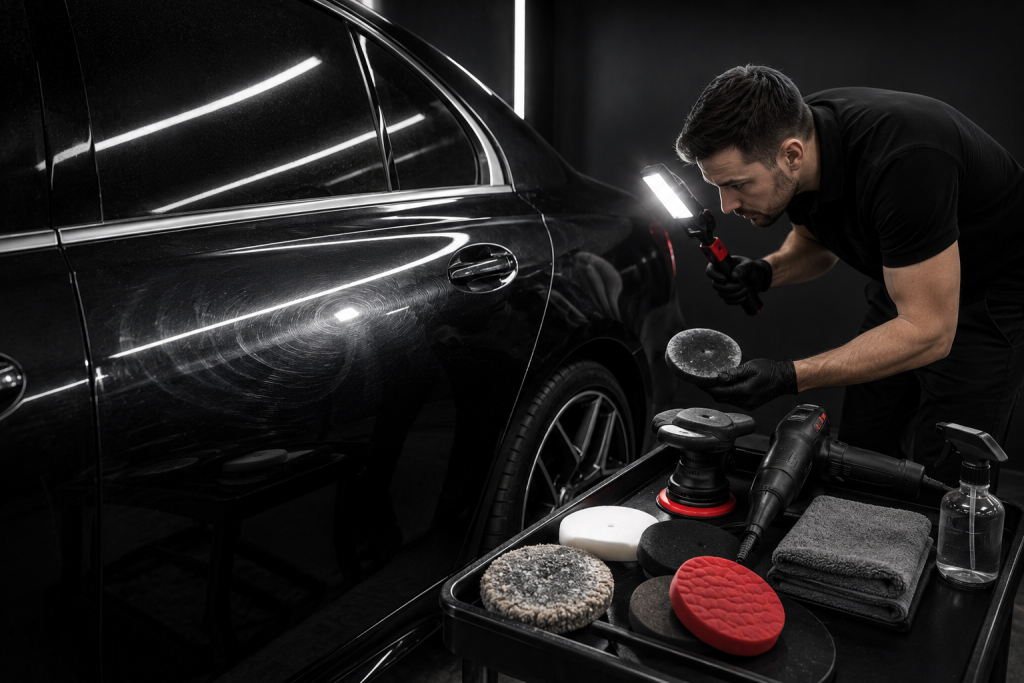
- Machine polishing – Removes or reduces light-to-moderate swirls by leveling the clear coat
- Paint correction – A multi-stage polishing process that provides the most complete repair
- Deep scratches – May require professional evaluation, as removing too much clear coat can cause damage
A professional inspection can quickly determine whether your vehicle needs a light polish or full paint correction.
When Paint Correction Is the Right Fix
Paint correction makes sense when:
- Swirl marks are clearly visible in direct sunlight
- The paint looks dull or hazy even after washing
- Black or dark paint looks cloudy instead of deep and glossy
- Previous buffing left visible holograms
- Damage from automatic car washes has become obvious
- You’re preparing the car for a ceramic coating
- You’re detailing before selling, trading, or restoring the vehicle
Conclusion
Ultimately, what causes swirl marks on car paint is accumulated friction from routine care habits, such as improper washing, rough drying, or dry wiping. Prevention means minimizing dirty contact with the surface from the first rinse to the final dry. Because careful detailing cannot remove existing scratches, restoring a smooth, glossy reflection requires machine polishing or full paint correction.