
Brake dust builds up on wheels through everyday driving, leaving dark deposits that can make even a clean car look neglected. Over time, these particles can cling to the wheel surface, especially when exposed to heat, moisture, and road grime. If left untreated, the buildup can become harder to remove with a basic wash. Regular cleaning helps prevent stubborn buildup and keeps your rims looking their best.
Knowing how to get brake dust off rims starts with understanding why it sticks and which cleaning methods are safe for your wheels. Different rim materials and finishes require different care, and using the wrong products or tools can cause lasting damage. This guide covers effective cleaning methods, wheel-specific precautions, and common mistakes to avoid.
How to Get Brake Dust Off Rims
Removing brake dust requires suitable cleaning products and gentle techniques to protect your rims. Follow these steps for safe, effective cleaning:
- Let the wheels cool – Park in the shade and avoid applying cleaners to hot rims to prevent stains.
- Rinse off loose dirt – Use water to remove surface debris and reduce scratching.
- Apply wheel cleaner – Choose a product safe for your wheel finish. Follow the label’s instructions and don’t let it dry.
- Scrub gently – Clean the spokes, lug nuts, and inner barrel with a soft brush or microfiber mitt. Avoid abrasive tools.
- Rinse thoroughly – Remove all cleaner and brake dust. Repeat if needed rather than scrubbing harder.
- Dry the rims – Use a clean microfiber towel to prevent water spots and avoid transferring dirt to the paint.
- Apply protection – Use a compatible wheel sealant or coating to make future cleaning easier.
Clean your rims regularly to prevent stubborn buildup, and always follow the manufacturer’s care instructions for your wheel finish.
Why Brake Dust Sticks to Rims
Brake dust is the fine residue shed when pads clamp the rotors. It consists mostly of iron from the rotor and pad, plus carbon and friction material. Braking generates serious heat, and that heat helps the particles bond to the nearest surface, which is your rim.
Driving style sets the pace. Stop-and-go traffic, sharp turns and higher speeds all mean more braking, so more dust. Pad material matters too, since ceramic and low-dust pads shed less than aggressive semi-metallic ones.
Letting it sit does real damage because the particles are metal. Iron grit that stays wet can rust and stain, and it can embed in the surface. On bare aluminum, trapped residue invites oxidation. On chrome, it can pit the plating. Rinsing early is far cheaper than refinishing.
Tools and Products for Removing Brake Dust
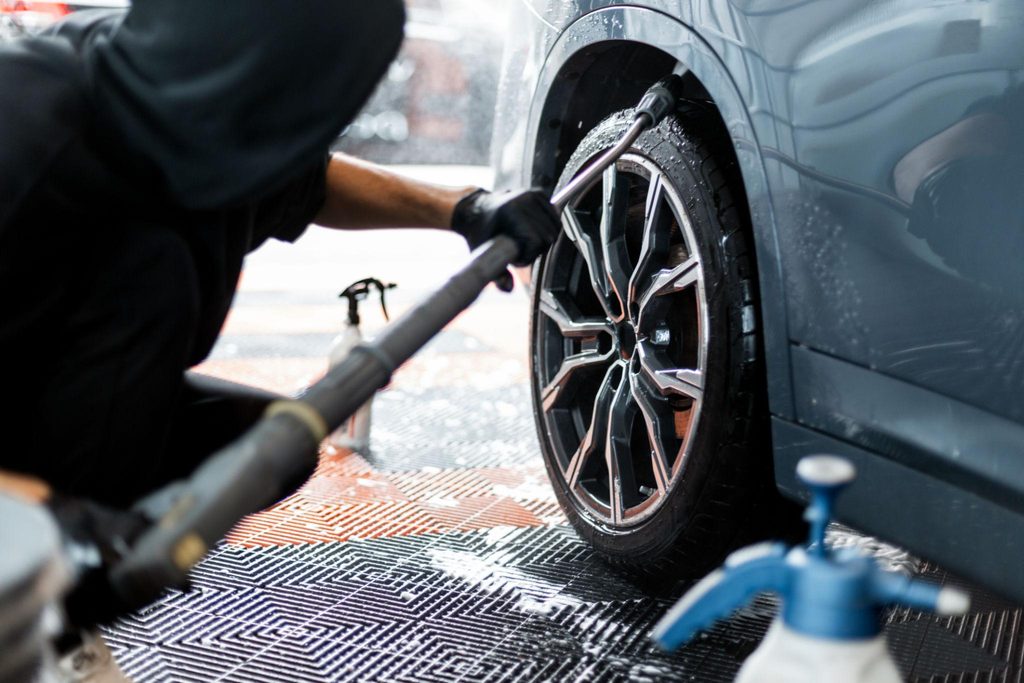
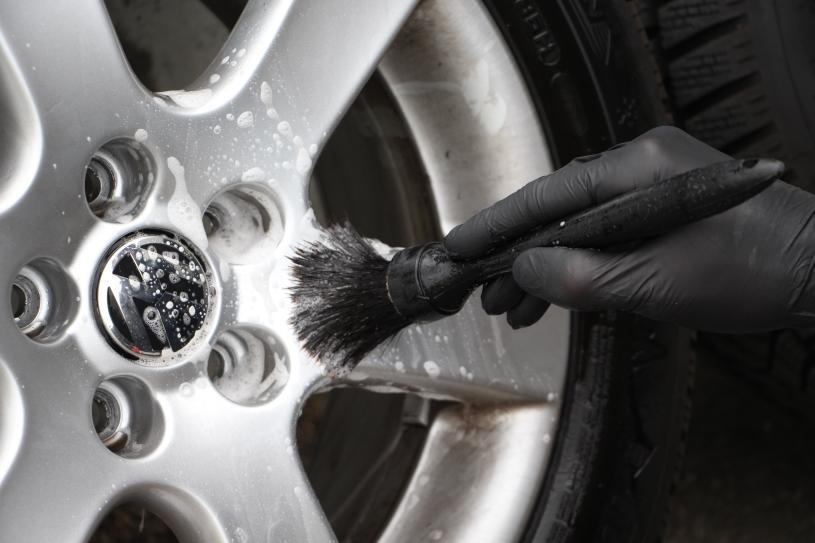
To clean brake dust effectively without damaging your rims, gather a soft wheel brush, a small detailing brush for tight spaces, microfiber towels, a bucket of clean water, and a hose or low-pressure washer.
Choose a wheel cleaner based on your rim material and finish. pH-neutral cleaners are a good starting point for many finishes, while acidic cleaners can remove stubborn deposits but may damage exposed metal or sensitive coatings. Alkaline cleaners help break down grease and road grime but may also harm certain finishes. Always check product compatibility, follow the label instructions, and wear appropriate protective gear.
Cleaning Brake Dust Off Different Wheel Types
Different wheel materials and finishes require different cleaning methods. Aluminum, chrome, and painted alloy wheels can react differently to chemicals and scrubbing. Since appearance alone doesn’t always reveal the finish, check the manufacturer’s care instructions before choosing a cleaner. Test any new product on a small, hidden area first.
| Wheel Type | Safe Cleaner Type | Brush Type | Risk If Wrong Product Used |
| Aluminum (Bare/Polished) | pH-neutral or product labeled for uncoated metal | Soft nylon or boar’s hair | Etching, white oxidation, dull patches |
| Chrome | pH-neutral or chrome-safe wheel cleaner | Soft brush, microfiber mitt | Plating damage, pitting, water spots |
| Painted Alloy | pH-neutral or finish-approved cleaner | Soft brush or mitt | Hazing, stripped sealant, lifted paint |
How to clean brake dust off aluminum wheels
Most aluminum wheels have a clear coat that protects the metal, making them suitable for gentle cleaning with a compatible pH-neutral cleaner and soft brush. Bare or polished aluminum is more sensitive and requires products specifically made for uncoated metal to prevent staining or surface damage.
Apply the cleaner according to the label instructions, gently loosen the brake dust, and rinse thoroughly before the product dries. Avoid harsh chemicals, abrasive brushes, and excessive scrubbing, especially on uncoated aluminum.
How to clean brake dust off chrome wheels
Chrome wheels have a thin protective plating that can become scratched or damaged by harsh cleaners and abrasive tools. Use a chrome-safe wheel cleaner with a soft brush or microfiber mitt to remove brake dust without damaging the finish.
Pay extra attention to tight spaces where dust collects, but avoid steel wool, wire brushes, and abrasive pads. Rinse thoroughly and dry immediately with a clean microfiber towel to prevent water spots. If the chrome is already peeling or pitted, avoid aggressive cleaning that could worsen the damage.
Removing Baked-On or Stubborn Brake Dust
Stubborn brake dust may require several cleaning rounds rather than aggressive scrubbing. Reapply a wheel-safe cleaner, let it sit for the recommended time, gently scrub, and rinse thoroughly. Repeat if necessary.
For embedded metal particles, use an iron remover compatible with your wheel finish. If deposits remain, a clay bar treatment with plenty of lubricant may help remove bonded contamination. Use light pressure and regularly fold the clay to expose a clean surface.
Never exceed the cleaner’s recommended application time or let it dry on the rims. If you notice pitting, peeling clear coat, or corrosion, the wheels may need professional repair rather than stronger cleaning products.
Mistakes That Damage Rims During Cleaning
Using the wrong cleaning methods can damage wheel finishes and leave permanent marks. Avoid these common mistakes:
- Cleaning hot wheels – Applying cleaner immediately after driving can cause it to dry too quickly, leaving stains or residue.
- Using the wrong cleaner – Harsh or incompatible chemicals can damage aluminum, dull painted finishes, or remove protective coatings.
- Letting cleaner dry – Leaving cleaning products on rims beyond the recommended time can cause staining or surface damage.
- Scrubbing with abrasive tools – Stiff brushes and rough pads can scratch clear coats and dull the wheel finish.
- Pressure washing too closely – Excessive water pressure can damage coatings and force water into sensitive areas.
- Reusing wheel towels on paint – Brake dust and trapped debris can scratch the car’s clear coat.
When Brake Dust Cleaning Is a Job for a Professional
DIY cleaning works well for routine brake dust, but expensive, delicate, or damaged wheels may need professional care. If you’re unsure how to get brake dust off rims after repeated cleaning, or notice pitting, corrosion, or damaged coatings, professional detailing may be the safer option.
A professional can identify the wheel finish, choose suitable cleaning products, and assess whether polishing or refinishing is necessary. As part of a complete car detailing service, wheel cleaning can also include protective treatments that make future maintenance easier. For stubborn buildup or sensitive finishes, MKM360 Autoworks offers professional wheel detailing.
Frequently Asked Questions
How often should I clean brake dust off my rims?
Clean your rims when a light layer of brake dust appears, typically every one to two weeks for daily drivers. The frequency depends on your driving habits, brake pads, and road conditions. Using our vehicle detailing checklist can help you include wheel cleaning in your regular maintenance.
Can brake dust cause permanent damage if I never clean it?
Yes. Over time, brake dust can contribute to staining, corrosion, and pitting, especially when combined with moisture and road salt. Regular cleaning helps prevent buildup, but existing corrosion or damaged clear coat may require professional repair.
Is it safe to clean brake dust off rims while they’re still on the car?
Yes, for routine cleaning. Removing the wheels gives better access to the barrels, but it isn’t required. Just keep them cool and shaded.
What’s the difference between a brake dust cleaner and a regular wheel cleaner?
Brake dust cleaners are formulated to break down bonded iron particles, and many change color as they react. General wheel cleaners handle road film and grime but may be weaker on baked-on dust. Some pH-balanced wheel cleaners also contain active brake-dust-dissolving chemistry and change color as contamination breaks down.
Why does brake dust seem worse on one side of my car than the other?
Front wheels typically collect more brake dust because they handle more braking force. If one wheel has significantly more dust than the opposite wheel, it could indicate a sticking caliper or uneven brake pad wear. Have the brakes checked if the difference persists.