Every swirl mark tells a story about how a car was washed. Daily driving, automatic car washes, and environmental exposure quickly take their toll on factory paint. Over time, micro-scratches rob your vehicle of its depth, leaving the finish dull and aged. Restoring that mirror-like reflection requires choosing the right approach to 1 step vs 2 step paint correction based on your specific surface damage.
This guide breaks down both processes in plain terms, what each stage does, and which defects it fixes. You’ll learn how to check your paint before booking and when the second stage earns its cost. By the end, you’ll know exactly which correction fits your car.
1 Step vs 2 Step Paint Correction – Main Differences
A 1-step paint correction works best on light swirl marks and mild haze. It restores gloss without cutting deep into the paint. A 2-step correction goes further, built for heavier swirls, oxidation, and water-spot etching. Dark paint usually needs that second stage too, along with cars headed for ceramic coating.
The table below breaks down one step vs two step paint correction across process, cost, and results, so you can see the differences at a glance.
| Factor | 1-Step Paint Correction | 2-Step Paint Correction |
| Process | One polishing stage | Compound + polish |
| Best For | Light swirls, mild haze | Heavier swirls, oxidation, deeper defects |
| Defect Removal | Moderate | Higher |
| Finish Quality | Gloss improvement | More clarity and depth |
| Time | 3-6 hours (average sedan) | 6-12 hours (average sedan) |
| Cost | Lower | Higher |
| Best Vehicles | Newer/well-kept cars | Dark, older, or neglected cars |
| Ceramic Coating Prep | Good if paint is already clean | Better if defects are visible |
What Is Paint Correction?
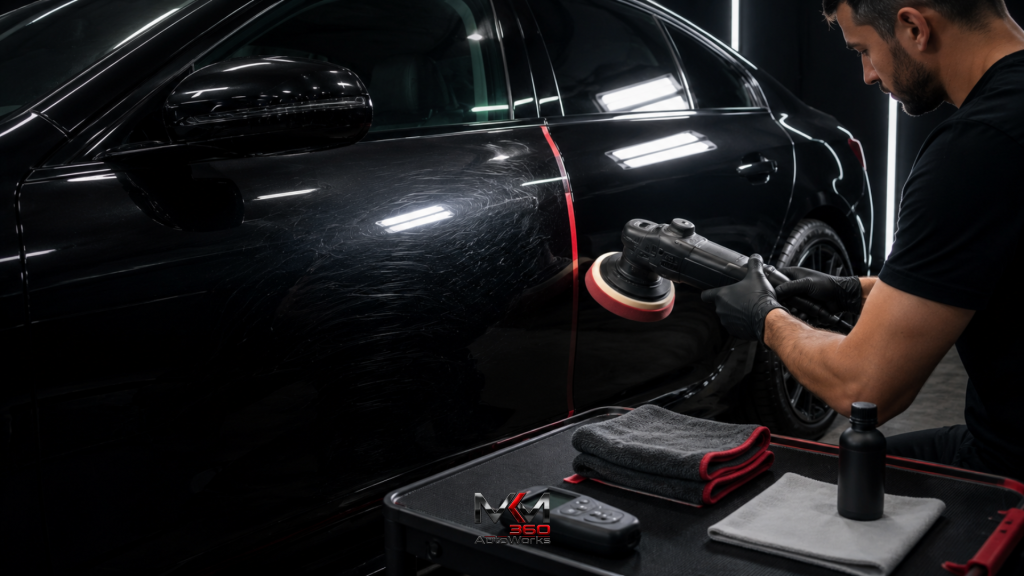
Paint correction is the process of machine polishing a vehicle’s clear coat to remove swirl marks, light scratches, and oxidation. A dual action polisher is safer for beginners, while a rotary polisher cuts faster but requires more skill.
The goal is to restore gloss and clarity. By smoothing the clear coat, paint correction creates a more even surface that reflects light better and produces a deeper shine.
The clear coat is thin, usually about 1.5 to 2.0 mils on factory paint, and cannot be replaced once removed. A proper paint correction removes only the amount needed to eliminate defects while preserving as much clear coat as possible.
What Is 1-Step Paint Correction?
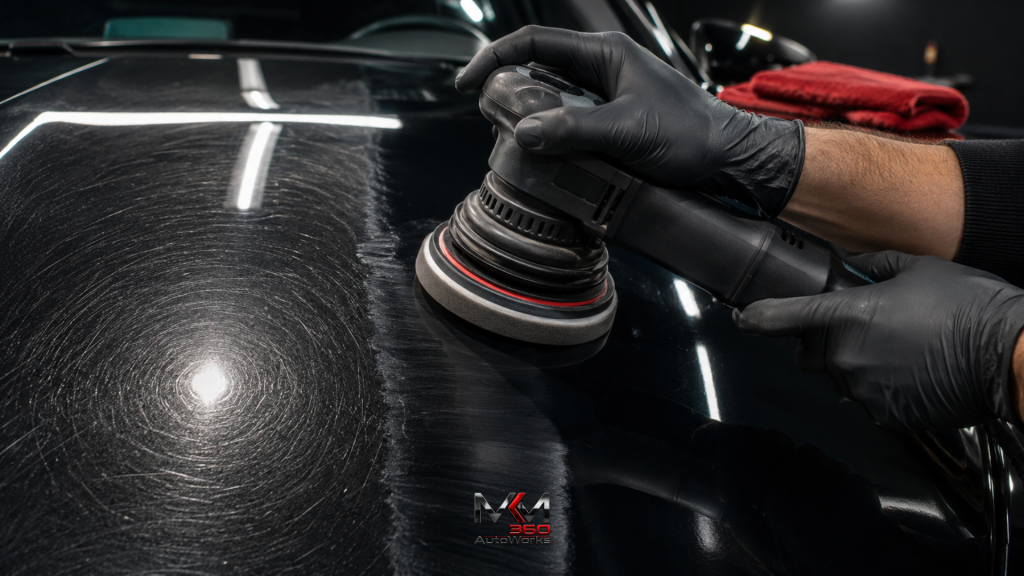
A 1 step correction is a single polishing pass using one polish or light cut compound on a foam polishing pad. There is no compounding stage before it and no refining stage afterward.
That’s enough to restore gloss on paint that isn’t badly damaged. Light swirls fade, mild haze lifts, and the surface reflects light more evenly again.
Newer, well-maintained daily driver cars are the best candidates because their paint usually has only minor wash mitt marring and light sun haze. Because service packages vary, understanding what a professional detail includes can also clarify whether machine polishing is included or priced as a separate correction service.
What Is 2-Step Paint Correction?
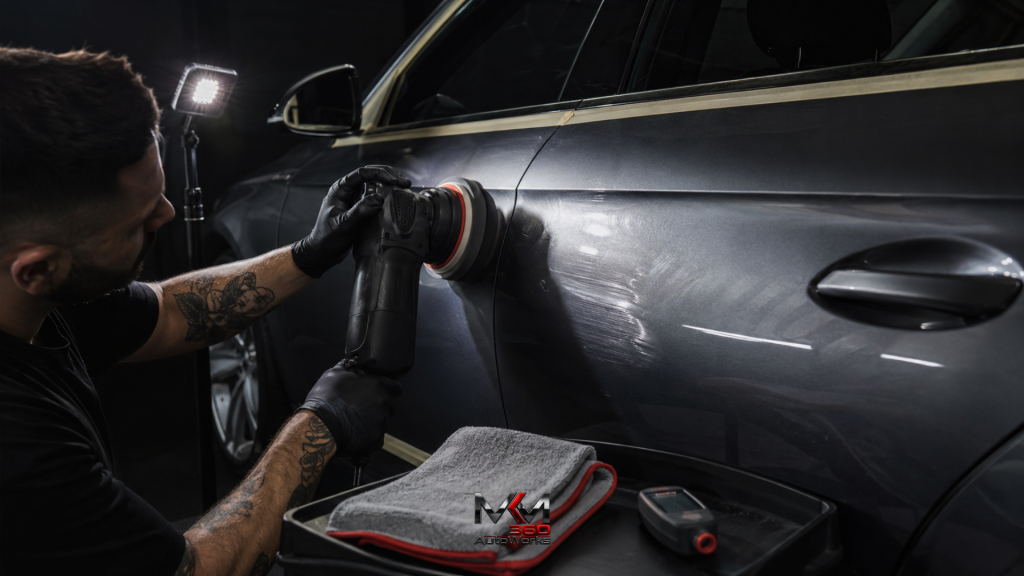
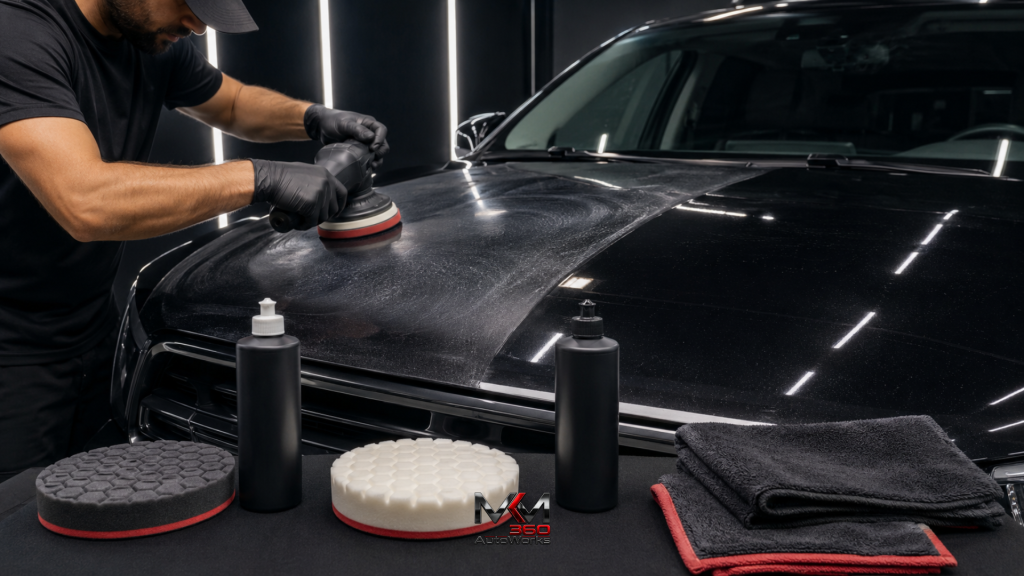
A 2 step paint correction uses two polishing stages. The first uses a compound with a firmer foam or microfiber cutting pad to remove deeper defects. The second uses a refining polish with a soft pad to remove haze and restore gloss.
Compounding removes heavier swirl marks, deeper scratches, and oxidation that a light polish cannot fully correct. Refining then restores clarity and leaves the paint with a smooth, glossy finish.
Dark colored paint benefits the most because it makes swirl marks and polishing haze more noticeable. A 2 step correction is also the better choice before applying a ceramic coating when visible defects are present because the coating seals in the paint’s existing condition. The tradeoff is that it takes longer and costs more.
When Is 1-Step Paint Correction Enough?
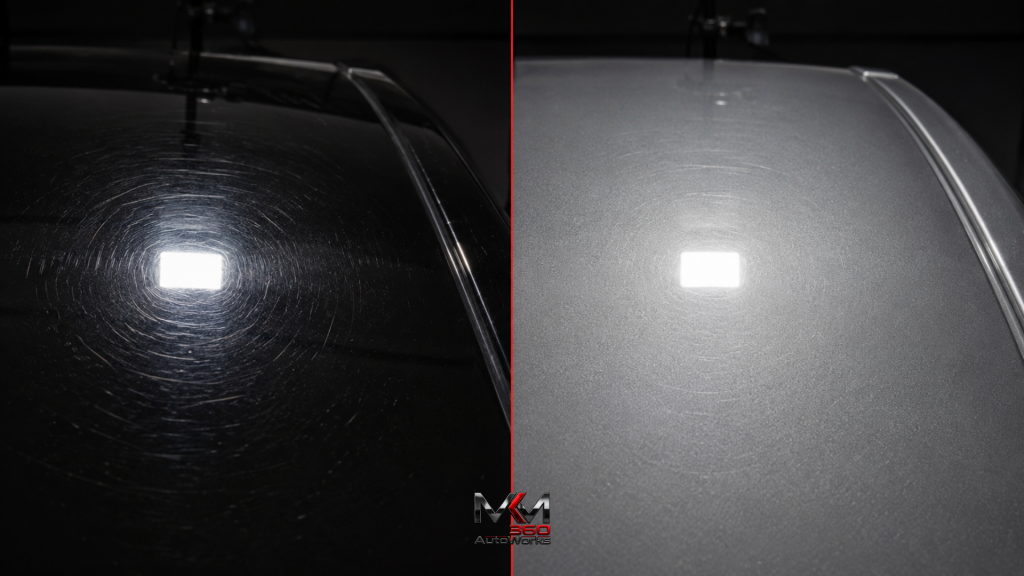
If the paint already looks decent in normal light, one stage is enough. To test it, hold a flashlight at roughly 30-45 degrees to the panel, 12-18 inches away, in a dark garage. Defects that vanish at that angle but reappear in direct sun are shallow enough for one stage.
For an owner chasing better gloss, not a show finish, one stage covers most daily drivers, and a second stage on mildly marred paint doesn’t buy enough extra result to justify the cost.
When Is 2-Step Paint Correction Better?
Two-step paint correction is essential for black and dark vehicles because dark surfaces reflect light like a mirror, revealing every minor imperfection. Lighter colors with metallic flakes scatter light and hide defects more easily than dark paint.
Heavy swirls, cloudy finishes, oxidation, and water spots sit too deep for a single polishing pass. This intensive dual-stage process eliminates deep defects and refines the clear coat to a flawless finish before applying a protective ceramic coating.
Does Vehicle Color Matter?
Yes. Dark paint makes swirl marks and scratches much more visible than light paint. A 1 step correction may look excellent on white or silver paint but still leave noticeable defects on black or other dark colors.
That’s why detailers inspect paint under direct sunlight or a swirl finder light to spot imperfections that normal shop lighting can miss.
Can Paint Correction Remove Scratches?
It depends on the scratch depth. Light, clear coat scratches and swirl marks often improve significantly or disappear because they only affect the surface.
Deeper scratches can usually only be reduced, not removed. If your fingernail catches on the scratch, it has likely gone beyond the clear coat. In that case, paint correction can soften its appearance, but cannot eliminate it without removing too much clear coat.
| Defect | 1-Step Result | 2-Step Result |
| Light swirls | Usually improves well | Improves more |
| Mild haze | Usually improves | Improves more |
| Heavy swirls | Partial improvement | Better correction |
| Oxidation | Light oxidation only | Better for heavier oxidation |
| Water spots | Light spots only | Better for etched spots |
| Deep scratches | Usually remain | May improve, not always removable |
Is 2-Step Paint Correction Always Better?
No. More polishing stages remove more clear coat, so they’re only worthwhile when the paint needs it.
For well maintained vehicles, a 1 step correction often delivers similar results while preserving a more clear coat for future corrections. A paint depth gauge should always determine how much correction is safe.
What About 3-Step Paint Correction?
A 3 step correction uses heavy compounding, intermediate polishing, and final refining. It’s the most aggressive option and is reserved for severely oxidized, heavily scratched, or neglected paint.
It’s typically used for show cars, pre-sale detailing, or correcting poor previous polishing. Because it removes a more clear coat, paint thickness should always be checked first.
Should You Get Paint Correction Before Ceramic Coating?
Ceramic coating protects the paint but doesn’t hide swirl marks, scratches, or other defects. In fact, the added gloss can make imperfections more noticeable.
A 1 step correction is usually enough for vehicles with minor defects, while a 2 step correction is better for visible swirls or haze. Correcting the paint first gives the best finish because the coating locks in the paint’s condition.
How to Maintain Paint After Correction
- Avoid automatic brush car washes because the brushes can trap grit and quickly reintroduce swirl marks.
- Wash by hand using the two bucket method, a clean wash mitt, plenty of rinse water, and clean microfiber towels.
- Remove bird droppings, tree sap, and water spots promptly since they can etch the clear coat if left on the paint, especially in hot weather.
- Apply a protective layer such as a ceramic coating, paint sealant, or wax to help preserve the corrected finish.
- Stay on top of maintenance with regular washing and protection instead of waiting for defects to return.
Final Recommendation
The choice between 1 step vs 2 step paint correction is not about choosing the option with more steps. It depends on the condition of your paint and how much correction it safely needs. Light swirls, minor haze, and well maintained paint often respond well to a 1 step correction, while deeper defects, oxidation, and noticeable imperfections may require a 2 step process.
The right correction removes only the necessary amount of clear coat to improve the finish. A properly matched approach restores gloss, protects the paint’s long term condition, and avoids unnecessary removal of material.