Ceramic coating provides excellent protection against water, dirt, and UV rays while creating a deep, glassy shine. However, this liquid polymer acts like a magnifying glass, meaning any existing swirls, scratches, or oxidation will be permanently trapped and amplified beneath the durable layer.
So, do you have to paint correct before ceramic coating to get the best results? To find out, this article analyzes the relationship between surface preparation and coating performance, exploring whether skipping polishing is viable and how to identify if your vehicle requires prior correction.
Do You Have to Paint Correct Before Ceramic Coating?
No. Paint correction isn’t required before ceramic coating, but it’s recommended if your paint has swirl marks, scratches, or oxidation. Ceramic coatings protect the paint. They don’t hide imperfections.
If your paint is already in good condition, a thorough wash and decontamination are enough before applying the coating.
Paint Correction vs Ceramic Coating
Two different jobs
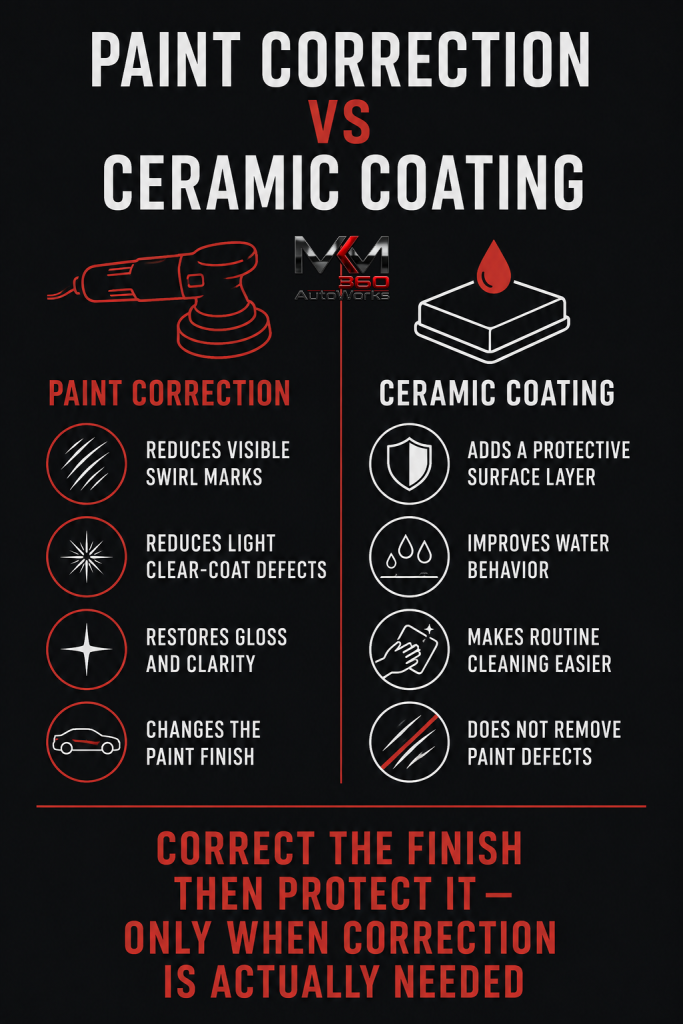
People often lump these two services together, but they solve different problems. Paint correction fixes what’s already wrong with your paint. Ceramic coating protects your paint regardless of its condition when it goes on, good or bad.
That distinction matters more than most shops explain upfront. If your paint has swirls or oxidation, coating over it locks that damage in place. The clear layer doesn’t discriminate between healthy paint and damaged paint. It just seals whatever is underneath.
Why shops blur the line
Some shops sell coating as a one-step fix for profit, not paint condition. Correction takes two to three times longer than coating and cuts margins. Skipping it is faster and more lucrative, which often dictates their recommendation.
| Service | Main Purpose |
| Paint Correction | Removes or reduces swirls, haze, light scratches, oxidation, and dullness |
| Ceramic Coating | Protects paint with gloss, slickness, water beading, UV resistance, and easier cleaning |
Paint correction improves the finish. Ceramic coating protects the finish. One repairs, the other preserves, and knowing which one you actually need, rather than which one a shop finds easier to sell, is the first step before booking either.
Why Paint Correction Matters Before Ceramic Coating?
Defects don’t disappear under coating
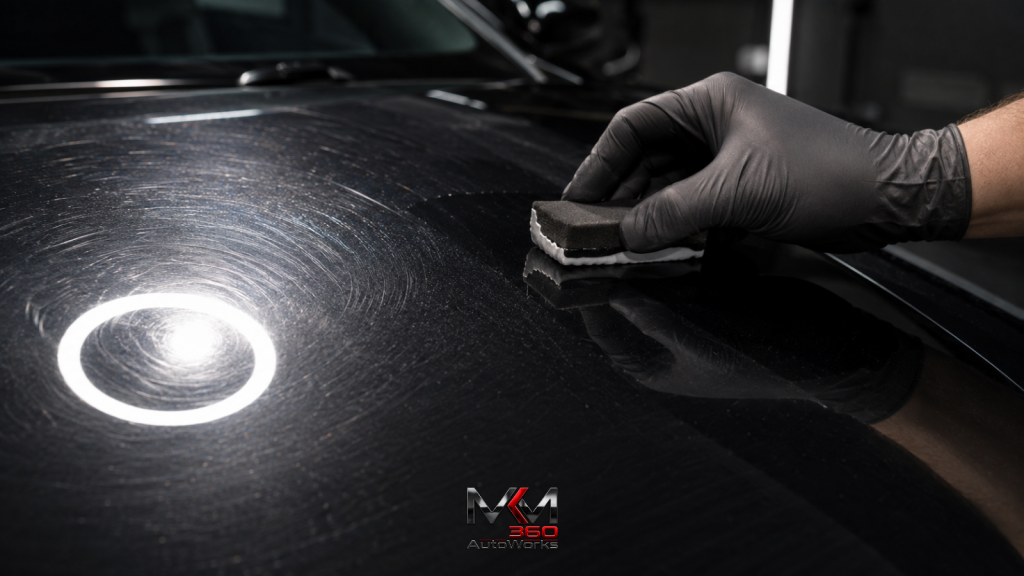
Ceramic coating is completely clear, meaning it permanently traps and amplifies every underlying flaw. Ceramic coating can last for years, sealing visible defects underneath it can turn a temporary paint problem into a long-term cosmetic issue.
While the coating bonds to a clean, contaminant-free surface rather than the correction itself, skipping preparation ruins the final look. Defect-free paint may not need polishing to bond properly, but it still requires thorough decontamination and oil removal to ensure a lasting seal.
The cost of fixing it later
Skipping paint correction leaves you stuck with the results, and fixing it later costs significantly more than doing it right the first time. Because a cured ceramic coating forms a permanent bond, it must be completely machine-polished and compounded off before any paint correction can actually begin.
This removal process often matches the cost of the original correction on its own. Delaying the process simply pushes the real expense further down the road, leaving you to pay for both the initial paint fix and the added labor of stripping away the ruined coating.
Can You Ceramic Coat Without Paint Correction?
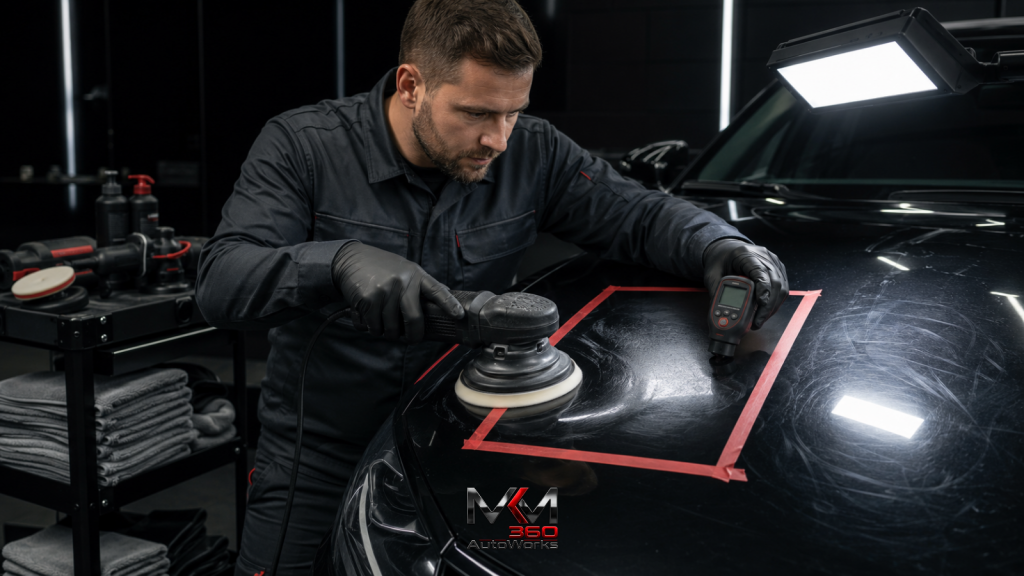
Ceramic coatings can be applied without prior paint correction, but this is only advisable when the vehicle’s finish is already in excellent, defect-free condition. While this approach is suitable for new or well-maintained cars, it is critical to inspect for minor imperfections, as coating traps surface defects permanently beneath the protective layer.
Skipping correction isn’t recommended for vehicles with oxidized, scratched, or dull paint, particularly on darker vehicles where defects are more visible. Furthermore, vehicles with automatic car wash damage and swirl marks require correction to avoid locking in surface imperfections rather than fixing them.
Signs Your Car Needs Paint Correction First
How to check
- Direct sunlight inspection – Parking your car in the sun reveals hidden swirl marks, dullness, or cloudy paint caused by a loss of clear coat clarity.
- The hand test – Running your hand over the clean paint helps identify bonded contaminants that may require clay bar treatment if the surface feels rough instead of completely smooth.
- Persistent water spots – Spotting mineral stains that don’t lift during a standard wash indicates etched damage that requires polishing.
- LED flashlight test – Holding an LED light at an angle exposes fine scratches and micro-marring that natural sunlight alone can miss.
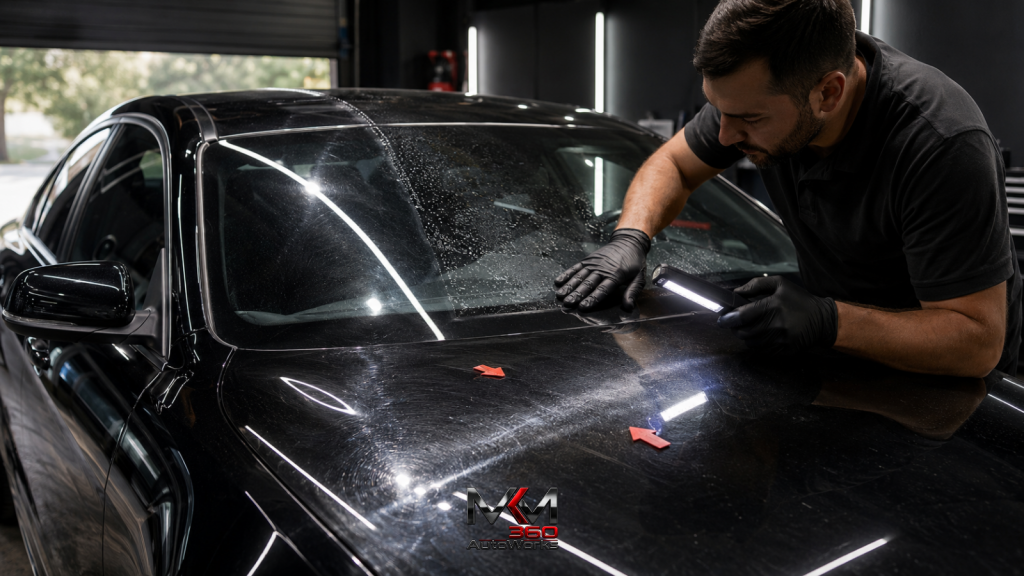
How much is too much
Not every paint flaw requires a full correction. A couple of light swirls on a single panel are usually not worth the effort. Consistent swirling across every panel is generally the point where correction becomes necessary. A scratch that catches your fingernail requires careful inspection because it may be too deep to safely polish out and might need touch up paint instead.
Conclusion
So, do you have to paint correct before ceramic coating? The outcome depends entirely on the current condition of your vehicle’s paint. Because a ceramic coating only protects and mirrors the surface beneath it, proper correction ensures your finish looks flawless under direct light before it is sealed for years to come.
The best approach is to inspect your paint thoroughly before making a decision. A quick evaluation under direct sunlight or a flashlight reveals exactly what your vehicle needs. Basing your choice on the actual condition of the panels ensures you get the absolute best results from your investment.