Vehicle paint faces constant damage from sunlight, dirt, and pollution that ruin its shine over time. Traditional waxes rub off quickly, driving a shift toward tough liquid coatings that bond with the surface to keep the vehicle looking glossy and clean.
Because this protective layer represents an investment, it is important to know how long does ceramic coating last based on where it is applied and the type of product used. This guide breaks down the expected lifespans for cars, wheels, and headlights while explaining what alters their durability, how to spot wear, and simple upkeep tips.
How Long Does Ceramic Coating Last?
Depending on the product type, a ceramic coating lasts anywhere from six months to over five years. Store-bought spray-on coatings typically last 6-12 months, consumer DIY kits last 2-3 years, and professional-grade coatings applied by certified shops can last more than five years with proper maintenance.
A closer look at the different coating types
Not every product labeled “ceramic” belongs in the same conversation. The category spans a wide range of chemistry and durability:
- Ceramic spray sealants – Quick spray-and-wipe formulas built for convenience rather than longevity, offering 6-12 months of protection.
- Hybrid ceramic waxes – Traditional carnauba wax infused with silicone dioxide that delivers a brief hydrophobic boost for 2-6 months.
- DIY ceramic coating kits – True solvent-based liquids that bond to the paint for 2-3 years, though performance relies heavily on proper surface prep.
- Professional ceramic coatings – Installer-applied, multi-layer systems boasting high silicone dioxide concentrations that provide hardened protection for 5+ years.
For benchmark reference, official Chemical Guys data clearly outlines this gap. Traditional carnauba wax degrades in just 4-8 weeks, demonstrating that even basic ceramic alternatives significantly outlast older paint protection technologies.
How Long Does Ceramic Coating Last on Cars?
On painted body panels, a properly applied professional coating can protect your paint for 3-5 years, while premium consumer kits last 2-3 years. Ceramic coating does not erase existing paint defects, so it helps to understand which scratches detailing can actually be removed before sealing the finish beneath a long-term coating. Furthermore, daily driving exposure and parking conditions directly dictate how long the protective barrier remains intact.
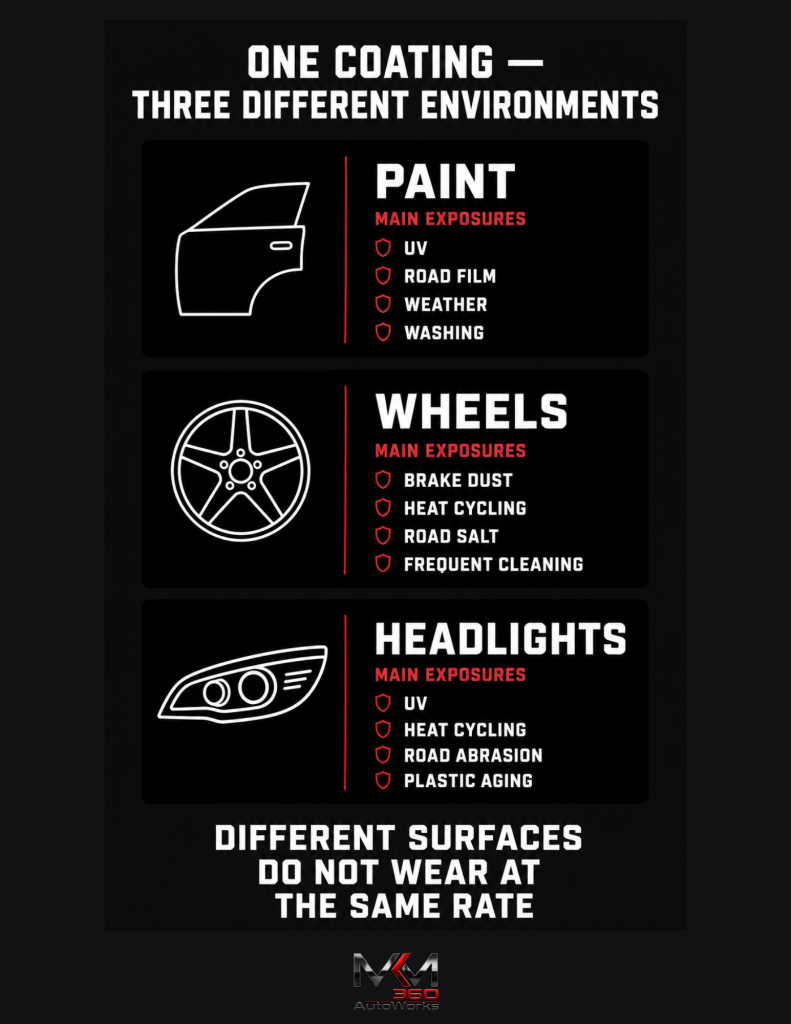
Because of these variables, two vehicles with identical coatings can age very differently. A garage-kept weekend car will almost always retain its gloss and hydrophobic properties longer than a daily driver parked outside and exposed to sun, salt, and stop-and-go traffic. Neither scenario means the coating failed; it just means the environment did more of the work.
How Long Does Ceramic Coating Last on Wheels?
Wheels take more punishment than paint, meaning a standard wheel coating generally lasts 1-2 years or roughly 20,000 miles. A ceramic coating on wheels typically wears down faster because it is constantly exposed to hot metallic brake dust, direct heat from the rotors, and road salt. Additionally, exposure to strong wheel cleaners and the frequent scrubbing required during washes will accelerate this wear.
A wheel coating still earns its keep by making cleanup dramatically easier and slowing down contaminant buildup. However, you should not expect it to match the lifespan of a coating on your paint. Budgeting for a wheel-specific refresh more often than your paint coating is the realistic approach.
How Long Does Ceramic Coating Last on Headlights?
Headlight coatings face a different enemy, typically preserving lens clarity for 1-3 years, depending on the climate. Plastic headlight lenses yellow and haze over time due to intense UV exposure, heat cycling, and road abrasion. Durability is also heavily tied to the quality of the restoration work and any oxidation that existed before the coating went on.
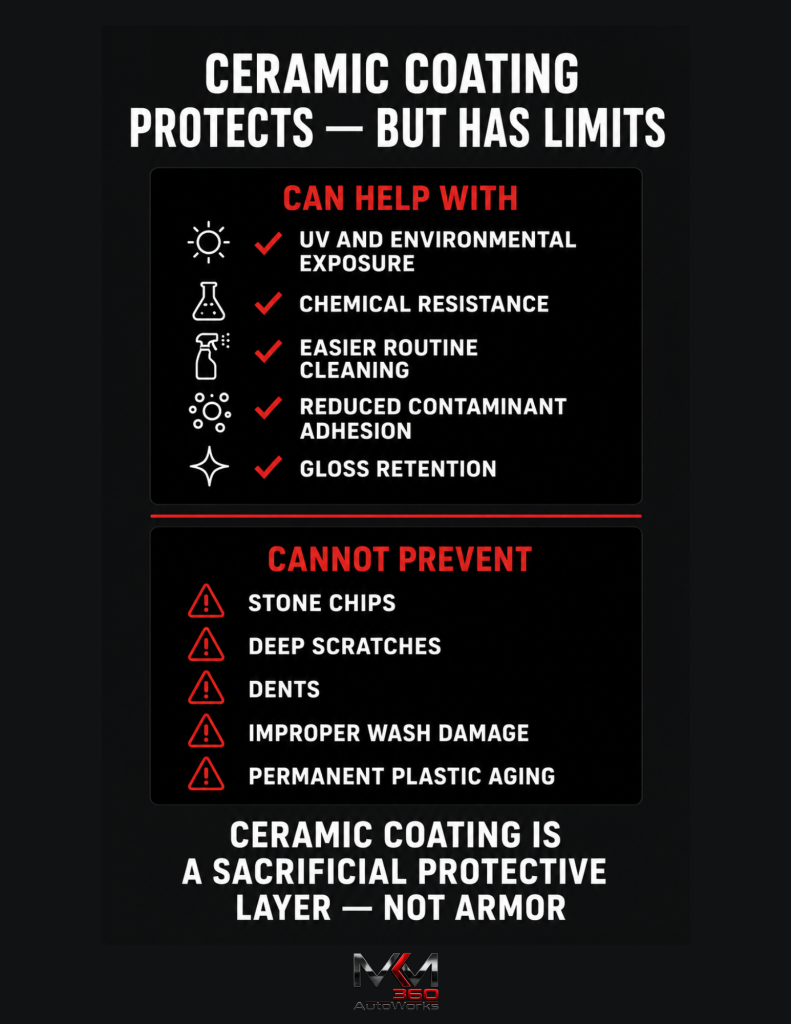
A ceramic coating helps preserve clarity and slows the yellowing process, but it isn’t a permanent stop button on plastic aging. Think of it as buying time and protecting a restoration, rather than preventing the aging process altogether.
What Affects Ceramic Coating Longevity Overall
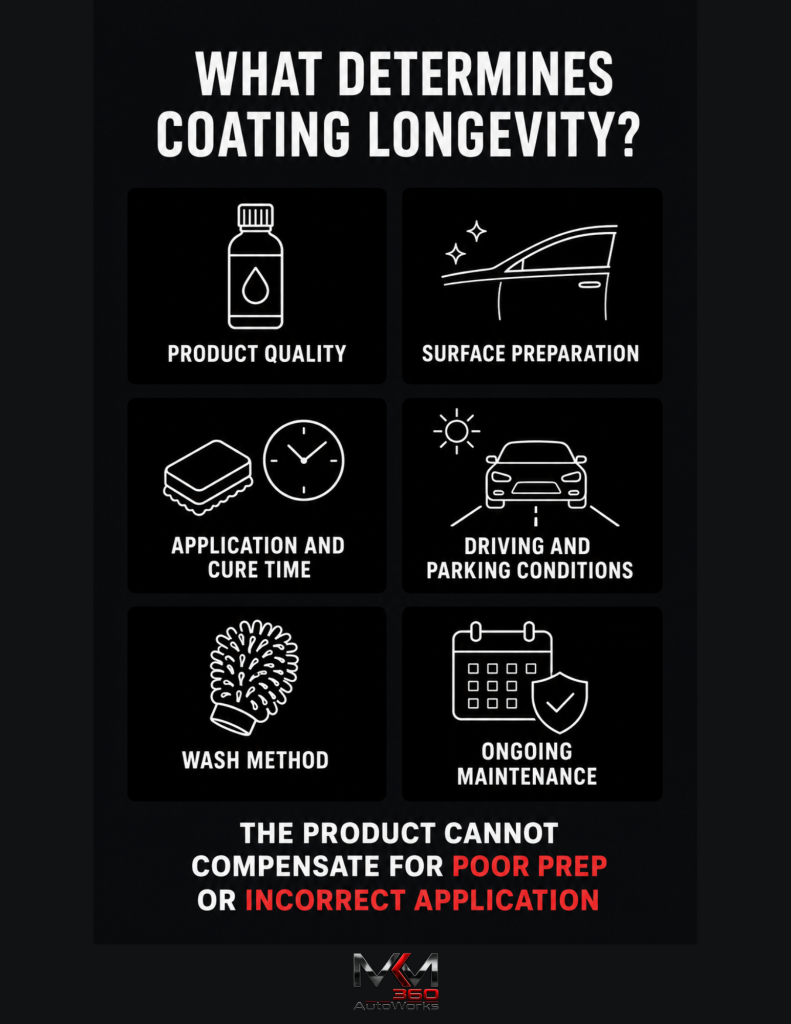
Across every surface, the same core variables dictate durability. Factors like coating quality, prep quality, surface condition, and installer skill form the foundation before application. Once applied, proper cure time alongside exposure to driving conditions, UV rays, road salt, and brake dust determine how the barrier holds up. Your ongoing wash method and maintenance products will either preserve or prematurely degrade the protective layer.
Prep and installer skills matter as much as the product itself. A premium coating applied over an uncorrected, contaminated surface will underperform a mid-tier coating applied correctly.
Signs Ceramic Coating Is Wearing Down
Your coating will tell you when it needs attention; you just need to know what to watch for:
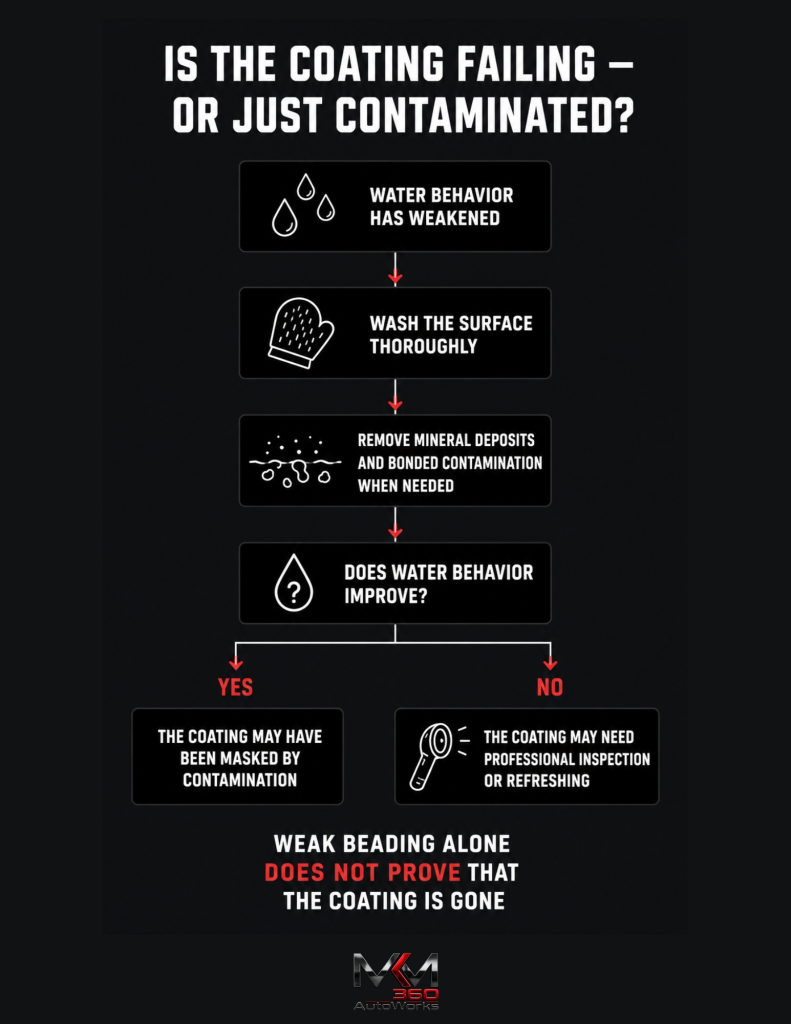
- Water stops beading tightly and starts sheeting or sitting flat
- The paint feels less slick to the touch
- Dirt and grime stick more stubbornly than before
- Washing takes noticeably more effort
- Gloss looks flatter or duller under direct light
- Contamination builds up faster between washes
Hydrophobic performance often fades before the coating itself is fully gone. Losing that tight water-beading effect is an early warning sign, not necessarily a sign the protective layer has failed completely.
How to Make Ceramic Coating Last Longer
Extending the life of your coating doesn’t require a complicated routine, just consistency:
- Hand wash regularly instead of using automatic tunnel washes.
- Use pH-neutral car soap to protect the coating.
- Avoid brush-based washes that can contribute to swirl marks and fine scratches.
- Dry with clean microfiber towels to prevent water spots.
- Remove bird droppings, sap, and bugs promptly to prevent etching.
- Use coating-safe products instead of harsh cleaners.
Final Takeaway
Determining how long does ceramic coating last depends on the specific product, surface preparation, installation skill, and daily driving conditions. Because paint, wheels, and headlights all face different types of environmental wear, they naturally degrade at different rates. Understanding these variables upfront ensures you get the most out of your protective investment without unexpected surprises.
Ready to get years of real protection instead of a few months of shine? Explore MKM360 Auto Works’ professional ceramic coating packages and get a coating built to last.